
Is your transmission having strange shifting problems and unexpected error messages on the dashboard?
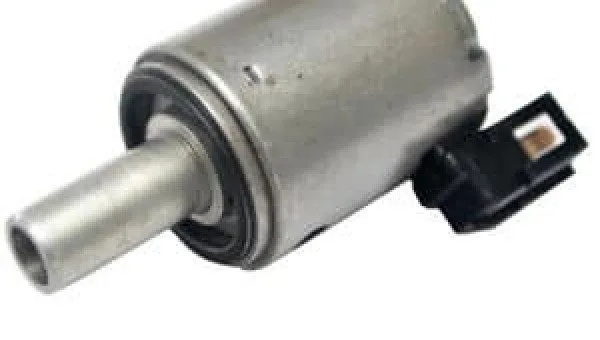
The shift solenoid is a part that causes many strange problems in automatic transmissions. There are several ways to know if your shift solenoid is bad.
Replacing a shift solenoid is often expensive, so you need to make sure you are not replacing a functioning shift solenoid.
In this guide, you will find everything you need to know about transmission shift solenoids, how to locate the problem, and how to replace the parts.
What is a Transmission Shift Solenoid?
The job of the transmission shift solenoid is exactly as it sounds – it shifts gears for you. The transmission control unit gets information from the engine, vehicle speed sensors, and other parameters. The engine uses all these parameters to calculate when to shift.
When it’s time to shift gears, the transmission control unit sends power or ground to the required shift solenoid and causes the solenoid to open and let transmission oil flow into the valve body.
The Function of a Transmission Shift Solenoid
Shift solenoids are spring-loaded with a coil inside. This depends on the car, but there are normally 12 volts to the solenoid all the time and the transmission control unit sends the ground to the solenoid when it’s time to open and release pressure.
If the transmission control unit is not able to open it, the shift solenoid assists in powering or grounding, and it will store a fault code in the transmission control unit on the affected shift solenoid. It is also possible that the shift solenoid has an internal problem or is stuck so that the transmission control unit cannot open it properly.
Bad Transmission Shift Solenoid Symptoms
There are a few different symptoms of a faulty shift solenoid. In the table below, you will find the most common symptoms, causes, and fixes. However, it is always recommended to perform proper research on the problem and not just replace parts from the list.
The most common symptom of a damaged shift solenoid or wiring is a light on your dashboard. This is often a check engine light or a transmission warning light. If you see a warning light on your dashboard, read the fault codes with an OBD2 scanner and start your troubleshooting there.
How to Diagnose a Shift Solenoid Problem?
First, we need to determine if it is a wiring, shift solenoid, TCM, or mechanical fault. To do this, you need to carefully read and research the fault codes to understand the problem before starting troubleshooting.
If the fault code tells us that it is stuck or that it is an electrical problem, it is most likely a wiring or shift solenoid problem.
Many shift solenoid fault codes could be resolved by trying to replace the transmission fluid or performing a transmission flush. A transmission fluid change is often not that expensive and can solve many problems with your transmission.
Here is a list of the most common problems regarding shift solenoid issues.
| Problem | Symptoms | Causes | Solutions |
| Transmission Shift Solenoid Problem | Shifting Delays | Faulty Shift Solenoid | Replace the Shift Solenoid (if possible) |
| Skipping / Jumping over certain gears | Low Transmission Fluid | Check Transmission Fluid Level | |
| Stuck in Gear | Bad Electrical Connections on the Transmission | Clean Connectors on the Transmission | |
| Downshifting / Upshifting Problems | Faulty Wiring for the Shift Solenoid | Repair Wiring Between the Shift Solenoid and the TCM | |
| Check Engine Light | Faulty TCM (Transmission Control Unit) | Replace TCM | |
| Limp Mode |
If you get an electrical or stuck code, the easiest way to check it is with an OBD2 reader with the function to test the shift solenoid by forcing the transmission control unit to open and close. If you don’t have an OBD2 reader with this function at home, you can borrow one or check out our article OBD2 Scanner Reviews.
Here is a list of how you can perform troubleshooting with a scanner:
- Find a transmission wiring diagram for your transmission.
- Find out which pins go to the affected shift solenoid.
- Loosen the transmission wiring plug on the transmission
- Use the OBD2 scanner and start the output test for the affected shift solenoid
- Measure to see if you get both 12 volts and ground to the shift solenoid on the transmission plug on the affected pin.
- If you don’t get both 12 volts and ground – you may have a wiring problem or a faulty TCM (Transmission Control Unit).
If you get 12 volts and ground and the shift solenoid fault code keeps coming back after clearing it, you probably have a faulty shift solenoid.
How to Fix a Transmission Shift Solenoid?
If the shift solenoid itself has an internal error, the best way is to replace only the shift solenoid if possible. In some cases, you can clean the shift solenoid if you find a lot of dirt inside. As I mentioned earlier, a transmission fluid change or transmission flush can solve some shift solenoid fault codes, so you can try that first.
To replace a shift solenoid, you need to remove the transmission fluid pan to reach the faulty solenoid. It is located in the valve body.
NOTE: In some vehicles, you cannot replace a single solenoid, you must replace the entire solenoid assembly. Always check this with your dealer before starting to remove the transmission pan.
Symptoms of a Faulty Automatic Transmission Solenoid
Solenoids are essential components of an automatic transmission. They control the flow of transmission oil, which allows for gear shifting and maintains the proper functioning of the transmission.
When a solenoid is faulty, it can lead to various symptoms, including:
Jerky or Harsh Gear Shifts:
- The car may shift gears suddenly and aggressively, causing an unpleasant jerk.
- You may feel vibrations or jolts when shifting gears.
Delay in Gear Shifting:
- The transmission may take time to shift to a higher or lower gear.
- You may feel the car “slipping” before shifting to the next gear.
Inability to Shift Gears:
- The transmission may remain stuck in a particular gear and not shift to other gears.
- You may be unable to shift into reverse or first gear.
Transmission Slipping:
- The engine may seem to rev without the car accelerating accordingly.
- You may feel a loss of power and efficiency.
Check Engine Light On:
- The check engine light may illuminate on the dashboard.
- An error code may be recorded in the onboard computer, indicating a problem with the solenoid.
Clicking or Buzzing Noise:
- You may hear a clicking or buzzing noise coming from the transmission.
- This noise may be more pronounced when shifting gears.
Transmission Fluid Leak:
- A transmission fluid leak may occur if the solenoid is damaged.
- You may notice a puddle of red fluid under the car.
If you notice any of these symptoms, it is important to have your vehicle diagnosed by a qualified mechanic.
The mechanic will be able to test the solenoids and determine if they need to be replaced.
It is important to note that other problems can also cause similar symptoms.
An accurate diagnosis is therefore necessary to determine the cause of the problem.
Here are some tips to prevent solenoid problems:
- Perform regular transmission fluid changes.
- Use the transmission fluid recommended by the manufacturer.
- Avoid overheating the transmission.
- Have your vehicle inspected regularly by a qualified mechanic.