
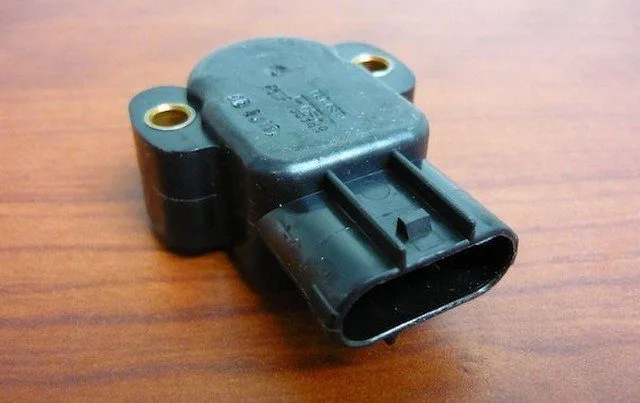
Throttle Position Sensor Description and Related Information
Almost all post-96 vehicles use a throttle position sensor (TPS) to inform the engine control module of the accelerator pedal and throttle plate position. TPS sensors are normally mounted on the throttle body with the throttle plate shaft running through the sensor. When the accelerator pedal is pressed, the throttle plate opens, rotating the sensor’s internal variable resistance. As the throttle opens, the voltage returned to the computer by the throttle position sensor varies (typically increasing), signaling the throttle opening rate as well as the throttle position. The computer uses this information to adjust fuel compensation, which is the duration the injectors remain open, providing more fuel.
Most throttle position sensors have at least 3 wires. These are for a 5-volt reference, a ground line, and the actual TPS voltage line. When testing the throttle position sensor system, always ensure you have the 5-volt reference and ground, then monitor the signal line for the actual throttle position sensor voltage output.
You can monitor this by probing the circuit again at the TPS. The voltage should increase steadily as the throttle is opened. This should be checked with the ignition on and the engine off. Use an appropriate wiring diagram and always verify the correct base voltage before scanning the accelerator pedal. Any voltage drop or irregular voltage indicates a problem. You should also check by tapping and heating the sensor if you suspect a possible intermittent issue. Refer to our article on automotive circuit testing for more help with these tests, and always exercise caution.
throttle position sensor
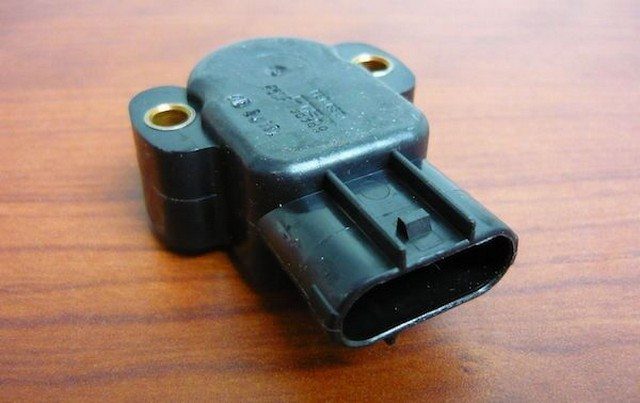
Possible symptoms of a faulty TP sensor include hesitation or stumbling during acceleration or surging, a dead spot in the throttle, rough idle, or a check engine light with associated codes. Some older style throttle position sensors are adjustable, but most newer style sensors are fixed position. Base TPS voltage readings are essential for proper fuel compensation operation, so always use your scan tool or multimeter to verify proper adjustment. A poorly secured sensor will cause erratic symptoms, including rough idle and hesitation, so check this as well. Have other questions? Use the Get Help link and we’ll assist you! Thank you for visiting and be sure to check out some of our highly informative articles regarding engine light repair!
If you find you need a replacement TP sensor, please visit one of our suggested parts suppliers. We search for the best companies for value and service and only recommend the best. You won’t find better prices anywhere and you can buy with confidence from reputable merchants! Thank you for visiting and have a great day!