
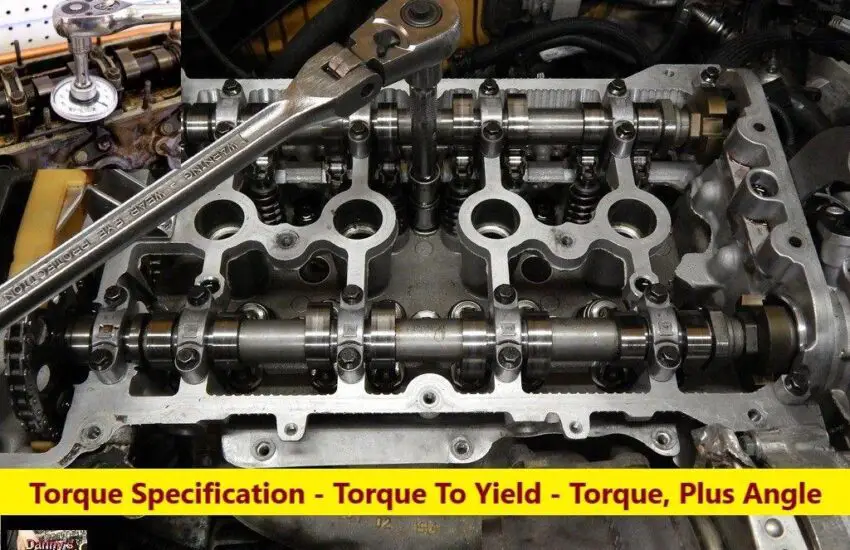
Torque specification is absolutely fundamental. Assembling an engine without adhering to the precise tightening torque is a direct invitation to failure. This is particularly true for modern, lightweight engines, which primarily use aluminum casings. Therefore, having the correct torque specification is crucial to ensure reliability, sealing, and longevity.
Understanding Tightening Torque and Its Importance
Tightening torque, expressed in Newton-meters (Nm) or foot-pounds (ft-lb), is the rotational force applied to a bolt or nut during tightening. It is not simply about “tightening hard”; insufficient tightening can lead to loosening and leakage, while excessive tightening can cause the bolt to stretch or even break, often damaging the threads in the softer material (such as aluminum). Precise torque ensures a uniform and optimal clamp load on the joint, guaranteeing its perfect operation.
The Torque to Yield (TTY) Method
The Torque to Yield method is an advanced tightening technique commonly used for cylinder head bolts on modern engines. Unlike standard reusable bolts, TTY bolts are specifically designed to be stretched beyond their elastic limit during the final tightening. This allows for a much higher and, most importantly, more uniform clamp load across the entire cylinder head gasket, which is essential for containing the high combustion pressures of today’s engines. Warning: TTY bolts are generally single-use components and must be systematically replaced.
The Torque Plus Angle Method
The Torque Plus Angle method is a two-step procedure often associated with TTY tightening. It combines the precision of an initial torque with the consistency of an angular rotation:
- Torque Step: A specific initial torque is applied to uniformly tension the bolt and the components.
- Angle Step: Each bolt is then tightened by an additional precise rotation angle (for example, 90° or 180°). This rotation stretches the bolt in a controlled manner to achieve the desired final clamp load.
This method compensates for friction variations and ensures a much more precise and reproducible tightening than torque alone.
Conclusion: The Key to Success
Whether for a repair or a rebuild, never improvise tightening. Always consult the manufacturer’s repair manual (workshop manual) for the exact torque specifications, tightening sequence (precise order), and the method to use (simple torque, TTY, angle). Use a calibrated torque wrench and meticulously follow the procedures. This is the only guarantee for a strong, sealed, and durable assembly.