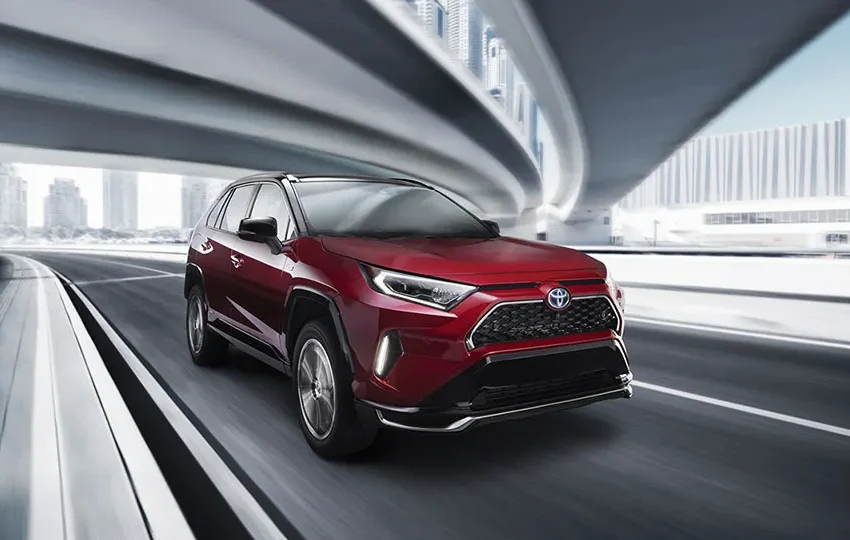
Plug-in hybrid electric vehicles, also called plug-ins or PHEVs, are the right choice for many drivers for much of this decade, until the number of public charging stations increases, the value of batteries improves, and the overall prices of pure battery electric vehicles drop.
Half of our favorite plug-ins travel at least 30 miles, roughly the length of an average round trip commute in the United States, according to the Bureau of Transportation Statistics. The others get you to work and back. None of them will leave you stranded because they have an engine and a gas tank.
One in Five Electrified Vehicles Was a Plug-in Last Year
Sometimes, statistics on “electric cars” can be tricky. Do they include plug-in hybrid electric vehicles (PHEV) or only battery electric vehicles (BEV)? It goes both ways. Last year, 64,300 plug-in hybrid vehicles were sold in the United States, compared to 213,000 battery-only cars, according to Pew Research data. Plug-ins also accounted for one-fifth of all electric vehicle sales last year, according to MotorIntelligence.
PHEV sales have halved since 2018, but Covid-19 played a role and it’s hard to draw definitive conclusions: the entire car market decreased by 23% in 2020. The format has always been a transition to battery electric vehicles, which have gradually increased their range as technology improves. General Motors, for its part, doesn’t even offer a PHEV since it killed the Volt in 2019: it’s betting on pure electric vehicles and its new Ultium modular battery system. The entire electrified segment, including PHEVs, still only represents 2% of new car sales in the United States, but 10 million of them are now on the world’s roads.
Toyota and Lexus, its luxury division, capture a significant share of alternative propulsion vehicle sales: 16 of the 30 vehicles are offered as hybrids or plug-ins, including the Mirai, its only hydrogen fuel cell electric vehicle. These vehicles also accounted for 24% of Toyota’s sales for the first nine months of 2021. Toyota offers two models with both hybrid and plug-in variants: the Prius and the RAV4. Just under half of Prius sales were plug-ins and one-fifth of RAV4s were plug-ins.
Why Plug-ins Make Sense
Many cars available today can be purchased in PHEV versions, which eliminates legitimate concerns about range anxiety and the availability of public charging. A shorter electric range, between 18 and 42 miles, is acceptable when there are still an additional 300 to 600 miles available with the gasoline engine. For people making short trips, the gasoline engine might only be used for longer weekend getaways.
All plug-ins can benefit from at least a portion of the available federal income tax credit, up to $7,500. The credit is based on the battery size and varies considerably among PHEVs. A vehicle with a 16.0 kilowatt-hour battery is eligible for the full $7,500 credit.
The Plug-In’s Electric Motor Acts as a Turbocharger
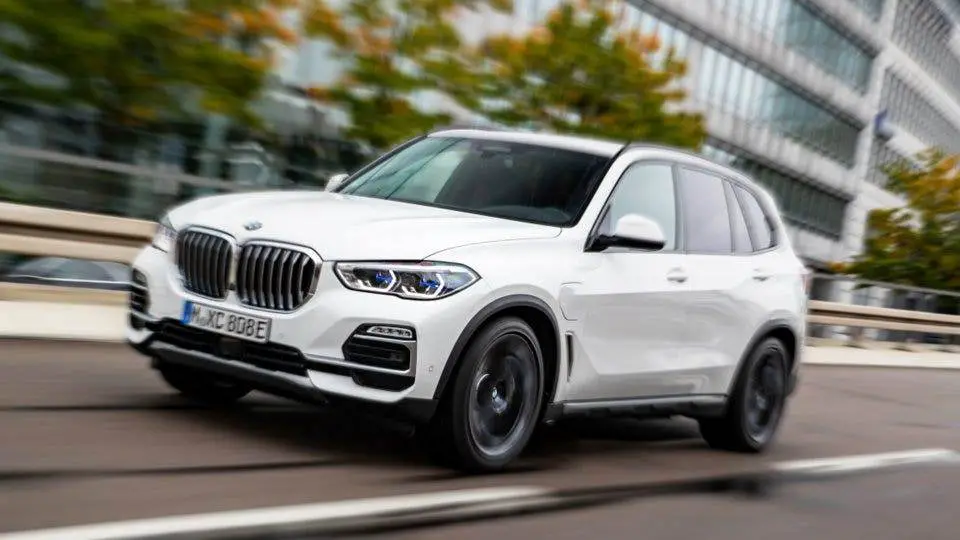
An electric motor develops maximum power (torque) at a much lower RPM than its companion gasoline engine. Even when the car switches to gasoline mode, the battery still has enough power for the electric motor to act as a booster, essentially a turbocharger. While the electric motor and lithium-ion battery are meant to improve mpg, they also go from 0 to 60 mph a second or two faster. Toyota’s RAV4 Prime (what it calls the PHEV version) takes 5.7 seconds, 2 seconds less than the gasoline-engine RAV4.
Below are 10 relatively popular PHEV choices, ranging from entry-level to full luxury. They are sorted by battery range. Drivers who want a transition vehicle to a fully electric future should strive to perform most daily driving tasks without waking the gasoline engine. This means battery range should play a significant role in the purchase decision.
Three of our favorites travel at least 500 miles combined, battery engine and gasoline engine. The cars below are 2021 models unless otherwise noted. To learn more about plug-ins, check out the best plug-in hybrids for 2021 in Forbes Wheels reviews.
Honda Clarity Plug-In Hybrid, 48 miles EV
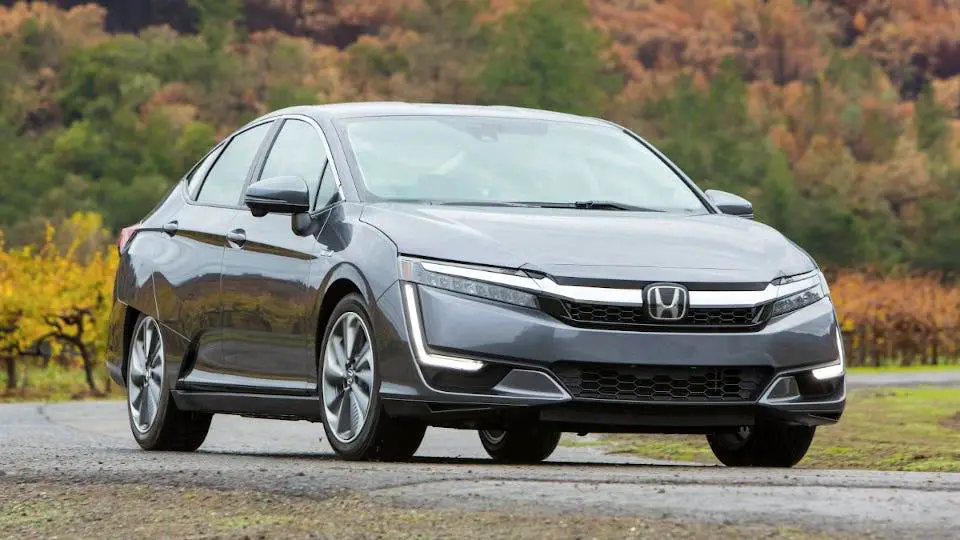
The battery-only version of the Clarity (discontinued last year) was a limited-range electric vehicle, but the PHEV has a lot to recommend, including 48 electric miles thanks to its 17 kilowatt-hour battery. The 1.5-liter four-cylinder (which rarely drives the wheels) combines with a robust electric motor to produce a combined 212 horsepower and a decent 8.1-second zero-to-60 time. Owners praise the comfort and ride quality, even if the rear bench could be larger. The $33,400 Clarity benefits from the full $7,500 credit.
Toyota RAV4 Prime, 42 miles
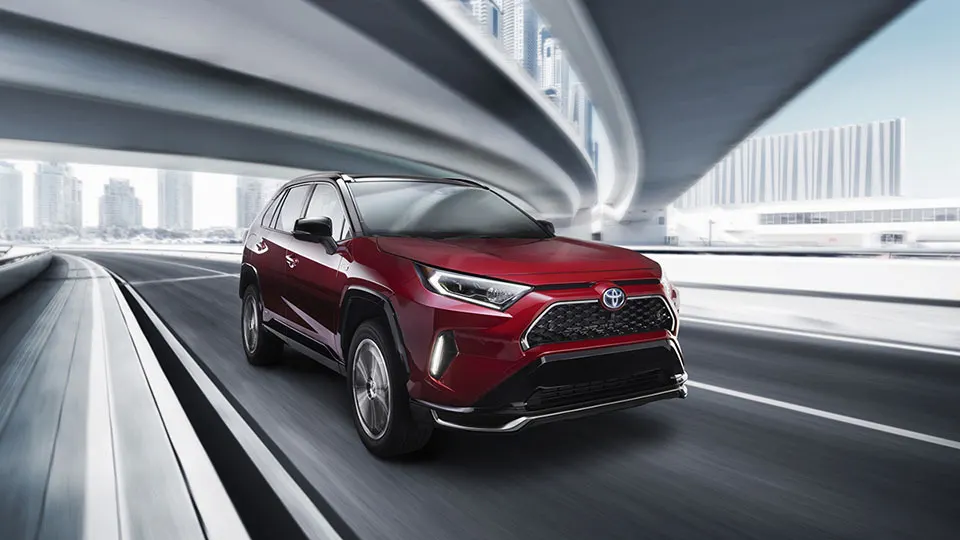
Here’s what a plug-in should be: the $38,500 PHEV version of the RAV4, with an 18.1 kilowatt-hour battery, 42 miles of EV range, 600 miles total. It’s an impressive ride. Some critics claim the actual range is better than that. There are also 302 combined horsepower in this RAV4, making it the fastest four-door Toyota. Only the Supra has faster acceleration. The RAV4 Prime benefits from the full $7,500 tax credit. The top-tier XSE model ($41,675) offers many useful features, including 19-inch wheels, paddle shifters, and some safety equipment. There have also been a few improvements to the $28,220 Prius Prime sedan, which now has 25 miles of EV range. But it’s a pokier beast, with a 121 horsepower powertrain. The $28,220 Prius Prime is eligible for a $4,502 federal income tax credit. If there’s one plug-in you buy, make it the RAV4 Prime.
Ford Escape Plug-In Hybrid, 37 miles
Toyota produced the first hybrids Americans could buy and Ford launched the first American car with the Escape in 2004. They then proved themselves as taxis on New York’s potholed streets. The Escape PHEV ($34,755, with a $6,843 credit) uses a 2.5-liter four-cylinder engine coupled with an electric motor for a total output of 221 horsepower. The electric range is 37 miles (530 total) via a 14.4 kilowatt-hour battery. There is no all-wheel-drive version. It’s worth upgrading to the $38,000 SEL version, which adds heated synthetic leather front seats with power adjustment for the driver, convenience and cold weather packages, parking sensors, and fog lights. The Co-Pilot360 Assist+ package adds adaptive cruise control.
Chrysler Pacifica Plug-In Hybrid Minivan, 32 miles
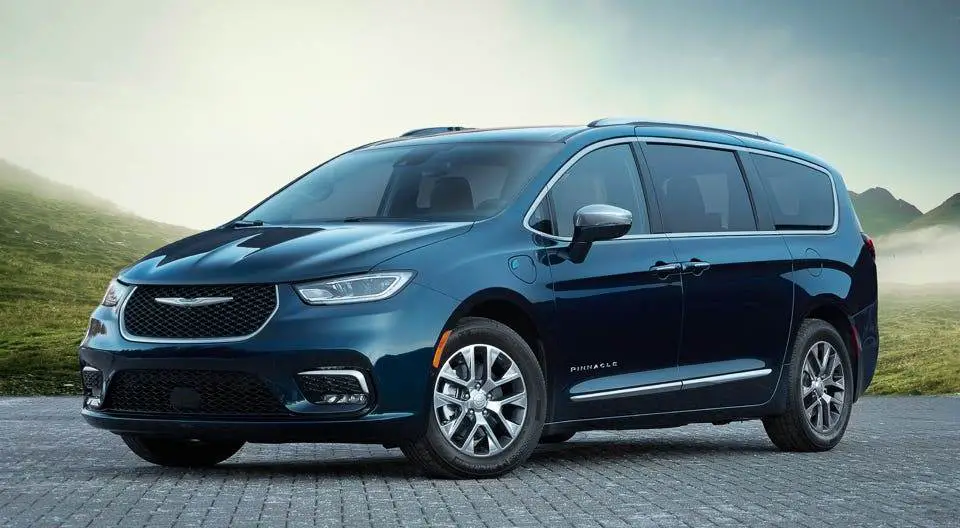
The $39,995 Pacifica remains the only American PHEV minivan, although the Toyota Sienna is now only available as a hybrid. The electric range via a 16 kilowatt-hour battery is 32 miles (566 total). A drawback of the PHEV version is that the company’s famous Stow ‘n Go seats are not available in the second row (which is equipped with captain’s chairs). It’s a large vehicle that needs the 260 horsepower it gets from a 3.6-liter V-6 (the same as the standard Pacifica) with two electric motors. For a grocery getter, the 7.4-second zero-to-60 time isn’t bad. The cargo space – critical in a minivan – is 87.5 cubic feet if the third row is down.
Hyundai Santa Fe Plug-In Hybrid, 30 miles

Good news for Santa Fe buyers: the 2022 model has a 13.8 kilowatt-hour battery, giving it a $6,587 tax credit. Apply that, and it means the PHEV is actually cheaper than the hybrid version. The 2022 Santa Fe starts at $40,535, although savvy buyers might want to look at the Limited. The PHEV’s 1.6-liter four-cylinder producing 177 horsepower is linked to a 90-horsepower electric motor for 260 combined horsepower. The electric range is 30 miles, 440 total. The Limited version increases the price to $46,545 but adds useful features such as leather seats, a 360-degree camera, and an eight-inch infotainment screen with a 12.3-inch digital gauge cluster.
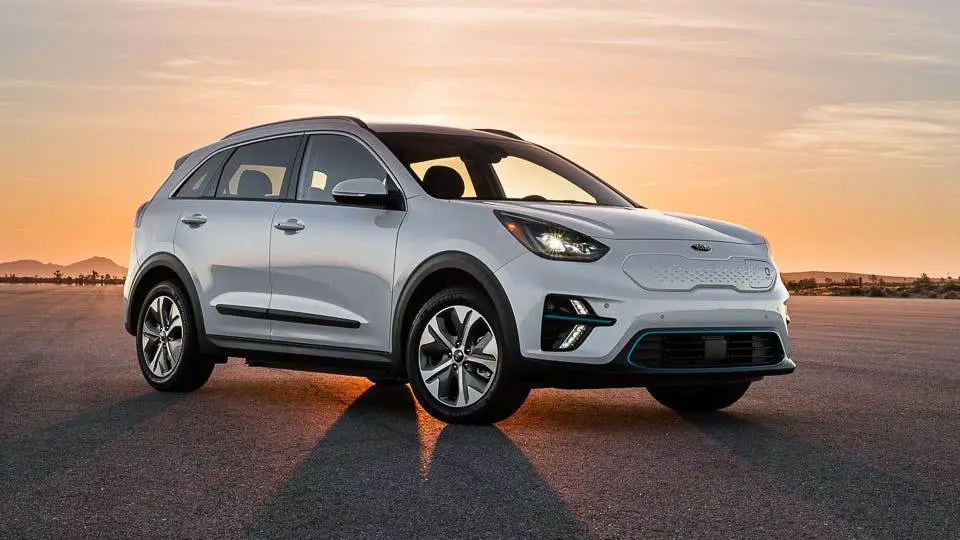
Kia Niro Plug-In Hybrid, 26 miles

Starting at $30,765 (with a $4,543 credit), the Niro is one of the most affordable PHEVs. The EV range is 26 miles via an 8.9 kilowatt-hour power, with a very good total of 560 miles. The 1.6-liter four-cylinder electric motor provides a modest 139 horsepower via a six-speed automatic transmission. Kia also makes an Optima PHEV, $37,315 in the only EX version (with a $4,919 credit). With a 10 kilowatt-hour battery, the electric range is slightly higher, 28 miles, and you get a good dose of punch: 202 horsepower. However, you have to opt for a sedan. That’s a problem for some people who like to sit up high. The Niro charges quickly in 2.5 hours; the Optima might take a bit longer.
Audi A7 55 TSFI e Quattro Plug-In Hybrid, 24 miles
The A7 PHEV allows its buyers to own a large, luxurious top-tier Audi while claiming some green credibility. The Sportback features a two-liter turbo four-cylinder that sandwiches an electric motor between it and a seven-speed S-tronic dual-clutch transmission. It produces a net 362 horsepower, good for 60 mph in 5.7 seconds. But remember it’s a PHEV, so its 14.1 kilowatt-hour battery gives it 24 miles of all-electric range (440 total). The S line exterior package is standard, as are LED headlights with high-beam assist, four-zone automatic climate control, and 20-inch wheels. This is a $74,900 car, with $6,712 in federal money available to soften the impact.
Mitsubishi Outlander Plug-In Hybrid, 24 miles