
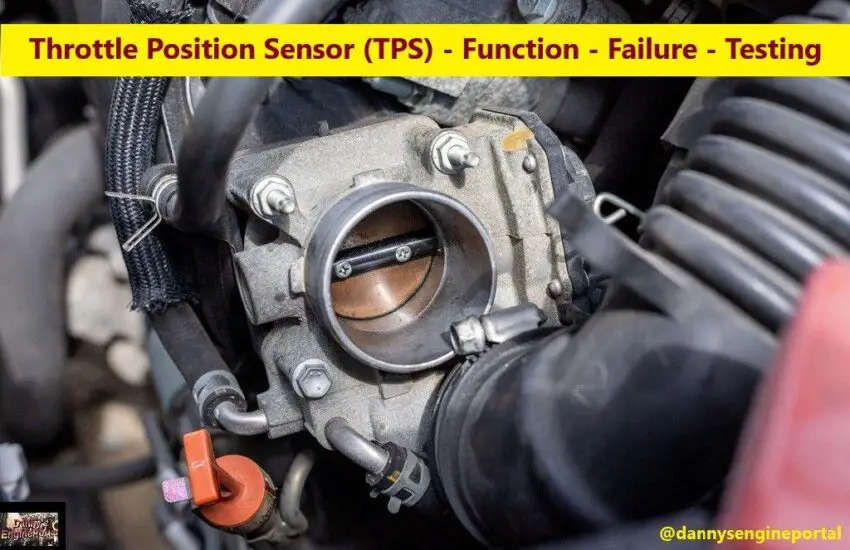
The Throttle Position Sensor (TPS) has the primary function of providing vital information to your vehicle’s engine control unit (ECU). This data, based on the actual position of the throttle valve, is essential for the proper operation of the engine.
What is the function of the TPS sensor?
The TPS sensor continuously monitors the opening angle of the throttle valve. It transmits this information as an electrical signal to the engine control unit. The ECU then uses this data to precisely regulate the air-fuel mixture and ignition timing, thereby ensuring optimal performance, efficient fuel consumption, and controlled emissions.
Common Symptoms and Causes of Failure
A faulty TPS sensor is indicated by several symptoms:
- Irregular Idle: The engine may stall or have an unstable idle.
- Hesitation and Power Loss: Hesitation during acceleration is common.
- Increased Fuel Consumption: The ECU, receiving incorrect information, can no longer optimize the mixture.
- Limp Mode Activation: The vehicle loses power to protect itself.
Failures are often due to normal wear, corroded connectors, or a faulty electrical circuit.
How to Test a Throttle Position Sensor?
Testing requires a digital multimeter. After locating the sensor on the throttle body, check the reference voltage (usually 5V) and the ground. Connect the multimeter to the signal wire and observe the voltage variation: it should be smooth and linear, without interruption, during the manual opening of the throttle. Any sudden voltage drop or absence of signal indicates a faulty sensor that needs replacement.