

Pickup trucks are unavoidable in America, and not just on our roads. Country music, the most distinctly American genre, is as worn by muddy tires as your local Walmart parking lot. The music has become so saturated with mentions of four-by-fours and tailgates that you can’t listen to a country station or playlist without hearing them.
This infatuation is evident. Just look at the discography of modern hitmaker Hardy, which includes number-one hits like “Truck,” “Truck Bed,” and “4×4.” There were many before them, like Lee Brice with “I Drive Your Truck,” Tim McGraw and his provocative “Truck Yeah,” and one of my favorites, Rhett Akins’ “That Ain’t My Truck.”
I had to understand the history of country music and pickup trucks, two cultural and commercial giants that have forged a relationship as profitable as it is personal for the people who love them. To do this, I contacted three experts who know the songs like the back of their calloused hands.
Pickup Trucks: A Valid Form of Identity
We begin with the not-so-simple concept of music and identity. Country music is, in many ways, America’s genre. But what that means precisely is harder to pin down. Which America does country music belong to?
As Dr. Jocelyn Neal explains, mentions of pickups in country pop seriously increased during a movement about thirty years ago with the widespread “Southernization” of American culture. “This shift in country songwriting in the early ’90s is the moment when driving a pickup becomes a very shorthand way for a songwriter to evoke the entire meaning of who the song’s protagonist is – a celebration of Southern masculinity and independence,” says Neal.

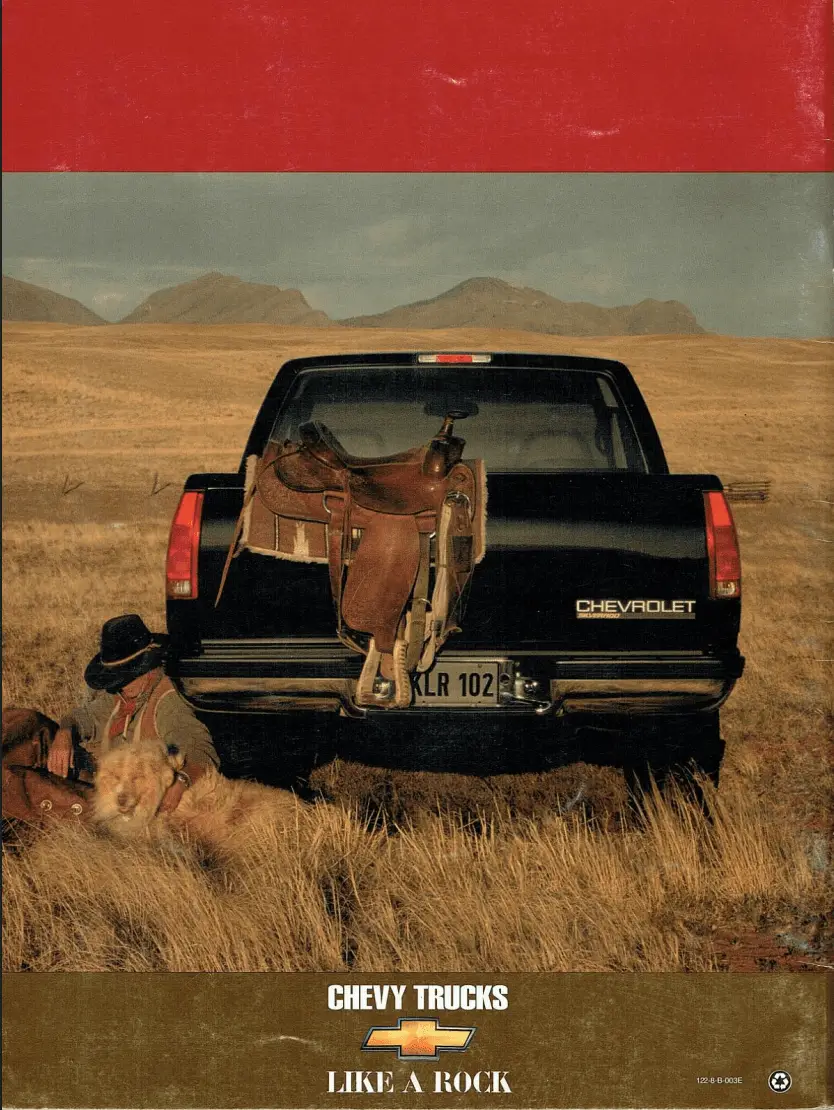
“Within this broader sense of the genre, the pickup represents a particular identity,” she continues. This identity is a deep respect for working-class life linked to a rural past, a kind of agrarian past.
A People on the Move
Rather than belonging to one American ethnicity, one could argue that country music is the soundtrack for all Americans who have ever been on the move. It’s easy to see how pickup trucks fit into this.
Professor Aaron Fox points to a crucial demographic shift: “I always start by showing a chart from the U.S. census from 1920 to 1930. In the 1920 census, the U.S. was over 50% rural… By around 1930, that had reversed. It’s exactly in that 10-year period – somewhere in the middle – that hillbilly music coalesces into a genre.”
Before pickups, these sentiments were tied to other images of displacement: trains and semi-trucks. Locomotives represented the mobilization of a people who had struggled against scarcity. Semi-trucks represented self-made success.
Neal explains that for decades, this is what musicians were talking about when they mentioned the word “truck.” It’s only natural that this imagery evolved as personal transportation became more accessible to people in rural areas.
The Hillbilly Highway and Other Proven Tropes
Country music is absolutely loaded with tropes. If you ask Bill Malone, who has devoted the vast majority of his 91 years on earth to studying this art, most of them boil down to two central themes: “home” and “rambling.”
“Home is a metaphor or an important image for people who have lost their home or who have left it – who have moved away from mom and dad,” explains Malone. “And the other image, the flip side of the coin, is rambling – the desire to get away from that existence, to hit the road and experience new things.”
He speaks of the “rambling impulse” fueled by great migrations, like the massive movement to California caused by the Dust Bowl. This shared experience provided endless material for songwriting.
The cowboy is another key trope that laid the groundwork for country’s contemporary obsession with pickups. “The cowboy was there from the beginning of country music… He is romantic. He is the embodiment of the individualist dream,” explains Malone. The trucker was quickly co-opted as a modern cowboy-style trope. He was self-made, self-reliant, and self-motivated.
To Put It Simply, It’s Not So Simple
As you can see, there are decades of context to consider when looking at country music. The music is a reflection of it.
As Neal explains, there’s an entire concept in ethnomusicology concerning insider and outsider interpretations. “The same phrase can carry very different meanings for people operating within a shared cultural understanding and space compared to outsiders.”
Country artists aren’t oblivious to this. They have long joked about the perceived simplicity of the songs they sing. The most famous example is perhaps David Alan Coe’s 1975 hit “You Never Even Called Me By My Name,” which humorously lists essential country tropes, including pickup trucks.
That is, in short, how country music became so enamored with pickup trucks. And no matter what you think of contemporary country hits, there’s simply more to it than meets the eye.