
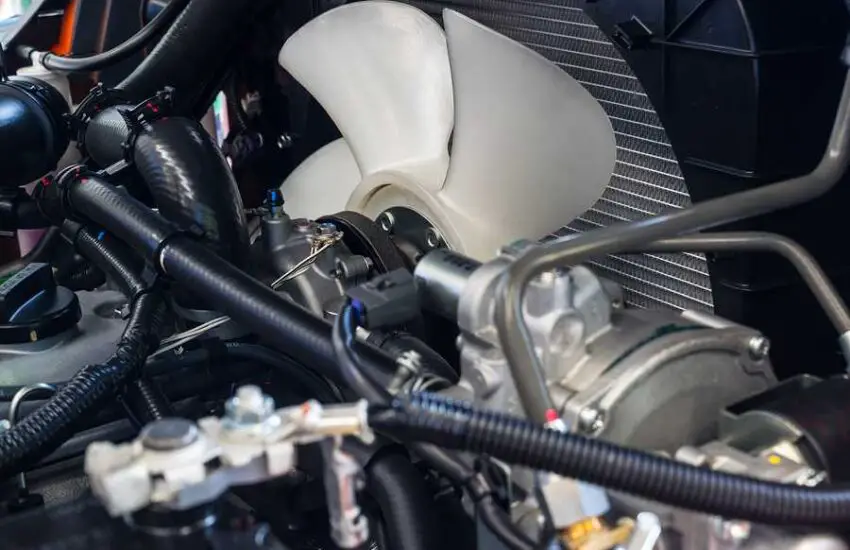
The issue of radiator fan malfunction will cause enormous damage to the engine and therefore must be given immediate attention when it occurs.
As part of the engine cooling system alongside coolant, a radiator fan blows fresh air through the radiator as a means of heat transfer to prevent the engine from overheating.
Discover how a radiator and a radiator fan work, how to diagnose the radiator fan malfunction problem, and the common causes.
What is a Radiator Fan For?
Everything related to the proper functioning of your engine is a priority, after the engine itself. Another component that can lead to engine malfunction and failure is the radiator.
Quite different from the radiator in your home, a radiator in a car is an essential element of its engine cooling system.
The engine runs your car by generating combustion inside the combustion chamber, and with it also a large amount of friction. This results in a lot of heat inside the engine.
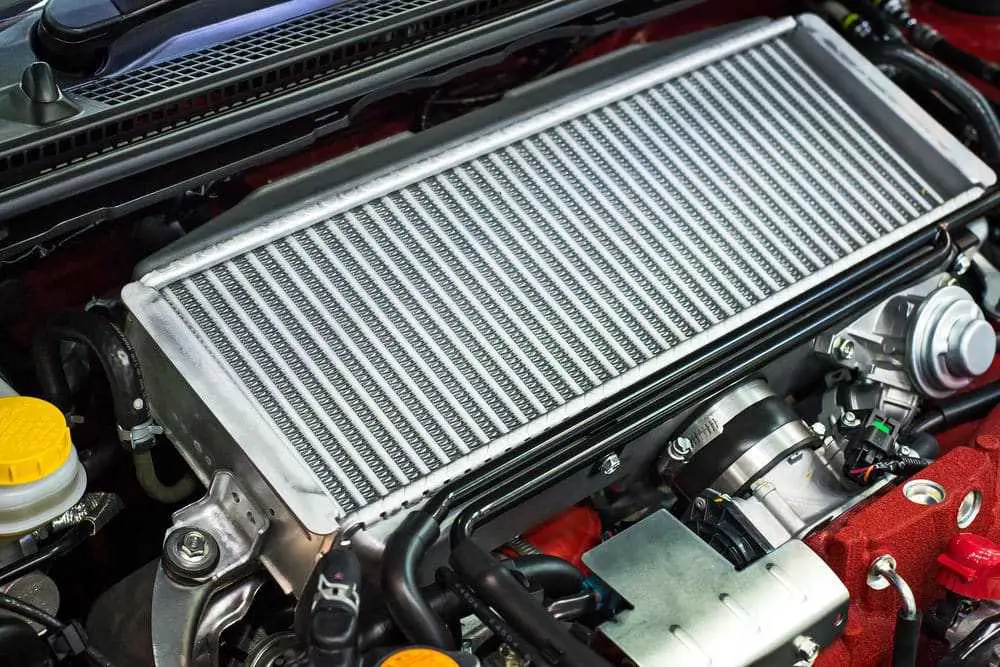
If this heat is not diverted elsewhere to cool the engine while it is running, the engine will become too hot and, like all other parts of your car, this will eventually cause enormous damage.
The radiator is one of the multi-part cooling systems of the engine, along with the lubricating oil that reduces friction and the exhaust system through which heat exits the combustion chamber.
When the thermostat located in front of the engine detects that the engine is reaching a dangerous temperature, the radiator then springs into action by releasing a mixture of water and coolant to quickly cool the engine.
There is a sensor on the lower passenger side of the radiator. It does the job of taking notes on the coolant temperature.
It sends signals to the radiator fan to turn on when the temperature exceeds 172°F. The fan should also turn on after turning on the air conditioner.
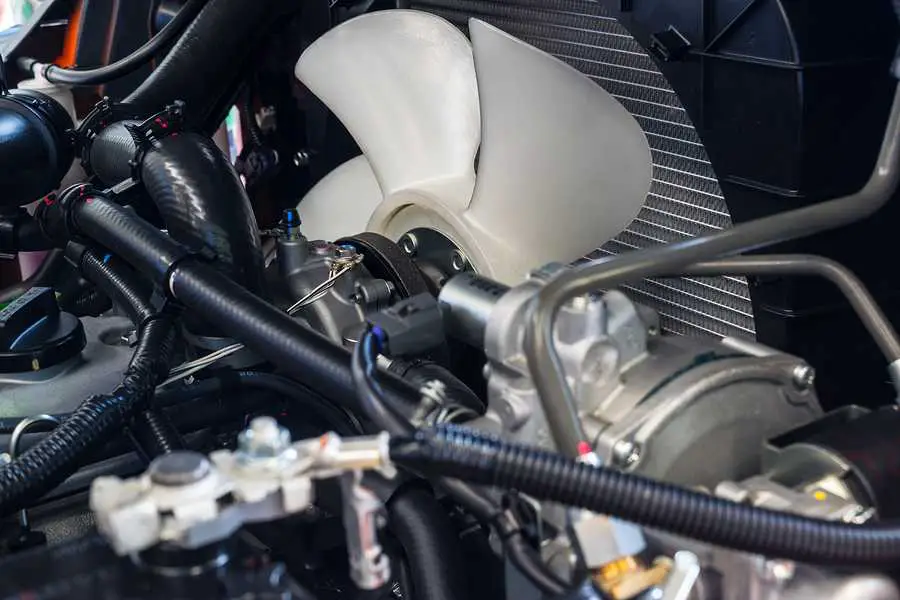
Placed between the radiator and the engine, cooling fans blow cooling air through the car’s radiator to cool the heated water and coolant mixture circulating through the radiator.
Radiator Fan Not Working: Symptoms
If you need to confirm whether it is working or not, you need to start your engine and let your vehicle idle. The safest way to check is to actually listen for the sound of the fan.
Turn the air conditioning to the maximum setting, this should trigger the cooling fan which will turn on immediately. In older cars, it usually takes about 15 to 20 minutes for the engine to reach the right temperature.
All you have to do is lift the engine hood and listen carefully for the fan noise. The best modern cars have very quiet engines so it may not be easy to hear the noise when you are inside the car.
If the fan kicks in immediately when the air conditioning is running at maximum volume, but it doesn’t work properly when the engine heats up later, the radiator fan may not be working properly.
Can I Drive My Car If the Fan Is Not Working?
Yes, your car can still run without a radiator fan, but you should never drive it. Your vehicle’s cooling system is crucial for engine performance and lifespan.
Whenever your engine overheats, you cause enormous damage to the precious engine.
As soon as you feel that your radiator fan is no longer working or that your car is not cooling, you need to take a few troubleshooting steps to determine what the problem is.
If you can’t figure it out, take your car to a mechanic immediately so they can determine the problem.
Radiator Fan Not Working: Common Causes
What prevents cooling fans from working? Here are 5 common problems that can affect your car’s radiator fan, making it obsolete or ineffective:
1. A Bad Fuse
This is a very common problem that leads to radiator fan failure: the fuse can blow or simply fall out.
You will need to consult the owner’s manual to know exactly where you can find the fuse, but once you do, it’s an easy task.
You will need to replace the radiator fan fuse if it is not working or missing.
Remember that if anything electrical in your car isn’t working, your first point of check is the fuse. Here’s how to test radiator fan fuses with a multimeter.
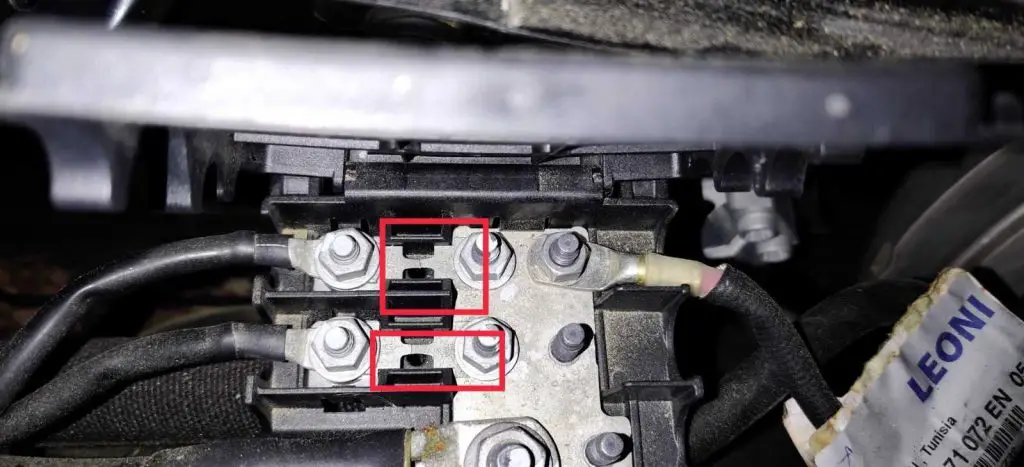
You need to check the voltage of a few fuses in the fuse box under the dashboard (numbers 3, 15, and 20) and in the fuse box under the hood (numbers 47 and 50).
Turn off the engine or turn the ignition key to IG2. Set the multimeter dial to “20” in the DCV section because you will be testing 12V circuits.
The multimeter’s black probe will go to the negative terminal of the battery (for fuses under the hood) or to a metal ground point on the car (for fuses under the dashboard).
Each fuse has two contacts where you need to touch the multimeter test probes to get the readings.
Touch the red probe to one of the two contacts and take the reading. The value should be around 12 volts.
No need to worry about recording the precise voltage value as it varies due to several factors including alternator output and battery charge. Touch the robe to another contact and take the reading.
What do the readings mean?
- 12V on both contacts. This means the fuse is working correctly and you can simply check the next one.
- 12V on one contact and 0V on the other. This is the sign of a blown fuse. You need to replace it.
- 0V on both contacts. This means the fuse has no power, which is only possible if the black probe is not properly connected to the battery’s negative terminal or grounded to a metal part. Detach the probe, then reconnect it to take measurements.
2. Dead Wires
If you see the engine heating up but not the radiator fan, the fan wires could be the cause. Simply disconnect the two wires, negative and positive.
The standard direct current they must supply is 12V (approximately). Take a voltmeter and check for current. If there is none in one or both, you will need to replace it.

You will be able to locate the fan relay under the hood. Check the current between the relay and the fan. This is where the current must pass.
If there is voltage there, a fault in the fan is the reason why the radiator fan is not working. Then it is the fan that you will need to replace.
3. Broken Fan Clutch
The fan clutch is responsible for attaching the radiator fan to the engine and making it work. If this clutch fails, the fan will not work.
It is the usual wear and tear over the years that can cause corrosion, or even burning out, of the clutch springs. If you don’t find any other radiator fan problems, the clutch is probably the cause.
4. Insufficient Coolant Level
An insufficient coolant level in the engine can also lead to fan failure. Just look at the coolant reservoir and check if the level reaches the required maximum mark. If not, simply fill it up to the line and you’ll be good to go.
This is actually one of the most practical maintenance tips that helps you keep the engine as well as the cooling/heating system in good condition.
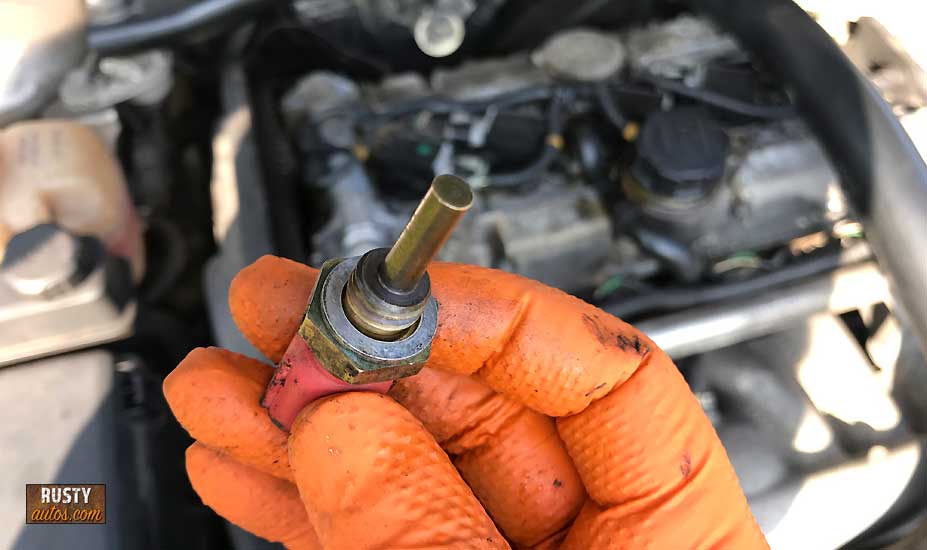
5. Defective Temperature Sensor
The temperature sensor is the mechanism that decides when the radiator fan should spring into action. To do this, it reads the temperature of the cooling system.
If this sensor is faulty, the fan will not be able to start its operation. You will likely find this sensor in the thermostat housing.
You can try disconnecting the wires and reconnecting them to the sensor, chances are it will work. Otherwise, you will need to have it replaced.
6. Faulty Radiator Fan Motor
If the radiator fan not working problem persists, you can check the fan by connecting it to another power source, i.e., direct battery power.
First, unplug the wiring connector. Check for any damage and clean the connector. Make sure the wires are securely fastened and are not damaged.
Next, look at the wires and identify which are power wires and which are ground wires to avoid confusion.
Then, connect the battery negative to the ground side of the fan connector, then connect the battery positive to the other wire.
You may need to consult your vehicle’s repair manual to see if your vehicle has a 4-terminal connector or three terminals, two for power and one for ground wires. After being connected to the battery, your radiator fan should start working.
However, if your radiator fan does not start working with direct power or runs at a very low speed, you then need to ensure that the terminal is not damaged and test the incoming voltage.
If there is indeed incoming power, the problem is a failing fan motor and you will also need to replace the fan motor.
Radiator Fan Replacement Cost
A radiator fan costs between $200 and $400. Additionally, your mechanic will charge you between $120 and $200 for labor depending on the make and model of your car.
Since the radiator is located right at the front, your mechanic does not need to open other components to remove the radiator fan.
If you also need to replace the fan motor, labor costs are estimated between $170 and $220, while parts cost between $530 and $680.

How Long Does It Take to Replace a Radiator Fan?
Replacing a radiator is a laborious process and the duration varies depending on the skills of the service attendant.
It is unlikely that a professional mechanic will take more than 2 to 3 hours. It may take an additional 30 minutes to an hour because the process involves additional services like coolant disposal, broken belts, and a few other things, if necessary.
Experts may need two to three hours for installation.
You may need more time depending on the condition of some other parts. If the car is old, it is possible that the electrical connectors and terminals are damaged and the fasteners are broken.
You will need to repair and replace these parts for the radiator to resume operation. Some mechanics may also want to change the antifreeze and replace the radiator hoses.