
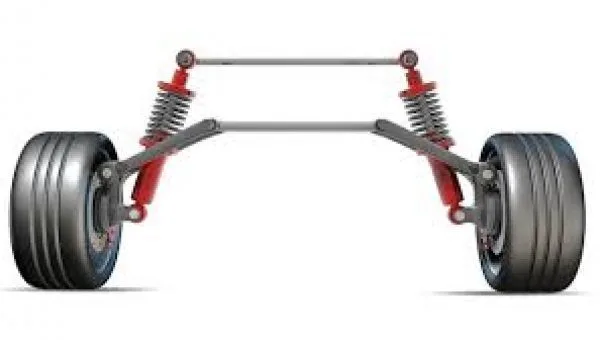
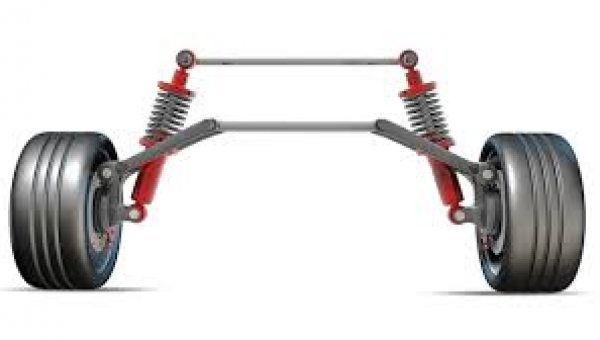
Shock absorbers and suspension struts are often referred to interchangeably because they perform the same function, however, they differ in the design of the suspension system.
When you drive over a speed bump, a pothole, or other rough roads, you will be grateful when the shock absorbers and struts of your vehicle are working well. Although these two vehicle components are often discussed together, they are individual parts that provide an essential service to keep your vehicle strong and safe. If you have ever wondered about the difference between shock absorbers and struts, this article should enlighten you. Let’s take a moment to break down what a shock is and what a strut is, the tasks they perform, and what happens when they wear out.
Are Shock Absorbers and Suspension Struts the Same Part?
Every vehicle on the road today has a vehicle suspension system made up of several individual parts – including shock absorbers (or struts) and springs. The springs are designed to support the vehicle and cushion the ride when the vehicle hits objects on the road. The shock absorbers (also called struts) limit the vertical travel or movement of the springs as well as absorbing or damping the impact of road obstructions.
People often use the terms shocks and struts to describe the same part because they actually perform the same function. However, there is a difference in the design of shock absorbers and struts – and each has unique advantages and disadvantages:
- The main difference between a strut and a shock absorber lies in the design of the individual suspension system.
- All vehicles will use either a shock absorber or a strut at each of the four corners. Many use struts at the front with a shock absorber at the rear.
- Struts are used on vehicles without an upper control arm and connect to the steering knuckle, while vehicles with upper and lower control arms (independent suspension) or a solid axle (at the rear) use shock absorbers.
What is a Shock Absorber?
A shock absorber is designed to be slightly stiffer than a strut. This is mainly because they work with auxiliary suspension components to absorb road shocks. There are 3 main types of shock absorbers:
- Monotube Shock Absorber: The most commonly used type of shock absorber is a monotube (or gas) shock absorber. This component is made from a steel tube with a rod and piston installed inside. When the vehicle goes over a bump, the piston pushes upward and is slowly compressed by the gas for a smoother transition.
- Twin-Tube Shock Absorber: A twin or two-tube shock absorber includes two vertical tubes filled with hydraulic fluid rather than gas. When compressed, the fluid is transferred to the secondary tube.
- Coilover Shock Absorbers: Vehicles with shock absorbers installed at the front are often called coilover shock absorbers – they have a shock absorber that is “covered” by a coil spring.
What is a Strut?
The most common type of strut is called a MacPherson strut. It is a very robust and durable component that combines the strut and spring into a single unit. Some vehicles use a single strut with a separate coil spring. Suspension struts are usually mounted on a steering knuckle, with the top of the “spring” installed to support the body. Struts are much smaller than shock absorbers, which is one of the main reasons they are often used in vehicles with strut suspension.
Should I Use a Shock Absorber or a Strut in My Car?
Like any other moving part, a shock absorber and a strut are designed to wear out over time. Depending on the type of vehicle you own, they can last from 30,000 to 75,000 miles. They should be replaced according to the vehicle manufacturer’s recommendations, and it is always wise to use OEM (Original Equipment Manufacturer) replacement parts when they need to be replaced. If your vehicle left the factory with shock absorbers, you should replace them with the same type of component. The same applies to struts.
Shock absorbers and suspension struts should always be replaced in pairs (at least on the same axle), and the vehicle should have a professional suspension alignment completed to ensure that the tires, steering, and the entire suspension system are aligned straight.