
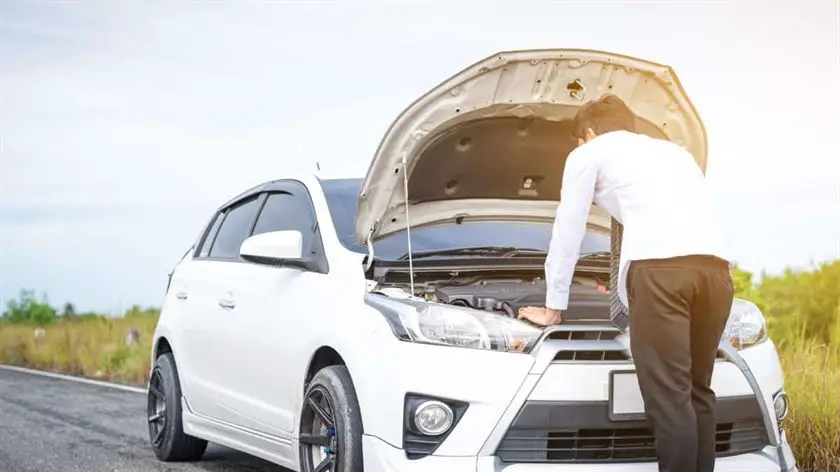
A car that stops suddenly while driving can be very frustrating. Here are the most common causes and how to fix them!
Are you experiencing this annoying problem when your car shuts off out of nowhere? Don’t worry, we’re here to help!
In modern vehicles, there are many sensors and functions to ensure your car runs properly. Having a basic knowledge of your vehicle can help you counter a mechanical issue, such as your car shutting off while driving. So, what can cause a car to stop while driving?
The most common reasons a car stops while driving are a faulty crankshaft position sensor or fuel supply issues. This can also happen due to a faulty alternator, ignition switch, or an empty fuel tank. Because of the many possible causes, it’s important to diagnose it properly.
Even though this list gives you an idea of the most common signs, it’s far from exhaustive. Here is a more detailed list of the six most common reasons your car shuts off while driving:
6 Reasons a Car Stops While Driving
1. Faulty Crankshaft Position Sensor

The most common reason a car dies while driving is a faulty crankshaft position sensor. The crankshaft sensor is necessary for your car’s engine to operate in most car models.
You also have a camshaft position sensor on some car models, which the car uses if the camshaft sensor is faulty. However, a faulty crankshaft position sensor may not cause the vehicle to stop completely.
However, if your car has a crankshaft position sensor but not a camshaft sensor and you get a trouble code, you need to replace it.
2. Faulty Fuel Pump or Fuel Supply System

A fuel pump supplies the engine with the correct amount of fuel to the fuel injectors. If the fuel pump doesn’t supply the right fuel to the engine, the engine will stop, and you’ll be stranded.
The bad news is that there’s no workaround for a faulty fuel pump; you must repair it or buy a new one. Another reason could be that your fuel filter is clogged, so the fuel pump can’t pump fuel through it.
A fuel filter is a small component whose only role is to clean the fuel entering the engine. If the fuel filter is clogged, the fuel entering the system will be insufficient, and the engine will stop. Fortunately, it’s easy for you to replace a fuel filter.
Most fuel pumps are installed inside the fuel tank. A little mechanic’s secret is to kick or hit the fuel tank when the car stops. If the car starts then, there’s likely a problem with your fuel pump.
Be careful not to hit it with a sharp object, though, as fuel tanks are plastic, and you could make a hole – and that’s the last thing you want to do!
If your car shuts off while driving and then immediately restarts, it can often be due to a faulty fuel pump.
3. Empty Fuel Tank
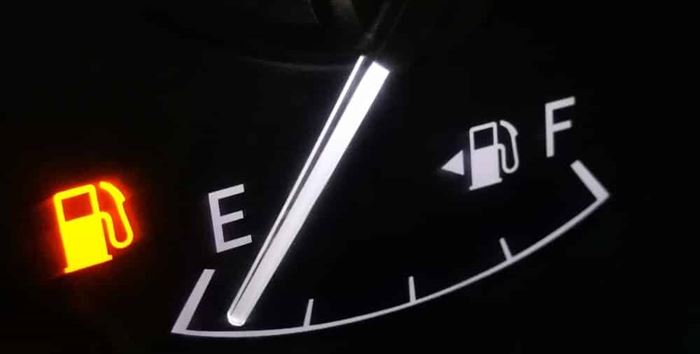
Most car owners probably know that you need to check your fuel level from time to time while driving.
If you have enough fuel for your trip, that’s perfect, but if your fuel gauge or fuel level sender is faulty and doesn’t show the actual fuel level in your car, you could have a big problem.
A simple way to see if there’s a problem with your fuel gauge or fuel level sensor is to add 1 gallon (4 liters) of fuel to see if it starts.
4. Alternator Problems

An alternator manages your vehicle’s electrical power. If your car stops suddenly, the alternator might be faulty. A faulty alternator will cut off power to vital car components, and you’ll notice the lights going out on the dashboard or the engine suddenly losing power.
If your alternator fails, one of the main symptoms you’ll experience is the occasional illumination of the red battery light on your dashboard.
If your car still has electrical power and the starter works after it stops while driving, there’s another issue. In this case, the alternator is not to blame.
5. Faulty Ignition Switch
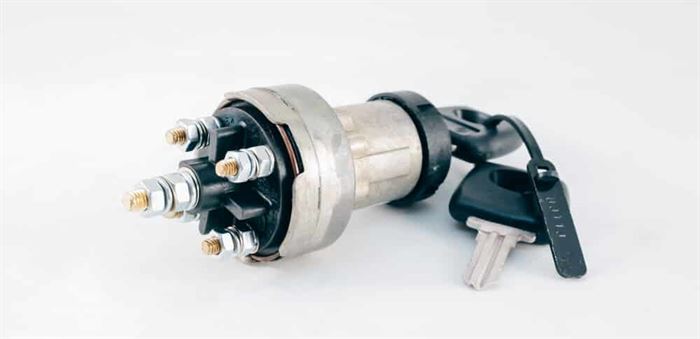
Sometimes, a faulty ignition switch can cause your car to stop while driving. The ignition switch is located behind the ignition lock and is turned when you turn the key to start the car.
Inside this switch, tiny metal plates can accumulate corrosion and rust. If this happens and one of these plates loses connection, the entire contact will be cut off.
This will also cause the entire engine to stop immediately. Fortunately, it’s easy to check. When the car stops, check if there are still ignition lights/indicators on your dashboard. If the dashboard instrument is dead, there’s a good chance it’s a faulty ignition switch.
6. Faulty Sensors
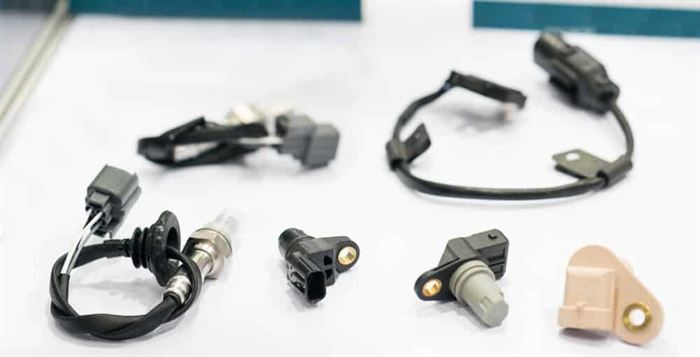
Modern cars have many sensors to optimize the air-fuel mixture for optimal fuel consumption. If a sensor fails and is off, your car’s engine could stop completely. If you notice your car shuts off while driving but restarts afterward, or if it shuts off at idle or when slowing down, it could be due to a faulty engine sensor, which could cause a bad air-fuel mixture or idle RPM.
Fortunately, most of these sensors cannot completely stop the engine. Sensors such as the MAF sensor, coolant temperature sensor, and oxygen sensor could disrupt the air-fuel mixture so much that the engine dies.
How to Fix a Car That Shuts Off While Driving
If your car shuts off while driving, the first thing to do to fix it is to check the engine control module for error codes and all sensor data. You also want to make sure there’s fuel in the tank and that the alternator is charging.
Here is more detailed information on how to solve the problem of your car stopping while driving:
1. Check Trouble Codes
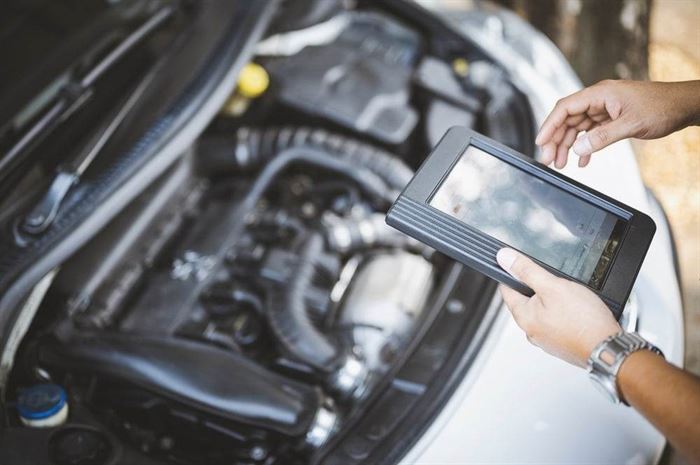
With older car models, you had to diagnose the car with a multimeter or just common sense to find a problem. Fortunately, modern cars have built-in diagnostic software that detects when there’s a problem with one of the engine sensors and then stores an error code, triggering a check engine light.
This makes diagnosis much easier, and you don’t have to waste time measuring every sensor in your car’s engine. You also don’t need to guess and replace the wrong parts.
So, the best way to find out why your car shuts off while driving is to check these trouble codes in the engine control module and see if there’s a recorded issue. However, to read the error codes, you need an OBD2 scanner. You can either buy one yourself or go to a repair shop, and they’ll read the codes for you.
Continue troubleshooting with the information you received from the diagnostic scanner. For example, if you find a misfire trouble code, it could be due to faulty spark plugs, the ignition coil, or the ignition system.
2. Check Alternator Voltage
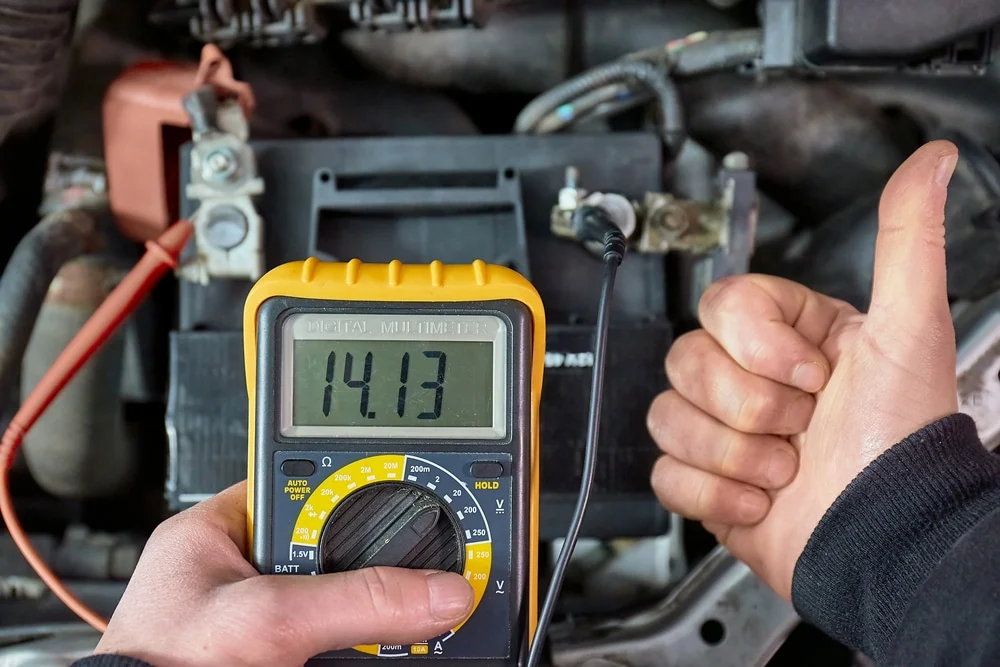
If you don’t have an OBD2 scanner or find no trouble codes stored, the next thing you want to do is check the alternator voltage with the engine running.
Basically, you need to apply the emergency brakes, start the engine, and measure the car battery voltage with a multimeter. If you get a reading below 12.5 volts, there might be a problem with your alternator or charging system.
3. Fill the Fuel Tank

Even though it might seem obvious that you need to refuel, you might actually be running out of fuel even if you don’t know it. A low fuel level can cause the engine to stall in turns at higher speeds because the fuel pump sucks in air instead of fuel.
There’s also a risk that your fuel tank’s fuel gauge sensor is faulty and your fuel level is low even if your fuel gauge indicates it’s full. So, that’s definitely something you want to check by opening the fuel cap and adding a bit of fuel.
4. Check Fuel Pressure
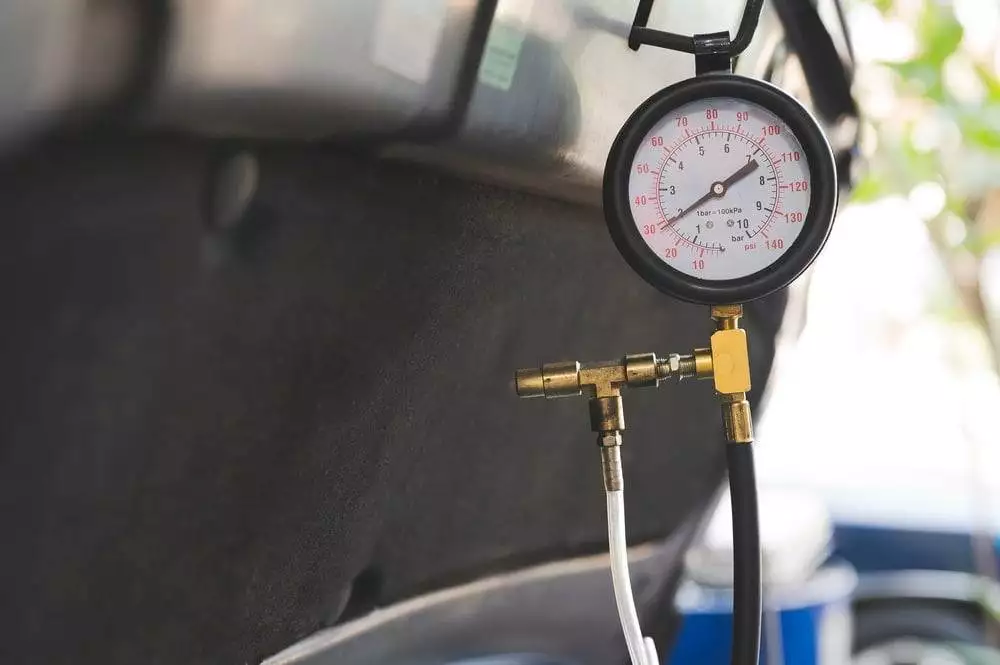
Low fuel pressure is another common issue when your car stops while driving, so you’ll want to check the fuel pressure in your car. The best way to check fuel pressure is to connect a manual pressure gauge to the fuel rail or line.
You can also use a diagnostic scanner to measure the pressure from the vehicle’s pressure sensor if there is one, but there’s always a risk that this sensor is faulty. Check your car’s fuel pressure specifications, and if you notice the fuel pressure is low, you need to inspect the fuel filter, fuel pump, and fuel pressure regulator.
5. Inspect the Tachometer

The RPM gauge or what’s called the tachometer on your dashboard receives information from the crankshaft position sensor in most car models.
If you notice your tachometer isn’t working when your car stops while driving, or if it doesn’t move when you start the engine, it could mean there’s a problem with the crankshaft position sensor