
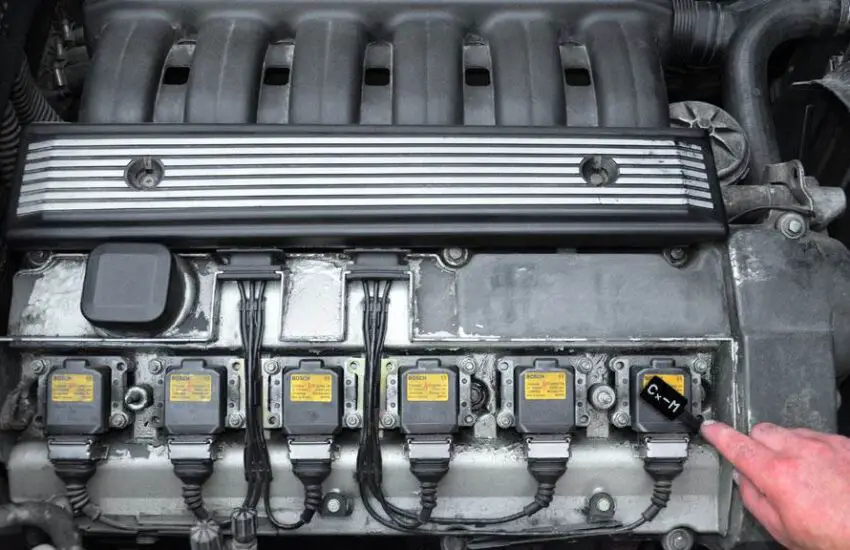
Although the automotive industry has made significant mechanical and technological advancements throughout history, there is one component that all fuel-powered engine cars have in common: the ignition system.
If you are serious about your valuable vehicle, understanding how the different types of ignition systems work, along with their advantages and disadvantages, is useful for choosing the right spark plug that operates most efficiently given the performance requirements of the ignition system.
Although almost all major components of a car have undergone improvements over the years, the basic principles of the ignition system have not changed for nearly a century.
Essentially, it takes the electrical voltage from the battery, converts it into a much higher voltage, and then transfers this electrical current to the engine’s combustion chamber, igniting the compressed mixture of fuel and air to create combustion. This combustion generates the energy needed to run your car.
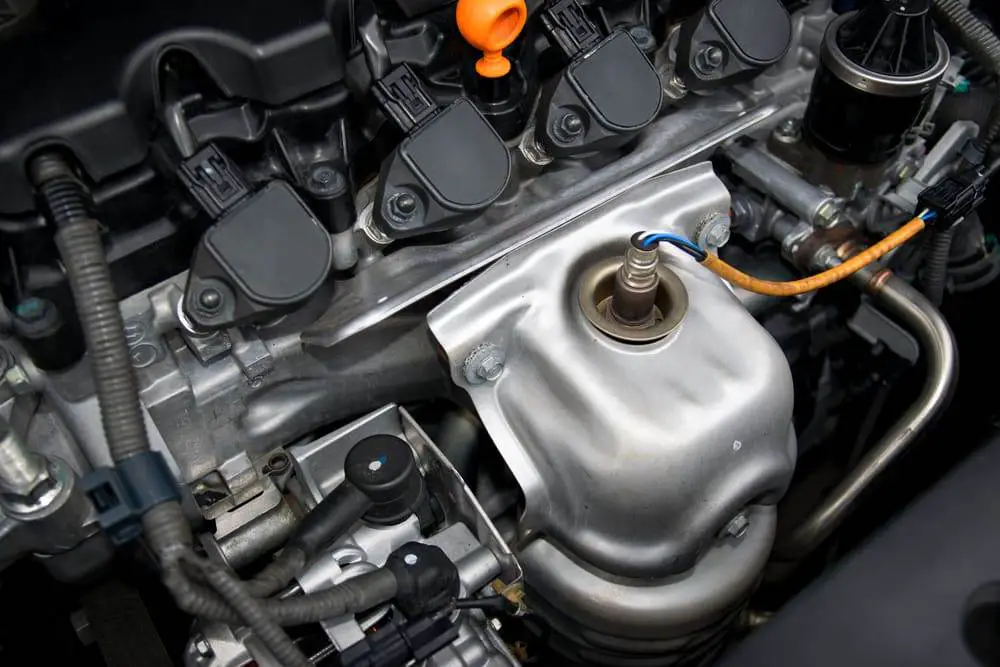
That said, the method by which the spark is created and distributed has greatly improved due to technological advancements. Currently, there are four types of ignition systems used in most cars and trucks, in order of invention: conventional breaker point (mechanical) ignitions, high-energy (electronic) ignitions, distributorless (waste spark) ignition, and coil-on-plug ignitions.
Breaker point (mechanical) ignitions and high-energy (electronic) ignitions are distributor-based ignitions. Another way to classify them is to group them into three broader types of ignition systems: distributor-based, distributorless, and coil-on-plug systems.
In this comprehensive guide, we will look at how each system works, as well as the advantages and disadvantages of each, regarding what it means for your engine’s performance and maintenance requirements.
What does the ignition system do?
When you put your key into your vehicle’s ignition and turn it, your engine starts and continues to run. Have you ever wondered about the entire process that happens behind such a simple action?
Let’s go back to Engine 101: your engine produces the energy needed to run your car by creating combustion, or an explosion, inside its combustion chamber, hence the name “internal combustion engine.” To generate such combustion, the ignition system plays a major role: your spark plugs provide the electrical spark that ignites the air-fuel mixture that powers the combustion chamber.
For the ignition system to function correctly, it must be able to perform two tasks simultaneously in an efficient and precise manner.
Create a strong and hot enough spark
The first task is to create a powerful spark that can jump across the spark plug gap. In other words, the ignition system must increase the voltage from the battery’s 12 volts to at least 20,000 volts, which is necessary to ignite the compressed air and fuel mixture in the combustion chamber to create an energy-generating explosion.
To achieve such a voltage surge, ignition systems of all cars, except diesel engine models, use an ignition coil composed of two coils of wire wound around an iron core, called the primary winding and secondary winding. The ignition coil acts as an electrical power transformer.
The purpose of the ignition coil is to create an electromagnet by passing the 12 volts supplied by the battery through the primary winding. When the vehicle’s ignition system trigger switch cuts power to the ignition coil, the magnetic field collapses. In doing so, the secondary winding picks up the collapsing magnetic field from the primary winding and converts it into 15,000 to 25,000 volts.
It then supplies this voltage to the spark plug, thus creating combustion in the engine’s combustion chamber, thereby generating energy to start and run your vehicle’s engine. For the necessary spark to occur, the converted voltage delivered to the spark plug must be between 20,000 and 50,000 volts.
Ignite the spark at the right time
At the same time, the other important role of the ignition system is to ensure that the spark fires at just the right moment during the compression stroke to maximize the power generated by the ignited air-fuel mixture. In other words, sufficient voltage must be supplied to the correct cylinder at the precise moment, and this must be done frequently.
All components work precisely and harmoniously for your engine to achieve optimal performance. Even the slightest timing error in a single part will lead to engine performance issues and, if prolonged, could even cause permanent damage.
The ignition system must provide enough sparks to the correct cylinder. To ensure precise spark timing, engineers have used several methods, which have evolved over the years.
Early ignition systems used fully mechanical distributors to control spark timing, followed by hybrid distributors equipped with semiconductor switches and the Engine Control Module (ECM), essentially a type of simple-process computer, to distribute electrical power to each cylinder.
What came next to counter the drawbacks of these early distributors were 100% electronic ignition systems, the first being a distributorless ignition system, where the distributor was eliminated.
The latest invention, coil-on-plug ignition systems, was able to significantly improve spark timing by using an improved ignition coil that has much greater power and generates a much hotter spark.
What each component of the ignition system does
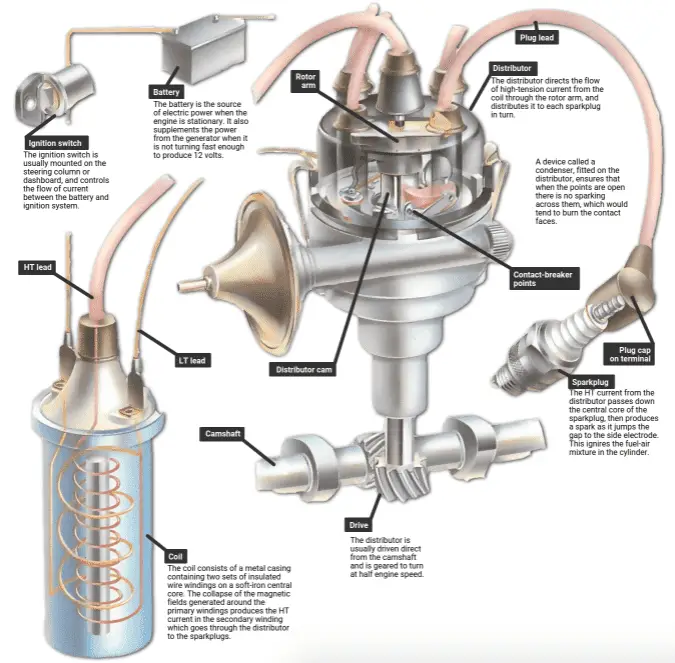
Battery
When the engine runs, it also operates the alternator which generates electricity to recharge the battery. Your car’s battery stores electricity and releases it as direct current.
The battery provides twelve volts of direct current. However, to get a spark necessary for combustion, there needs to be between 20,000 and 50,000 volts at the spark plug. To allow for such a considerable voltage increase, you need the ignition coil.
Ignition Coil
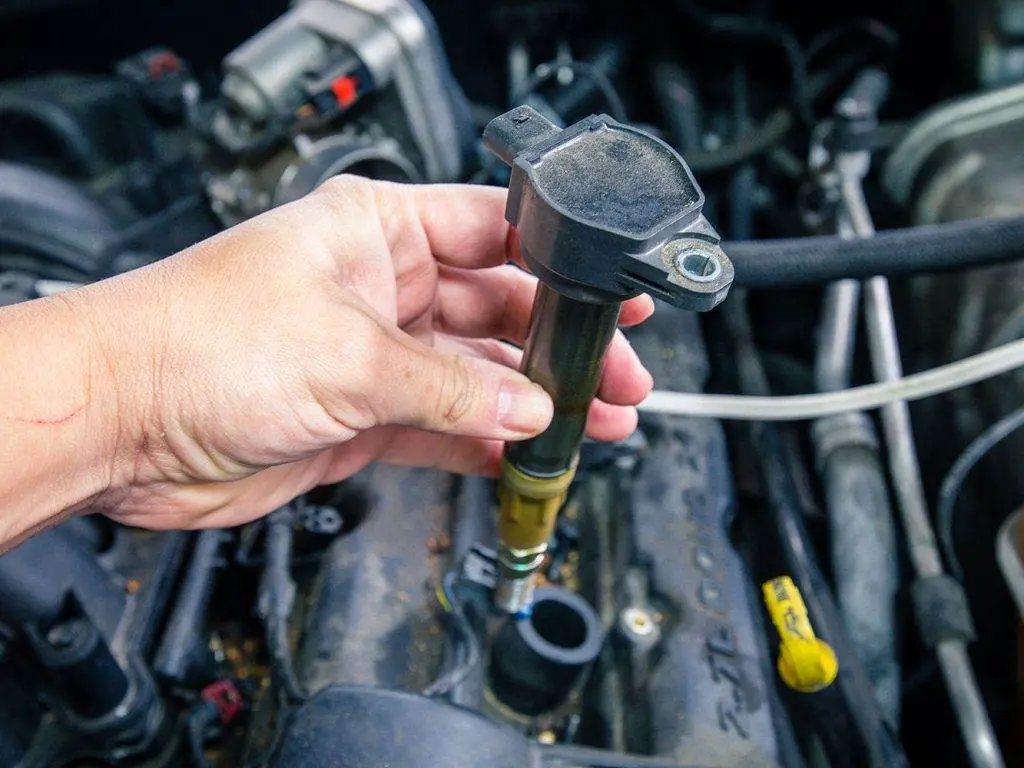
The ignition coil acts as an electrical power transformer. Early mechanical ignition systems rely on a coil to convert the battery’s low voltage into the high voltage needed for the spark plugs.
The ignition coil’s electrical transformation works on a principle called magnetic induction. In a traditional transformer, the primary coil receives power, i.e., direct current from the batteries. However, this charge through the primary coil is periodically interrupted. This disruption is caused by the distributor in early distributor-based ignition systems, and by a computer for more precise timing in later ignition systems. The distributor’s job will be discussed in more detail below.
The voltage in the primary coil produces a magnetic field. The periodic disruption of the current received by the primary coil causes the magnetic field produced by the primary coil to constantly collapse. Such significant movements of the primary coil’s magnetic field cause the secondary coil to create a burst of high-voltage energy at once.
The value of the voltage created by the secondary coil depends on the ratio between the number of turns of the primary coil and the number of turns of the secondary coil. If the secondary coil has twice as many turns as the primary coil, the output voltage will be double the input voltage.
Thus, to increase the voltage from 12 volts to the at least 20,000 volts that spark plugs need, in a car’s ignition coil, the secondary coil has tens of thousands of times more turns than the primary coil.
Distributor
Here is how the distributor creates the aforementioned periodic and discrete charges supplied to the primary ignition coil. The distributor contains a “breaker point” that grounds the primary coil circuit. This point is connected to ground by a lever. The lever is moved by a cam connected to the distributor shaft. This opens the primary coil circuit and causes the collapse that triggers the high-voltage bursts in the secondary coil.
Furthermore, while the battery and ignition coil provide the energy, the distributor performs important work: determining precisely where and when this energy goes to each spark plug.
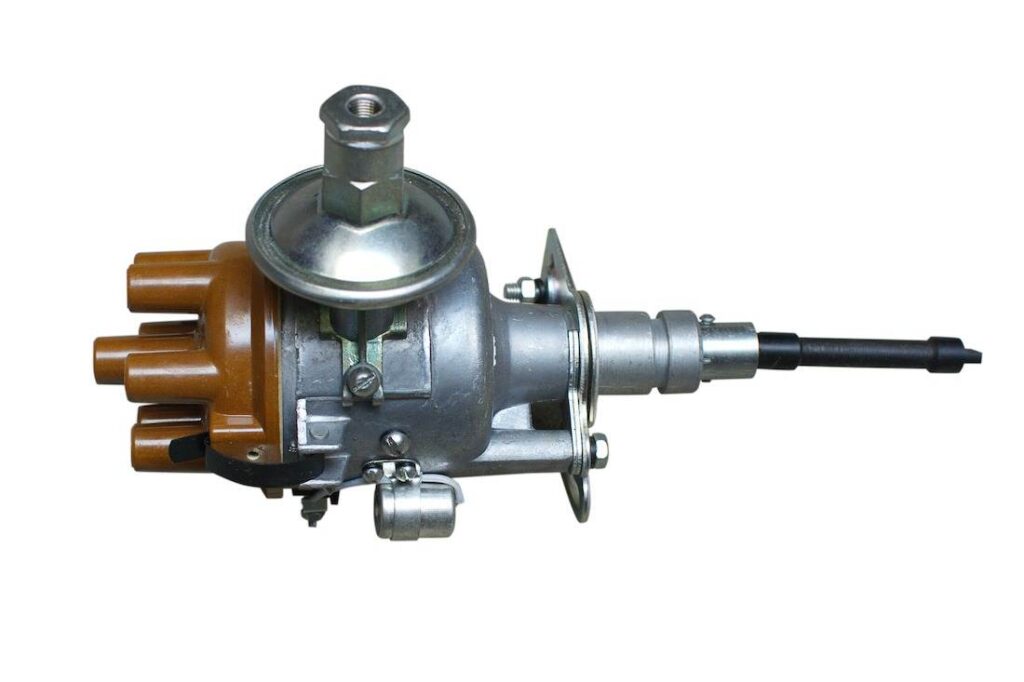
The distributor contains many parts, the most important of which include a rotor that rotates at engine speed and several “contacts” mounted on the distributor cap. The electrical current from the ignition coil is supplied to the rotor.
The rotor spins, and when the tip of the rotor approaches one of the contacts, an electrical arc forms to that contact. From there, the power flows along a spark plug wire to the associated spark plug, thus timing the charge of each spark plug.
Spark Plugs and Their Wires
Spark plug wires, also called ignition wires, are insulated wires that carry energy to the spark plugs so they can finally create the spark that causes combustion.
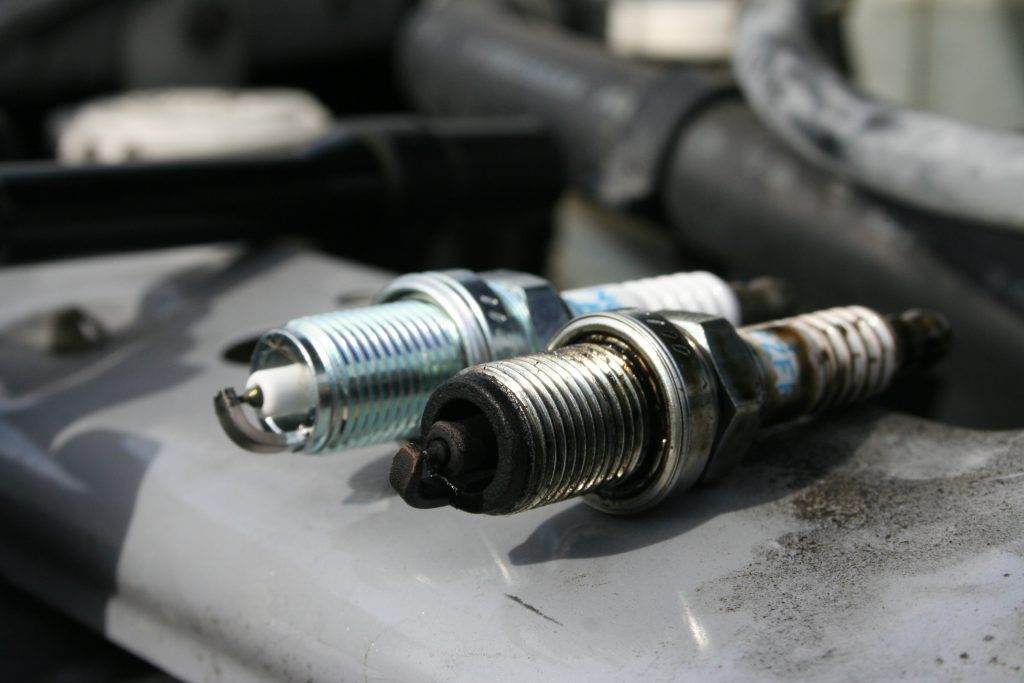
The spark plug consists of an insulated ceramic body with a central conductive metal core in the center. There is a gap between this central metal core and the tip of the electrode that connects to the spark plug’s metal base. Electricity forms an arc or jumps across this gap, causing the spark.
How important is the ignition system
The key takeaway is that if the ignition system does not work properly and precisely, your car may struggle to start or not run at all.
Worn spark plugs and faulty ignition system components will affect your engine’s performance, creating a wide range of engine problems including hard starts, misfires, lack of power, poor fuel economy, and even permanent damage if the issues are not resolved in time. Also note that these engine problems caused by faulty ignition systems can damage other critical components of your vehicle.
Therefore, regular maintenance of your ignition system is essential to ensure your engine’s optimal performance and thus a smooth and safe drive. So, how often is sufficient enough? At least once a year, you should perform a visual inspection of your ignition system components to check for signs of wear or failure, and then replace them immediately if necessary.
Regarding your spark plugs, be sure to inspect and replace them at the frequency recommended by your vehicle’s manufacturer. Again, given the importance of the ignition system, preventive maintenance is key to maximizing your engine’s performance and lifespan.
Watch more:
Understanding about 4 types of ignition system
1 Distributor-Based Breaker Point Ignition (Mechanical)
History
The oldest type of ignition system is the conventional breaker point ignition system, sometimes also called the mechanical ignition system. It has been used since the early days of the automotive industry, especially in the 1970s.
It is one of the two types of ignition systems using a distributor, called distributor-based systems. Unlike the other three types of ignition systems discussed later, the breaker point ignition system is fully mechanical, hence its second name.
Let’s learn how they work, and then based on that, we’ll see the advantages and disadvantages of this type of ignition system. We will go into more detail in this section since the mechanical breaker point system is the first invention and thus the basis for all subsequent models. You need to understand how this system works well, to see the advantages and disadvantages of the later improved systems.
A Brief Description of Distributor Ignition
The first two types of ignition systems, the breaker point system and the electronic system, are both distributor-based, unlike the other two distributorless systems. So let’s learn the basics of how a distributor-based system works.
A distributor is a closed rotating shaft with mechanically timed ignition. The distributor