

13 Causes of Poor Fuel Consumption (Increase Your MPG)
If your car suddenly starts consuming a terrible amount of fuel and leaves you wondering “why is my car using so much gas all of a sudden?”. You are not alone, and current gas prices make this a more serious problem than it used to be.
There are a number of common causes behind the drop in fuel efficiency. Fortunately, many of them can be easily fixed so you can recover the missing miles per gallon.
Causes of High Fuel Consumption
1) Excessive Idling
An often overlooked MPG killer (especially in summer and winter) is excessive idling. Although it may seem harmless to sit in your parked car for long periods waiting for someone or letting the engine warm up, you are literally getting 0 miles per gallon during this idling time.
These minutes of inactivity here and there really add up. It is said that idling consumes between 0.17 and 0.50 gallons of fuel per hour, depending on the vehicle.
Contrary to myths, idling for more than 10 seconds uses more fuel to keep the engine running than it would take to restart it. Unless you are stopped in traffic, it is best to turn off the engine if you are sitting for more than 10 seconds.
2) Carrying Excess Weight

A simple cause of high fuel consumption is when a vehicle carries too much weight, whether it has many items in the trunk, is full of people, is carrying a roof rack, or is towing a trailer.
The more weight the vehicle carries, the harder the engine has to work to generate enough power to move everything. In the case of a roof rack, you will also have to deal with additional wind resistance, which also affects your MPG.
Whenever more power is needed, whether cruising or accelerating, the engine must burn more fuel to achieve it. Consequently, you will need to fill up your fuel tank more often.
Keep in mind that excess weight leading to lower fuel consumption is often proportional to the amount of power a car produces. For example, an extra 100 pounds in a full-size truck won’t be a big deal, but that extra weight will have a significant impact on your Smart car’s MPG.
3) Dragging Brakes
If the brake pads, calipers, or any other component do not fully disengage from the rotor after releasing the brake pedal, you will experience constant friction and drag as the component lightly rubs against the spinning rotor. This constant friction forces your engine to work harder to maintain speeds and leads to a noticeable reduction in fuel consumption.
Often, you will notice a burning smell while driving or excessive brake dust covering your wheels. Causes can include stuck calipers, warped rotors, incorrect brake pads, or air in the brake lines.
4) Low Tire Pressure
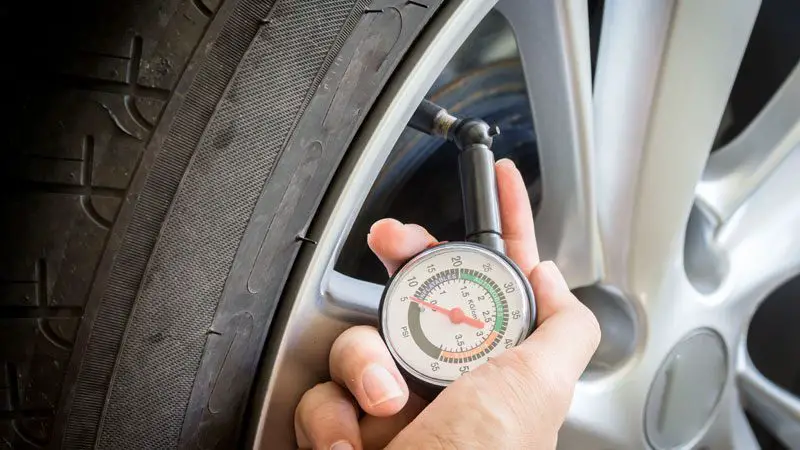
Your vehicle’s tires must be inflated to the proper air pressure, usually between 32 PSI and 36 PSI on the majority of vehicles. A good tire pressure gauge is something everyone should own.
If you drive a vehicle with low tire pressure on one or all tires, it creates more wear and resistance for those tires. This forces the engine to work harder to compensate for the extra resistance, meaning more fuel will need to be used to power the engine.
5) Worn Tires (Low Tread Depth)
This may be surprising, but tires with insufficient tread can lead to increased fuel consumption. Because they have less grip and traction on the road, the engine works harder during acceleration, as some of the wheel movement is wasted.
Furthermore, unevenly worn tires (inner or outer tire wear) add extra drag and reduce mileage. This is because uneven tire wear changes the contact patch with the road, creating an imbalance.
6) Dirty Air Filter
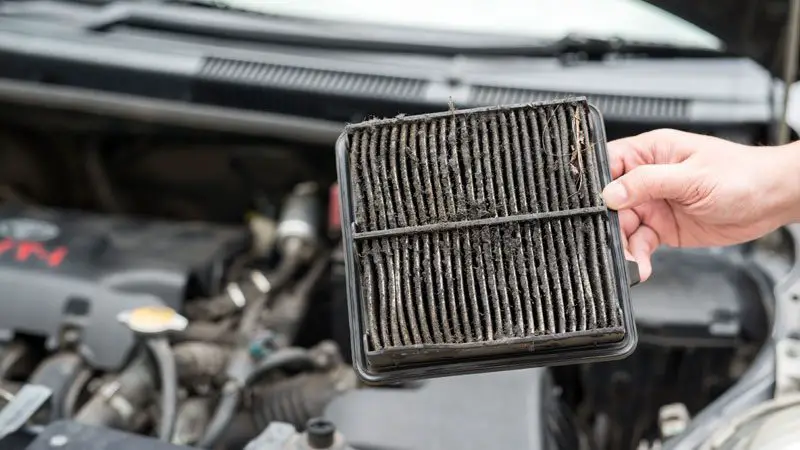
There are many reasons to have a clean air filter, but one of the main reasons is to have good fuel economy. If your air filter is clogged or dirty, less air enters the combustion chamber, causing the engine to work much harder to meet the driver’s power demands.
This can even cause a rich running condition where the air/fuel mixture is not optimal. So consider changing your air filter at the recommended frequency set by the vehicle manufacturer. Your vehicle’s manual will contain this information.
7) Driving Too Fast
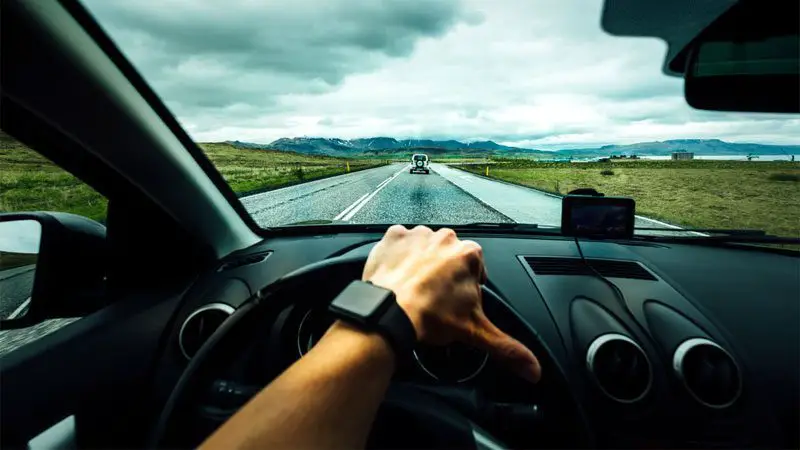
Believe it or not, the difference between a speed of 80 MPH and a speed of 70 MPH could mean fuel consumption that is 25% higher. The two main contributing factors are wind resistance and gear ratio. That’s why it’s always best to just stick to the speed limit or get as close to it as possible. Otherwise, you will consume more fuel than necessary.
8) Aggressive Driving
Even more important than driving above the speed limit, aggressive acceleration and braking have a drastic effect on your MPG.
This impatient, impulse-based driving style can reduce MPG by 33% compared to gradual, steady acceleration and braking practices. By stomping on the pedal for bursts of speed, you are dipping much deeper into the least efficient ranges of your engine’s RPM and fuel consumption.
Hard acceleration also often requires hard braking to slow down for turns or when closing in on traffic. This triggers a vicious cycle reminiscent of frustrating stop-and-go driving, a constant seesaw between flooring it and hard braking.
Smooth acceleration will save you a lot of fuel, especially when there is another red light a few blocks away.
9) Improper Gear Shifting

This is especially true with manual transmissions, but also applies to automatic transmissions with sport modes. Don’t shift too early or too late. If you try to shift to a higher gear at too low an RPM, the engine has to work harder to accelerate.
Alternatively, if you constantly let your engine rev in the upper RPM range of your power band since you are enjoying the extra power, keep in mind that you are also burning much more fuel.
10) Old Engine Oil
Not only do your spark plugs need to be in good condition, but you must also ensure you change the oil regularly and replace the oil filter as well. Over time, engine oil becomes thicker and has different flow properties.
For this reason, there is increased resistance within your engine’s components. This leads to requiring more fuel to move a vehicle.
11) Air Conditioning
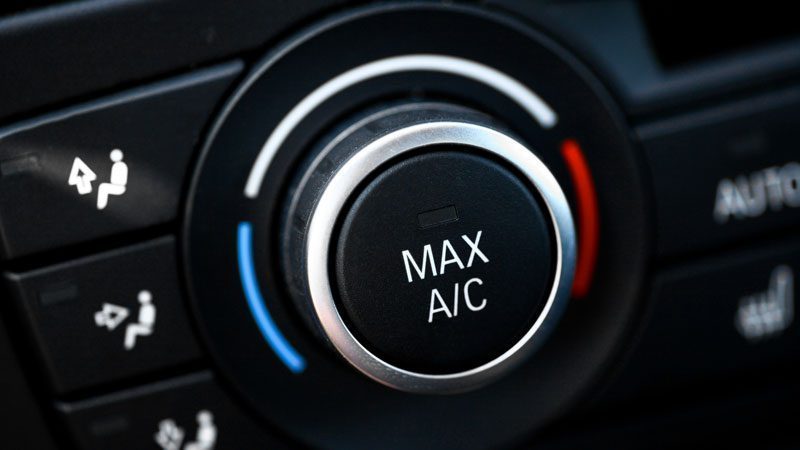
When you use the air conditioner, the engine is under more load. As a result, it must consume more fuel to meet this demand. Use the standard fan ventilation if possible, or simply roll down your windows when driving at slower speeds, like on typical city streets.
Keep in mind that driving with the windows down also consumes more fuel because the openings create a drag effect that slows the vehicle. This is especially true at higher speeds, like on the highway. In that case, using the AC is the better option.
12) Bad Oxygen Sensor
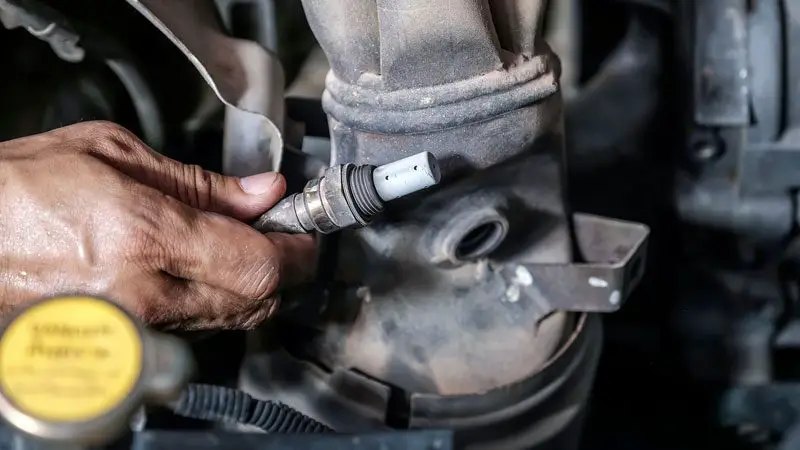
Your engine is equipped with oxygen sensors that track the air and fuel mixture in the internal combustion chamber. Based on what it detects, it tells the Powertrain Control Module to add the correct amount of fuel.
But if the oxygen sensor is faulty, the system may automatically add more fuel even if the engine doesn’t need it.
13) Bad Spark Plugs
When the spark plugs are worn, you will have more engine misfires with your vehicle, which will consume more fuel. You will want to use good quality spark plugs if possible (OEM plugs are often the best), so you can get the most out of them. Iridium spark plugs and platinum spark plugs are the two most popular types.
How Weather and Environmental Factors Influence Fuel Consumption
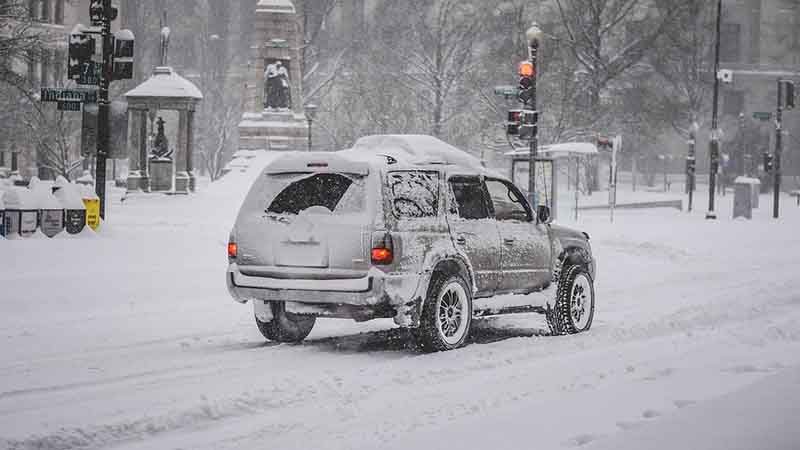
Cold Temperatures
- Icy winter air makes engine oil viscous like molasses. This creates more internal friction to overcome.
- More gas is burned to bring the engine up to operating temperature.
- Winter gasoline blends have a higher ethanol content, which reduces the energy density of the fuel per gallon.
Hot Temperatures
- Summer heat helps engines avoid cold-start issues, but the constant operation of the air conditioning places a heavy accessory load on the engine, reducing highway mileage by up to 25%.
Strong Winds
- Intense headwinds or storm gusts produce significant aerodynamic drag on the outside of the vehicle, making it much harder to maintain speed.
- The engine must consume more fuel to fight against the wind resistance forces trying to push it back.
Rain and Snow
- Wet roads cause tires to hydroplane more easily, increasing rolling resistance.
- Hard throttle jabs or wheel spin accelerate wear and significantly reduce mpg.
Altitude Changes
- Traveling to mountainous altitudes changes air density and oxygen content.
- Thinner air causes engines to lose power and efficiency at altitude.
- More throttle is needed simply to maintain speed, harming fuel economy.
Monitoring fuel consumption across different seasons and weather conditions illustrates how much external conditions can significantly impact MPG. What seems at first glance to be a random drop in fuel consumption is often due to environmental factors.