

Engine compression is the heart of your vehicle… when it’s low, everything suffers. Low compression can turn a reliable vehicle into a frustrating wheel problem overnight.
For many car owners, recognizing the signs of low engine compression early on can make the difference between a simple repair and a major repair bill.
Understanding Engine Compression
Engine compression is the pressure created when the piston moves up in the cylinder, compressing the air-fuel mixture into a confined space. This pressure is measured in pounds per square inch (PSI) and is typically between 125 and 175 PSI in a healthy gasoline engine.
Good compression is essential for your engine’s performance. When air and fuel are compressed, they become more volatile, causing a stronger explosion when ignited by the spark plug. This explosion forces the piston downward, generating the power needed to propel your vehicle.

Compression occurs during one of the four stages of the combustion cycle:
- Intake Stroke: The piston moves down while the intake valve opens, drawing air and fuel into the cylinder.
- Compression Stroke: Both valves close as the piston moves upward, compressing the air-fuel mixture.
- Power Stroke: The spark plug ignites the compressed mixture, creating an explosion that forces the piston downward.
- Exhaust Stroke: The exhaust valve opens as the piston moves back up, pushing the spent gases out.
For this process to work correctly, the cylinder must be properly sealed by the piston rings, valves, and head gasket. Any leak in this sealed system will result in a loss of compression, leading to various noticeable symptoms.
Signs of Low Compression in an Engine
When engine compression drops below normal, your vehicle tries to tell you in different ways. Here are the most common symptoms, starting with the most frequent.
1) Check Engine Light
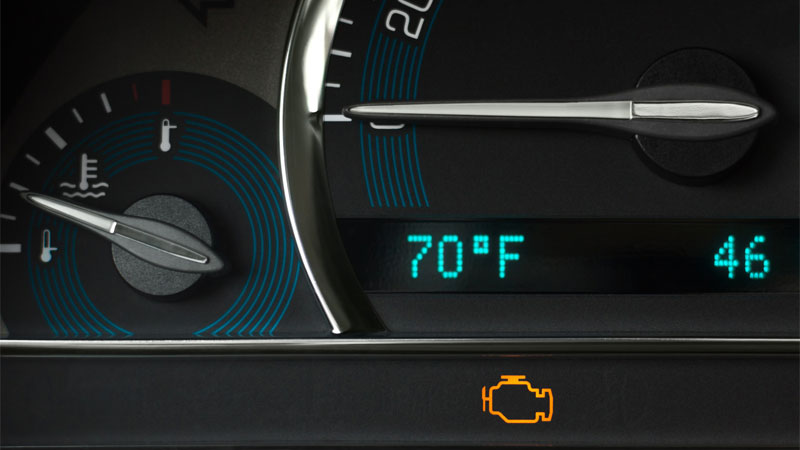
The check engine light is often one of the first indicators of low compression problems. When your engine’s compression drops below normal, oxygen sensors detect abnormal exhaust gas compositions and misfire detection systems recognize incomplete combustion. These signals trigger specific diagnostic trouble codes (DTCs).
Common codes related to compression issues include P0300-P0308 (cylinder misfires), P0171/P0174 (system too lean), or P0401-P0408 (EGR system problems).
Although the check engine light doesn’t specifically indicate low compression, these codes, combined with other symptoms on this list, strongly suggest compression problems. Unfortunately, many drivers choose to ignore this light initially, but it’s your vehicle’s first attempt to alert you to issues before performance noticeably degrades.
2) Starting Problems
If your engine cranks but doesn’t start, or takes much longer than usual to start, low compression could be the cause. When starting, your engine needs adequate compression to generate enough heat and ignite the air-fuel mixture.
With low compression, the spark plug may still fire, but there isn’t enough pressure to create the explosion needed for combustion.
You might notice the engine cranking normally but refusing to start, or requiring several attempts before starting. In more severe cases, the engine won’t start at all, despite having a good battery and starter. These starting problems often worsen in cold weather, when the engine already faces more challenging starting conditions.
3) Poor Engine Performance

Once your car is running, low compression will result in poor performance. You might accelerate and notice a significant delay before the vehicle responds, or struggle to maintain highway speed on inclines you never had trouble with before.
Acceleration becomes sluggish, and your engine may feel like it’s working harder than usual to keep up with traffic. This happens because the low-compression cylinders aren’t generating their share of power.
Even if only one cylinder has compression issues, you’ll feel the difference (your engine runs with fewer cylinders than it has). The problem becomes more evident in situations requiring more power, like passing another vehicle or towing.
4) Rough Idle and Misfires
An engine that idles smoothly and at a steady RPM is a sign of good health. When compression is low, the engine often idles roughly, with RPM fluctuations instead of maintaining a constant level. Vibrations may be felt in the steering wheel or seat, or the vehicle might shake slightly when stopped at a red light.
This rough idle occurs when low-compression cylinders misfire or fire irregularly. The onboard computer may try to compensate by adjusting fuel delivery or timing, but it cannot fix the underlying compression problem.
If you check for error codes with an OBD2 scanner, you’ll likely find misfire codes for specific cylinders (usually those with low compression). These misfires not only make driving uncomfortable but can also damage your catalytic converter if ignored.
5) Engine Noise
Low compression often manifests through distinctive noises from the engine. You might hear knocking, ticking, or rattling that wasn’t there before, especially during acceleration or under load. These noises occur when combustion is compromised, causing ignition irregularities and mechanical stress.
A backfire through the exhaust can indicate unburned fuel passing through the system due to incomplete combustion in low-compression cylinders. Some drivers also report a hissing sound during compression, which may indicate pressure leakage from worn piston rings or valves.
These noises generally worsen as the engine warms up and parts expand. While many engine noises are hard to diagnose, combined with other symptoms on this list, they provide strong evidence of compression problems.
6) Poor Fuel Economy
If you find yourself visiting the gas station more often lately, low compression could be the cause. While poor fuel economy can have many causes, when it appears alongside others in this article, it can be related to compression.
When your engine doesn’t properly compress the air-fuel mixture, much of that fuel is wasted, incompletely burned, or not burned at all. The onboard computer often tries to compensate for this poor performance by injecting more fuel, further reducing your fuel economy.
This drop in fuel economy can occur gradually, as compression slowly decreases, or suddenly if there’s a rapid loss of compression in one or more cylinders. In either case, you’ll pay more at the pump while getting worse performance (a losing situation).
7) Excessive Exhaust Smoke
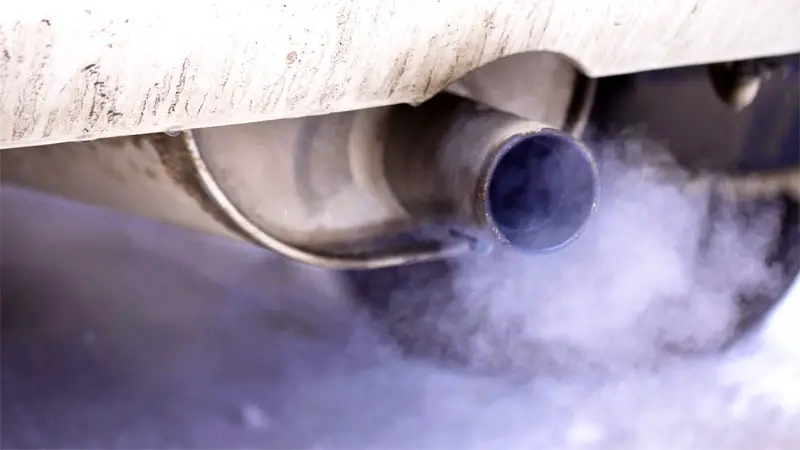
Your exhaust can often reveal what’s happening inside your engine. When compression is low, you’ll often see abnormal smoke coming from your tailpipe. The color provides important clues:
- Blue or gray smoke typically indicates oil burning in the combustion chamber, often due to worn piston rings with poor sealing. This is the most common type of smoke with compression problems.
- White smoke (beyond normal condensation) can indicate coolant entering the combustion chamber through a blown head gasket or cracked cylinder head (both of which can cause compression loss).
- Black smoke usually signals excessive fuel consumption, which occurs when the computer tries to compensate for power loss due to low compression. This smoke is particularly noticeable during acceleration, when the engine is under load and compression problems are most apparent.
8) Failed Emissions Test
If your vehicle fails an emissions test, low compression could be the cause. In most cases, compression problems trigger the check engine light mentioned earlier well before the emissions test, automatically resulting in failure in many states.
However, even if you manage to temporarily clear the codes, the emissions equipment will still detect high hydrocarbon (HC) readings resulting from incomplete fuel combustion.
When compression is insufficient, fuel doesn’t burn completely, causing unburned hydrocarbons to exit through the exhaust. Your catalytic converter tries to clean up these emissions but can become overwhelmed when compression problems are significant.
High carbon monoxide (CO) levels may also be observed for similar reasons. Emissions testing equipment can detect these issues even if they’re not yet severe enough to affect driving, unlike what you might notice during normal driving.