

If you’ve seen the recent Gran Turismo movie, you might recall a scene where Jann speeds into a corner and crashes because his brakes were glazed. Upon further inspection, the mechanic confirmed that the young driver was right, which explains why he overcooked the turn.
Simply put, glazed brake pads are brake pads that have overheated and no longer function properly. The surface of the brake pad becomes smooth and can no longer bite the rotor as it should.
Glazed brakes can significantly increase your stopping distance, making them quite dangerous to use (especially if you’re trying to set a fast lap time on the track).
Are you worried that your brake pads are glazed? Here are some symptoms that suggest your brakes are glazed and how you can fix them yourself.
Symptoms of Glazed Brake Pads
Most symptoms of glazed brake pads involve significantly reduced braking performance. Here are some specific examples to watch for.
1) Increased Stopping Distance
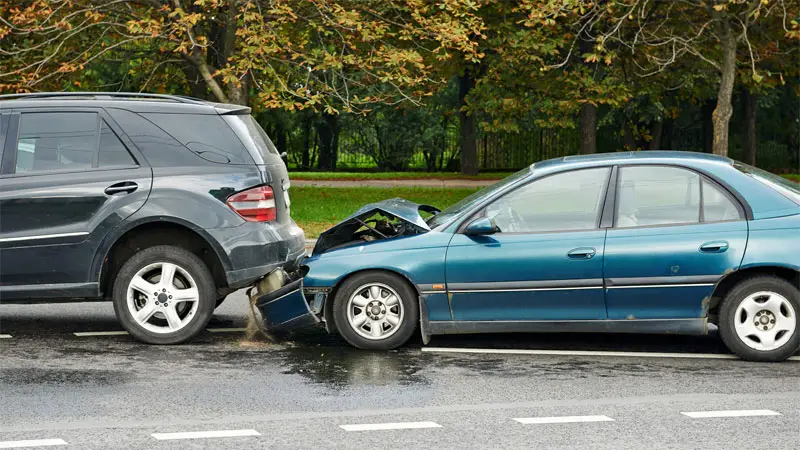
One of the easiest ways to tell if your brakes are glazed is if your stopping distances are considerably longer. This is obviously quite dangerous, as you expect your car to stop within a certain distance with a certain amount of pressure.
2) Inability to Activate ABS or Lock the Brakes
If your brakes are glazed, you might not have enough braking power to lock the tires or activate the ABS. This means your vehicle is no longer able to fully utilize its braking potential.
3) New Braking Noise
Glazed brakes sometimes produce a different noise than what you’re used to hearing. This is because the surface of the brake pad has changed. If you notice a change in brake noise, it’s worth taking a closer look to see if something is wrong.
4) Brakes Don’t Bite
When you first apply the brakes, you should feel the initial pressure of the brake pad on the rotor, which immediately slows the vehicle down. If you have to press hard on the brake pedal before successfully slowing the vehicle, your brake pads might be glazed.
5) Excessively Smooth and Shiny Brake Pads or Rotors
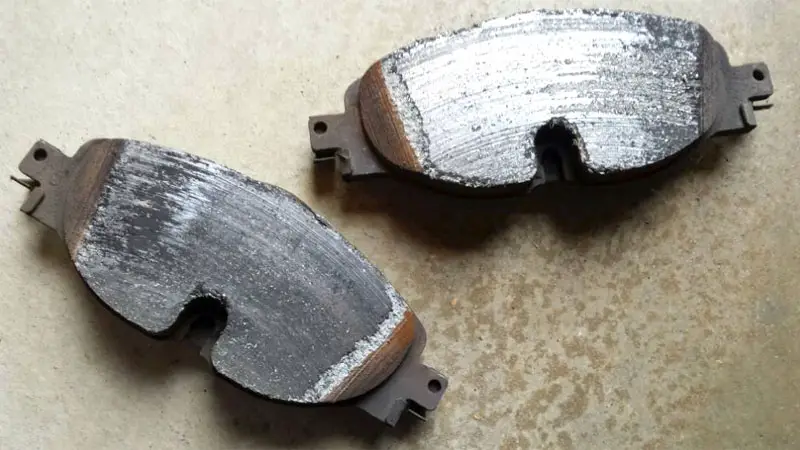
When you glaze your brakes, your brake pads will look very smooth and shiny. Generally, brake pads have a black, asphalt-like appearance. Brake pads have some texture if you look closely.
Brake rotors should also have texture and not be completely smooth. New brake rotors have a cross-hatched pattern that looks like a machined grid on the surface.
When you use the brakes, the cross-hatched pattern is replaced by a ring of brake pad material, usually dark blue in color. If your rotors are really shiny without any bluing from the brake pad material, you may have glazed your brakes.
Causes of Glazed Brakes
1) Too Much Braking (Without Cooling Time)
The primary cause of glazed brakes is simply overusing your brakes or using them incorrectly without allowing them to cool sufficiently between braking events.
Your brakes heat up when you use them and need time to cool down between applications. If you brake too hard or too often, you risk ending up with overheated brakes.
You can easily overheat your brakes by riding them. This is equivalent to braking gently over a long period, as some people do when going down a mountain pass. The brakes never get a chance to cool while you’re riding them, even if you’re braking gently.

A better strategy for braking downhill is to brake a bit more than needed, then coast for a while until you start going too fast, and then brake again. This brief moment of rest during braking will allow the brakes to cool while you’re coasting.
If you’re descending a very steep grade, like that of Pike’s Peak, you should engage a lower gear. The transmission will help slow the vehicle and prevent excessive braking. Some steep grades might even require first gear for this.
2) Stuck Caliper Piston
If one of your brake calipers is stuck, you might notice glazing on only one corner of the vehicle. A stuck caliper often comes with other symptoms. One corner might be smoking, and you might smell brakes near the stuck caliper.
That rotor will also be very hot. If you have an infrared thermometer, you can see that the temperature of the rotor under the stuck caliper is significantly higher than the other three.
3) Stuck Caliper Pin
Caliper pins allow a floating caliper to slide back and forth when you apply and release the brakes. A stuck pin can cause constant contact of one side of the brake pad with the rotor, risking glazed brakes on one corner of the vehicle.
A stuck caliper pin can exhibit symptoms similar to a stuck caliper piston. When a pin is stuck, it’s common for one pad or one side of a pad to be excessively worn, while the other pad looks relatively good.
How to Fix Glazed Brake Pads
1) Address the Underlying Issue
The first step is to figure out how you glazed your brakes. Otherwise, if you perform brake work, you risk glazing them again.
If it’s simply due to over-braking, try adjusting your driving style to allow the brakes time to cool. If you have a mechanical issue like a stuck caliper, replace the faulty component(s) before attempting to service the pads and rotors.
2) Sand the Brake Rotors and Pads
Sanding the brake pads and rotors is a simple way to remove surface glazing without completely replacing the brakes. This method is particularly useful if your brake pads and rotors are relatively new.
A good rule of thumb is to replace brake pads once they are thinner than the backing plate (ignoring any wear indicators that may be present).
If you sand the pads and find they are a bit thin, just replace them. There’s no need to extend the life of brake components and risk an accident. Brake pads are quite inexpensive.
3) Re-bed the Brakes
After sanding or replacing the brake pads and rotors, you will need to bed the brakes to ensure there is an even layer of pad material on the brake rotors. Follow the brake pad manufacturer’s instructions to properly bed the brakes.
4) Replace the Brake Pads and Rotors
Sometimes, your brakes are still damaged even after sanding. If you still experience poor braking performance after trying to remove the glaze yourself, replace the brake pads and rotors.