
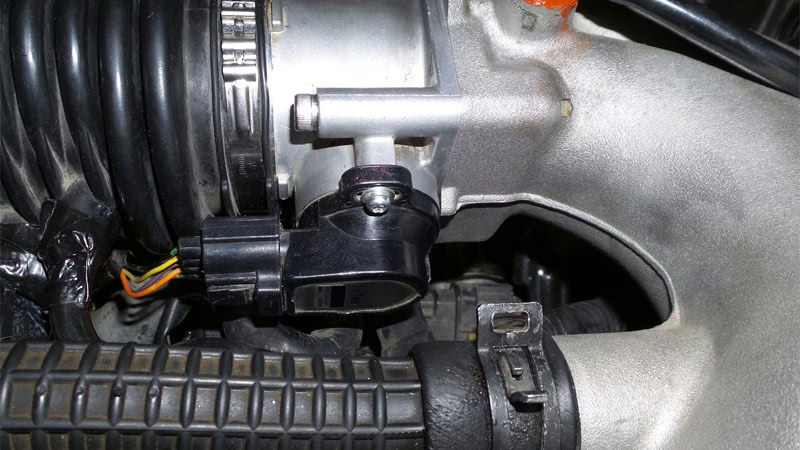
Although small and relatively simple, the throttle position sensor (TPS) is an essential component that tells your car’s computer how far you’re pressing the accelerator pedal, thus helping to control your engine’s fuel supply.
If your TPS fails, you risk encountering annoying driving problems or downright dangerous driving conditions. Although the symptoms of a faulty throttle position sensor can often mimic those of other issues, when taken as a whole, they allow for easier diagnosis.
What is a Throttle Position Sensor For?
The throttle position sensor monitors the exact position of your throttle (a valve that controls the amount of air entering your engine). When you press the accelerator pedal, the TPS sends precise signals to your car’s Engine Control Module (ECM), which then calculates how much fuel to inject into the engine.
Modern cars use an electronic throttle control system, called “drive-by-wire.” Instead of a mechanical cable connecting your accelerator pedal to the throttle, sensors and electric motors handle this task. When you press the accelerator pedal, the TPS helps the ECM determine exactly how far the throttle should open based on various factors (e.g., vehicle speed, engine load, driving conditions, etc.).
Most recent vehicles use multiple throttle position sensors for safety. If one sensor fails or sends incorrect data, the backup sensor helps prevent potential problems. This redundancy helps avoid disastrous scenarios in case of malfunction.
Common Signs of a Faulty Throttle Position Sensor
1) Check Engine Light
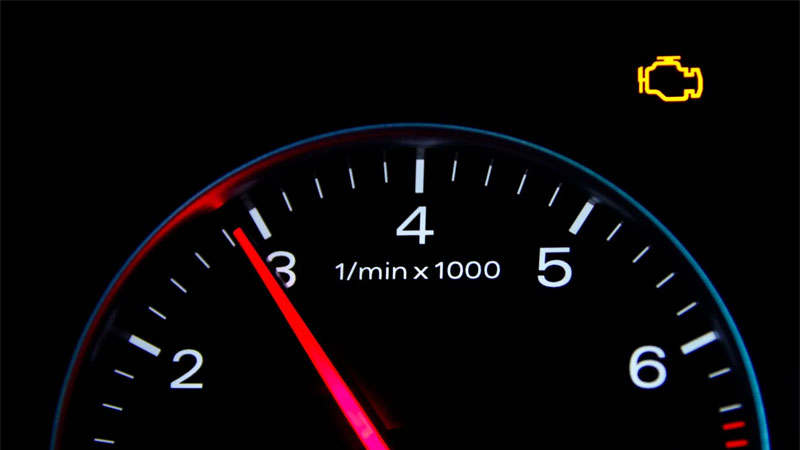
The most reliable indicator of a TPS problem is the check engine light accompanied by specific fault codes. When your TPS starts to fail, it sends incorrect signals to your car’s computer, causing the warning light to come on.
Using a code reader (OBD2 scan tool), you will typically see codes P0120 to P0124, all related to TPS circuit problems. Even if your car seems to be running normally now, don’t ignore this warning. If you don’t have access to a scan tool, check if a local auto parts store can scan it for you (many do it for free).
2) Poor Acceleration Response
When your TPS fails, your car’s onboard computer receives incorrect information about the accelerator pedal position, leading to unpredictable acceleration. You may notice hesitation when you press the accelerator, a delay before the car accelerates, or sudden surges.
Some drivers describe this as the car feeling sluggish or requiring more pedal pressure than usual to accelerate. This symptom can be particularly noticeable when attempting to pass other vehicles or merge onto the highway.
In some cases, the vehicle will enter “limp mode” to prevent engine damage.
3) Random Engine Stalling
Engine stalling can occur without warning at any speed when your TPS is malfunctioning. Since your car’s onboard computer receives false information about the throttle position, it may cut off the fuel supply at the worst possible times.
At best, your car stalls in your own driveway. At worst, it stalls while idling at a red light at a very busy intersection or even on the highway. The unpredictability of this can create dangerous driving situations. Some drivers may experience repeated stalling episodes, while others experience rare and random occurrences.
4) Irregular Idle Speed
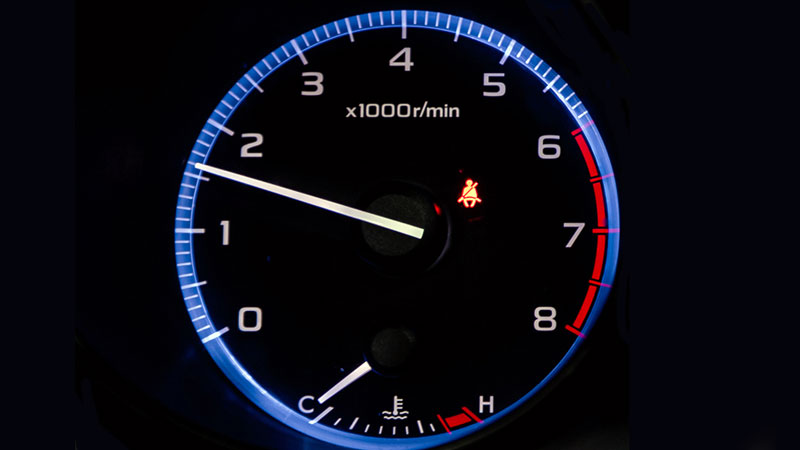
A faulty TPS can cause unpredictable fluctuations in your engine’s idle speed. You might notice the RPM rising and falling at a stop, or the engine may seem rough and unstable at idle. This symptom can make the car feel like it’s jerking or lurching, even when you’re not touching the accelerator pedal.
Pay attention to your tachometer; it should be at a steady speed at idle. If it’s going up and down on its own, it’s very likely that your TPS is sending incorrect signals to the engine computer.
5) Transmission Shifting Problems
Since your transmission relies on accurate throttle position data to determine shift points, a bad TPS can cause irregular shifting. Delayed, harsh shifts, or shifts occurring at incorrect speeds are all possibilities.
The transmission may also be confused about which gear to select, leading to unnecessary gear hunting or a refusal to downshift when needed for passing or climbing hills.
If this is the only symptom you’re experiencing, your problem is likely transmission-related. But when combined with a mix of other symptoms listed here, the throttle position sensor is a definite possibility.
6) Jerking or Random Surges

Your vehicle may experience unexpected surging or jerking, especially during constant-speed driving or light acceleration. Unlike transmission-related jerking, TPS-induced surges can occur even when your car isn’t shifting gears.
The jerking often feels as if someone is repeatedly tapping your brakes or altering your engine’s fuel supply. This symptom almost always appears alongside acceleration issues and can vary in intensity, from a slight bump to violent jerking that makes the car difficult to control.
7) Reduced Fuel Economy
Although a drop in MPG is common in most engine problems, it applies here too. When your TPS sends incorrect data, your engine’s fuel management system cannot optimize the air-fuel mixture and may therefore send more fuel than necessary into the combustion chamber.
You might notice a significant drop in your fuel economy, sometimes up to 10 to 20% below normal. Try monitoring your fuel consumption. If you’re filling up more frequently without a major change in your driving habits, in addition to other symptoms on this list, your TPS could be to blame.
8) Engine Misfires
A misfire can be hard to detect, but many describe it as a stumble or a momentary loss of power. Some drivers will say it feels like the engine “skips a beat” or temporarily loses power before recovering.
These misfires occur because the incorrect throttle position data leads to improper fuel delivery. You might notice the engine running unevenly, particularly during constant-speed cruising or light acceleration.
FAQ
Can You Repair a Faulty Throttle Position Sensor?
No, a faulty throttle position sensor cannot be repaired. If testing shows the TPS is failing, replacement is your only option. The sensor is a sealed electronic unit that cannot be repaired or rebuilt.
Is It Safe to Drive with a Bad TPS?
No, it is not safe. Driving with a failing throttle position sensor is risky and potentially dangerous. When the sensor fails, your car’s onboard computer activates a safety mode (limp mode) that limits engine RPM and speed to protect it. While this might allow you to get to a nearby repair shop, it is not suitable or safe for normal driving.
If you notice TPS symptoms, have the sensor tested and replaced promptly. Continuing to drive with a failing sensor can lead to unpredictable behavior like sudden stalling or loss of power, which is especially dangerous in traffic or on highways. Although TPS failure is usually the result of normal wear and tear over time, ignoring the symptoms can lead to additional engine and transmission problems.
What Causes a TPS to Fail?
Although normal wear from years of driving is common, several specific issues can accelerate sensor failure or cause premature problems.
Common causes of TPS failure include:
- Electrical Issues – Corroded connections, damaged wiring harnesses, or short circuits can disrupt sensor signals.
- Physical Contamination – Dirt, carbon buildup, or oil leaking into the sensor housing can interfere with its operation.
- Water Damage – Exposure to moisture (e.g., improper engine compartment cleaning) or environmental conditions can short-circuit the sensor.
- Thermal Stress – Constant exposure to extreme engine temperatures can degrade internal components over time.
- Mechanical Damage – Vibrations and impacts from road debris or careless work in the engine compartment can damage the sensor.
- Circuit Board Failure – Internal electronic components can fail due to aging or thermal cycling. This is particularly common with cheap aftermarket sensors.
- Poor Connections – Loose mounting or incorrect installation can lead to erratic sensor readings.
While you can’t prevent normal wear, regular engine compartment cleaning (done correctly) and promptly addressing any engine oil leaks near the sensor can help extend the TPS’s lifespan. Taking care during engine maintenance to avoid disturbing or damaging the sensor and its wiring can also prevent premature failure.