
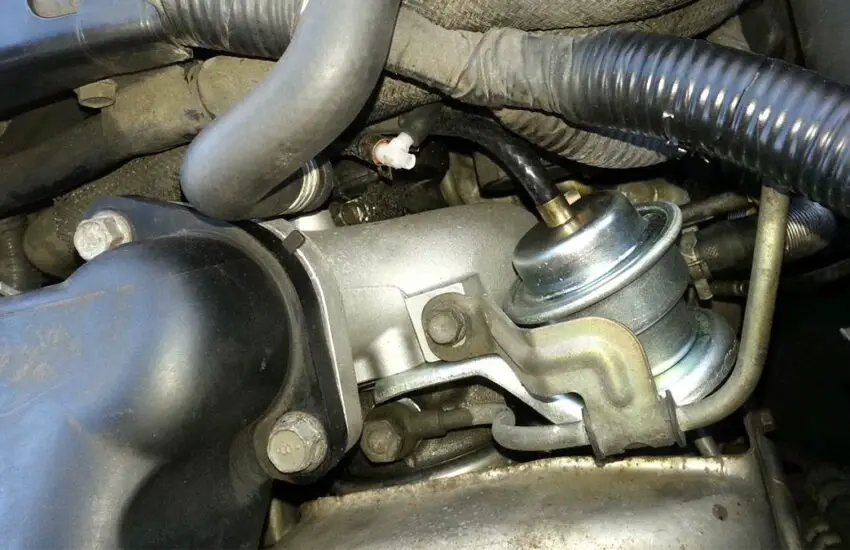
Turbochargers promise powerful performance, but when the internal wastegate fails, that power turns into problems.
Discover the typical symptoms of a turbocharger wastegate failure (some of which can be quite alarming), what causes them, and how much it will cost to repair or replace your wastegate.
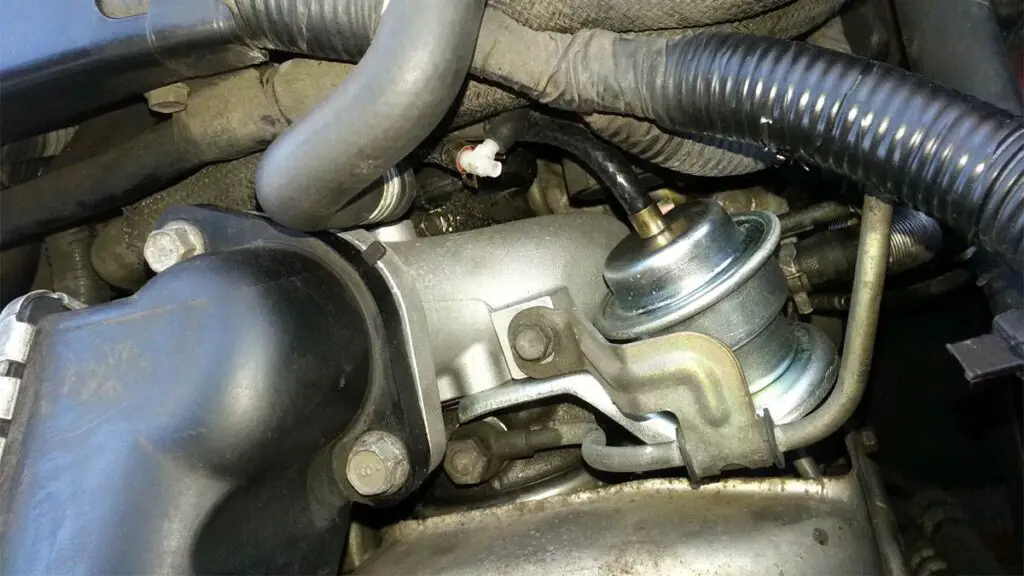
What is a Turbo Wastegate?
A turbo wastegate is an essential component found under the hood of vehicles equipped with turbochargers.
It is used to regulate the maximum speed of the turbocharger’s turbine, in turn governing the overall boost production as a whole. As a result, the risk of developing an overboost condition within a motor’s forced induction system is significantly reduced.
How a Wastegate Works
To better understand the process described above, you must first familiarize yourself with the basics of turbocharger operation. A turbocharger uses the exhaust energy produced during the combustion process to spin a specialized turbine wheel used to direct pressurized air into an engine’s intake tract.
This oxygen-dense intake air is ideal for producing more volatile combustion, especially when additional fuel is metered to each respective cylinder.
A wastegate regulates the turbocharger turbine’s speed by redirecting excessive exhaust energy away from an engine’s turbo, under specific conditions. Simply put, the maximum energy acting upon the driven (exhaust) side of a turbocharger’s turbine shaft is effectively limited by its corresponding wastegate, which in turn keeps maximum boost pressures in check.
Turbo wastegates come in several different forms and can consist of an internal or external arrangement, depending on the application. Regardless, most turbocharger wastegates feature a spring/diaphragm arrangement, which is acted upon by pressurized air distributed via an attached sensing line.
Here is a good video on how internal and external wastegates work:
Bad Wastegate Symptoms
When a turbocharger wastegate fails, a number of secondary symptoms can occur, some of which tend to be more concerning than others. Recognizing these symptoms can prove essential when attempting to expedite the repair of the issue at hand.
Here are some of the most common symptoms associated with a bad wastegate.
#1 – Check Engine Light
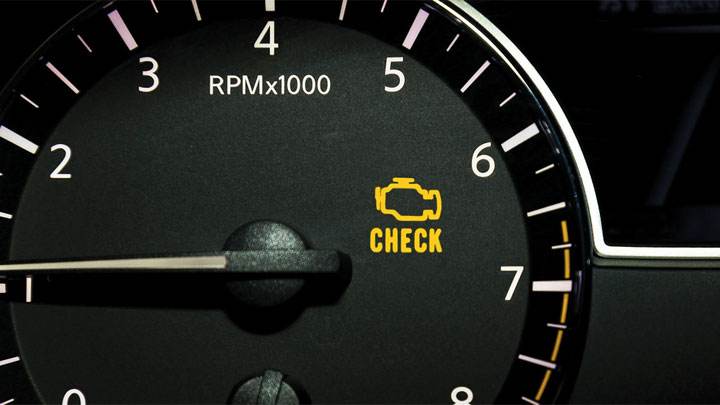
In most cases, wastegate-related issues will cause a vehicle’s check engine light to illuminate. This stems from the fact that an engine is unable to achieve desired intake pressures during operation.
An OBD2 scan tool should be used to discover which specific diagnostic trouble codes (DTCs) have been stored by a vehicle’s ECM to confirm if it is a wastegate issue. Some examples of wastegate-related codes include: P0234, P0243, P0244, P0245, and P0250.
#2 – Lack of Sufficient Boost
When a turbo’s wastegate is stuck open, exhaust gasses are vented away rather than being directed to an engine’s turbo’s exhaust side. As a result, boost pressures are significantly reduced.
#3 – Reduced Fuel Economy
Additionally, when a wastegate remains stuck open, excess fuel will be burned in an attempt to reach the engine’s expected power output. However, this desired power level will never be achieved, due to insufficient intake airflow.
#4 – Erratic Boost Pressures
When a turbo’s wastegate remains stuck closed, the risk of engine overboost increases significantly. As a result, erratic or excessive boost gauge readings are often recorded. If not quickly remedied, severe engine damage can result.
Causes of Turbo Wastegate Problems
Turbo wastegate failure can be caused by a multitude of underlying issues, a number of which are not always easy to identify. However, learning to troubleshoot these issues can prove essential when attempting to prevent recurring wastegate failures.
Here are some of the most common causes of turbo wastegate failure.
#1 – Carbon Buildup
In some cases, a wastegate can experience failure due to carbon fouling. As carbon generated by exhaust gasses contaminates a wastegate’s internal diaphragm, a bypass often results.
In the most extreme of cases, this carbon contamination can even cause a wastegate’s internal diaphragm to rupture.
#2 – Weak Actuator Spring
A turbo wastegate can also fail due to normal wear and tear, as its actuator springs begin to age. When this occurs, a wastegate can begin to vent unexpectedly, causing erratic boost pressures.
#3 – Improper Adjustment
At times, both internal and external wastegates can require adjustment. The procedure for doing so varies by wastegate configuration. An improperly adjusted wastegate can lead to a number of operational abnormalities.
Replacement and Repair Cost
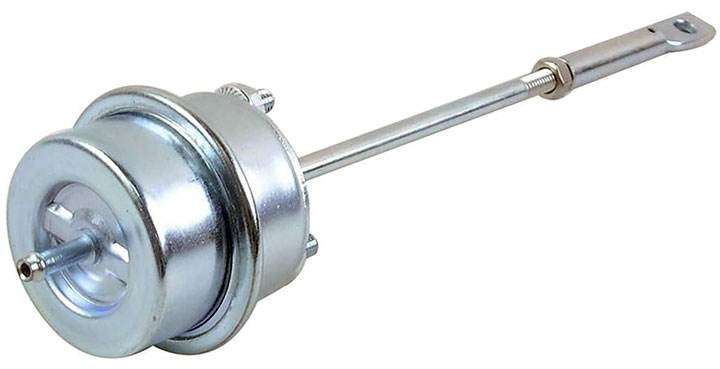
The cost of repairing or replacing a turbocharger wastegate can vary significantly from one vehicle model to the next.
This primarily stems from the fact that some external wastegates are far easier to repair than their internal counterparts. This fact alone can make estimating wastegate repair/replacement costs quite difficult.
Generally speaking, you can expect to pay between $200 and $600 to have your vehicle’s turbocharger wastegate repaired or replaced. However, if a failed wastegate itself necessitates turbocharger replacement, cost skyrockets, often totaling $2,000 or more.
Where is the Wastegate Located?
There are two different types of turbocharger wastegates in use today; internal and external.
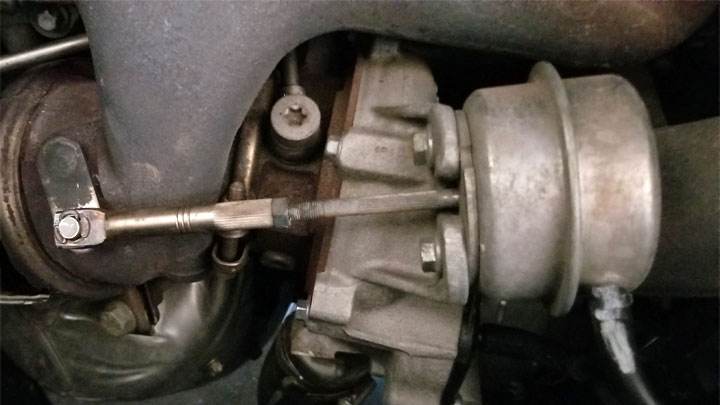
As their name implies, internal wastegates are located within the turbocharger itself, affixed prominently to the turbine housing. Wastegates of this style typically feature a pneumatic actuator, flapper valve, crank arm, and rod end.
Alternatively, some turbochargers are equipped with externally mounted wastegates, which are positioned between an engine’s exhaust manifold and the intake-side turbine housing of a turbo.
This style of wastegate moderates intake airflow by diverting incoming exhaust gasses, in the event that boost pressures exceed their rated threshold.

Wastegate vs Blow-Off Valve
Both wastegates and blow-off valves are designed for use with turbocharged engines and serve to reduce the risk of overboost. However, the manner in which each of these two components is used differs slightly from one another, most notably in terms of each’s location.
As mentioned earlier, wastegates are positioned ahead of the turbo, along an engine’s exhaust manifold or, alternatively, within the turbocharger’s turbine housing itself.
Conversely, blow-off valves are positioned within an engine’s intake tract, downstream of the turbo itself. These devices vent off excess boost pressure, rather than preventing its buildup, as a wastegate does.
Do All Turbocharged Vehicles Have Wastegates?
Turbocharged engines and wastegates go hand-in-hand, with the vast majority of turbocharged engines featuring a wastegate of one type or another. That being said, there are a few exceptions to this general rule, the most widespread of which pertains to the newest, most advanced variable geometry turbos.
The variable geometry turbocharger is unique, as it offers many of the same charge-limiting capabilities, without the use of a dedicated wastegate.
Turbochargers of this type feature specialized vanes on the exhaust side, which move in response to various operating conditions. This movement redistributes the flow of incoming exhaust gasses, thereby moderating the speed of the turbocharger as a whole.
Can You Run a Turbo Without a Wastegate?

Most turbocharged engines in production today utilize wastegates in one way or another. This is due to the fact that wastegates serve as somewhat of an engine protection device, preventing overboost from occurring.
Without this level of protection, severe engine damage could occur, as a turbocharged engine reaches its maximum RPM. Even though, in theory, it is possible to operate a turbocharged engine without a wastegate, doing so would prove largely impractical.
To accomplish this feat, you would be forced to find the perfect turbo for your specific application, which only reaches an engine’s maximum boost threshold when it has reached maximum RPM.
As this prospect is largely unattainable under real-world conditions, the use of a wastegate is deemed necessary.
What is Wastegate Rattle?
Wastegate rattle is a condition in which a persistent “rattling” or “chirping” is emitted from an engine’s turbocharger. This noise is most often heard at idle, but is sometimes also audible during periods of light acceleration. Wastegate rattle is most prevalent in high-mileage engines in most cases.
Much like many other turbocharger-related issues, wastegate rattle is most often attributed to significant wear that accumulates over the course of a turbo’s lifespan.
This “rattle” originates from the wastegate itself and is due to the worn bushings and rod ends of the actuator located there. Due to this wear, the wastegate no longer holds firmly, thereby causing an audible rattling.