
Sensors are essential for computer-controlled engines, such as the IAT measuring the intake air temperature. Faulty intake air temperature sensors affect a vehicle’s air-fuel ratio, which can lead to handling and performance issues.
But what are the specific symptoms of a faulty IAT sensor? Can you continue driving? And how much will it cost to replace the sensor?

What is an IAT Sensor?
As its name suggests, an intake air temperature sensor monitors the temperature of the air introduced into an engine’s intake manifold. Simply put, an engine’s IAT sensor functions like a thermometer, concerning the air ultimately delivered to each cylinder for combustion.
However, instead of displaying a mercury reading, the IAT sensor provides feedback to the ECM/PCM in a voltage configuration.
The engine’s control software then interprets this voltage value and converts it into a logical temperature feedback. This feedback is used as a key figure to determine the necessary air/fuel ratio for efficient combustion.
This point relies on the fact that colder air is much denser in oxygen than hot air, thus proving more volatile at the ignition point.
Symptoms of a Bad IAT Sensor
The failure of a vehicle’s intake air temperature sensor is often accompanied by a number of secondary symptoms, some of which tend to be more noticeable than others. When attempting to address the issue in question, it is essential to recognize these individual symptoms.
Here are some of the most common symptoms associated with a faulty IAT sensor.
#1 – Check Engine Light

In almost all cases, the presence of a faulty IAT sensor will cause a vehicle’s check engine light to illuminate. This occurs when a vehicle’s ECM or PCM stores one or more fault codes assigned to such a failure.
#2 – Rough or Irregular Idle
A faulty IAT sensor often results in a vehicle’s engine idling roughly or visibly stumbling at a stop. This is due to the engine’s inability to accurately determine the air/fuel ratio needed for efficient combustion.
#3 – Starting Difficulties

Another significant sign of IAT sensor failure is starting difficulties. Due to the inability of a vehicle’s ECM/PCM to determine the correct fuel trim values, an engine’s ability to start smoothly is compromised.
#4 – Engine Misfires
When an intake air temperature sensor begins to fail, it often results in random engine misfires. Again, this is due to the lack of accurate temperature readings, as a vehicle’s ECM/PCM attempts to determine the correct fuel supply.
#5 – Poor Fuel Economy

You might also notice a little extra pain at the pump if your engine’s IAT sensor is about to fail. Increased fuel consumption is often the result of excess fuel, due to out-of-spec intake air temperature values.
Where is the Sensor Located?
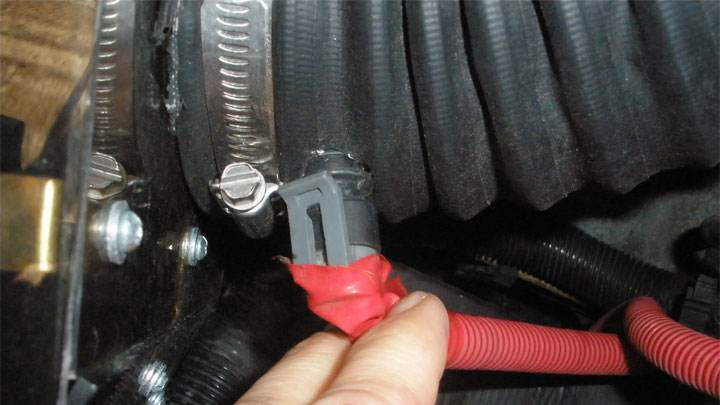
An engine’s intake air temperature sensor is most often located in the intake duct that connects an engine’s air filter housing and the throttle body. In the vast majority of applications, the IAT sensor probe will be mounted flush in the intake duct, with only the end of the sensor receptacle protruding into the engine compartment itself.
In some cases, a vehicle’s IAT sensor may also be located in other places, such as in the intake manifold or within the air filter housing itself. While this solution is far from the standard, it has become more widespread over the last decade.
What Causes the Sensor to Deteriorate?
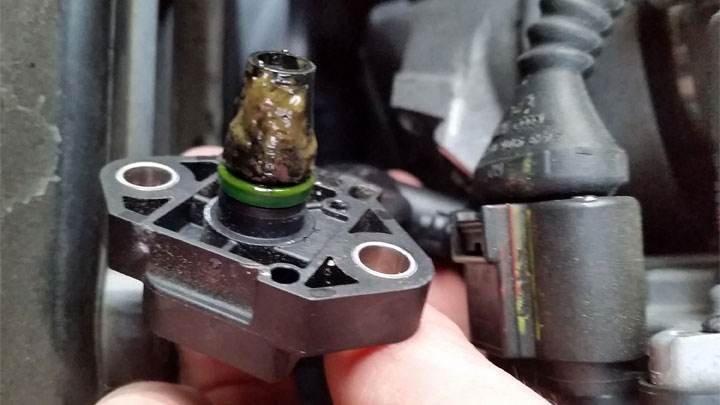
The most common cause of intake air temperature sensor failure is a buildup of contamination on the sensor probe.
This contamination often appears in the form of oil traces, although any type of airborne debris in an engine’s intake duct can cause similar problems. If significant enough, fouling of this nature causes an engine’s IAT sensor to “short-circuit.”
In other cases, an intake air temperature sensor can fail simply due to its age or standard wear and tear. This is particularly prevalent in older vehicles or in vehicles that have traveled a significant number of miles. Unlike the case of debris fouling, a simple cleaning will rarely remedy an intake air temperature sensor failing in this particular manner.
In rare cases, a vehicle’s IAT sensor may also be damaged at any time it was disturbed during other maintenance or repair of an engine’s intake duct. This can even occur if excessive force was applied to the ducts leading to an engine’s air filter housing during routine air filter replacement.
How Long Do IAT Sensors Last?
Generally speaking, an engine’s intake air temperature sensor is considered a consumable part, meaning it will likely need to be replaced at some point during a vehicle’s lifespan. This is largely due to the sensitive nature of the IAT sensor itself, as well as its tendency to become fouled by oil and other particles in an engine’s intake duct.
In most cases, one can expect their vehicle’s intake air temperature sensor to last an average of 5 to 10 years, although this number can vary significantly on a case-by-case basis.
However, this is not to say that your vehicle’s IAT sensor will definitely fail during this period, as it is not uncommon for this type of sensor to last much longer under ideal circumstances.
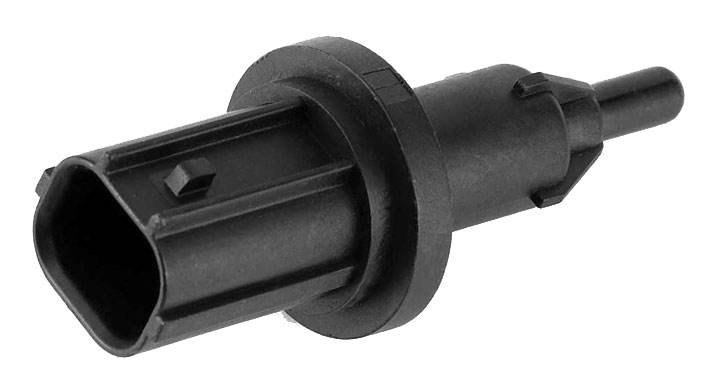
Fortunately, the cost associated with replacing the intake air temperature sensor is not as high as that associated with many other forms of automotive repair. This is due to the relatively inexpensive nature of the IAT sensor itself, as well as the ease of its replacement.
On average, replacing an engine’s intake air temperature sensor costs approximately $50 to $300. The price of the replacement IAT sensor itself accounts for only a small portion of this cost (between $20 and $125), while labor and shop costs account for a much larger share (between $30 and $175).
Can You Drive with a Faulty Intake Air Temperature Sensor?
Although you can drive with a faulty intake air temperature sensor if necessary, it is not advisable to do so for extended periods. This is due to the many effects such a fault can have on an engine’s performance.
A compromised IAT sensor can lead to difficulties when attempting to start a vehicle and is also known to cause excessively rough idling, which can worsen over time.
In any case, it is crucial to diagnose and repair issues related to IAT sensor defects as soon as possible. This often prevents a motorist from becoming stranded or facing other forms of difficulties.
If you do not feel comfortable performing such repairs yourself, schedule an appointment with a trusted automotive service center as soon as possible.