
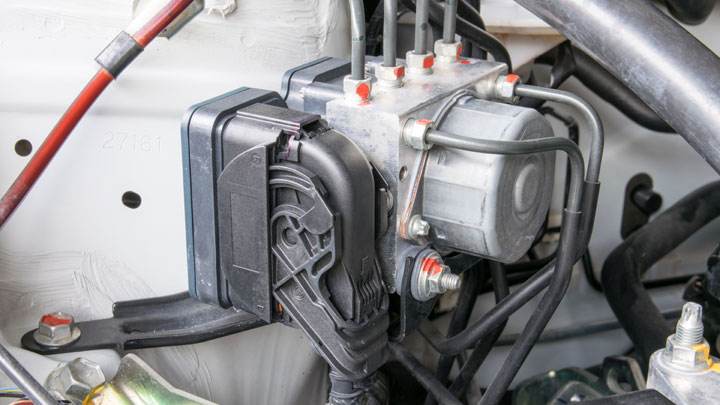
Anti-lock braking systems prevent dangerous lock-ups, but the ABS module that controls them can fail over time. Recognizing the symptoms of a faulty ABS module is essential for maintaining safety.
This guide will cover the warning signs of module failure and how to address them. With knowledge and preventive care, the ABS can continue to provide life-saving performance.

What is an ABS Module?
An ABS module is a microprocessor computer integrated into the electrical system of all modern vehicles.
This module is responsible for monitoring and operating a vehicle’s anti-lock braking system, which regulates the hydraulic pressure distributed to the brake assemblies at each respective wheel end, preventing lock-up during panic or emergency stops.
The ABS module itself relies on inputs from various sensors to facilitate the various functions it is responsible for. Some of the most valuable inputs come from each wheel speed sensor. These sensors detail the speed at which each wheel rotates relative to the others, thereby allowing the ABS module to detect a lock-up condition.
A vehicle’s ABS module also performs system self-tests with each key cycle and logs related system error codes if necessary. Furthermore, this module relays relevant data to other vehicle control modules, such as the PCM, via the CAN-BUS communication network.
Where is the Module Located?

The ABS module on most vehicles is located in the engine compartment, although some may also be found along a vehicle’s chassis frame rail.
Most often, the ABS module is found bolted in the driver’s side subsection of the engine compartment, in close proximity to the ABS block itself. In fact, on some vehicles, this module is bolted directly onto the ABS block itself.
Symptoms of a Faulty ABS Module
When an ABS module fails or is in the process of failing, a number of secondary symptoms can appear. By recognizing these symptoms, you can address the issue at hand much more quickly than would otherwise be possible.
Here are some of the most common symptoms associated with a faulty ABS module.
#1 – ABS Light Illuminated
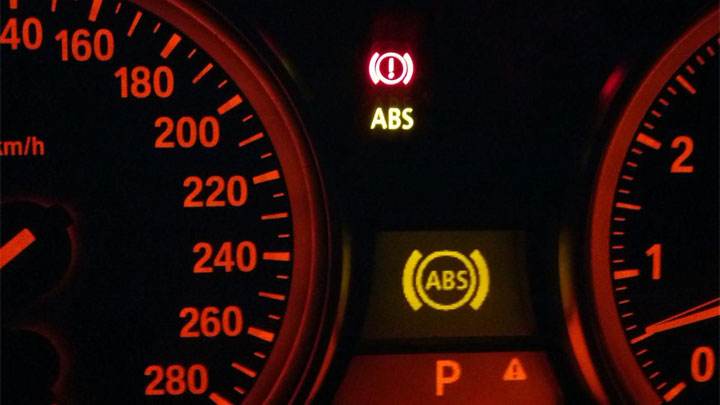
Since a vehicle’s ABS system performs system self-checks with each key cycle, relevant faults are stored fairly quickly as they occur.
Once such a fault has been stored, an ABS warning light illuminates on a vehicle’s dashboard, thereby alerting the driver of a problem that needs to be resolved.
#2 – Brake Lock-Up
Sometimes, an ABS module can fail and cause unintended braking, many of which occur rather aggressively, such as brake lock-up while driving.
What is even more concerning is that these occurrences are often intermittent in nature and happen without warning during normal braking.
#3 – Changes in Required Braking Effort
If you notice that your vehicle suddenly requires more or less effort on the brake pedal to stop, your ABS module could be the cause.
This often occurs when the ABS circuit finds itself unable to accurately regulate hydraulic brake pressure as it once could.
Is It Safe to Drive With a Faulty ABS Module?
Although a vehicle can be driven with a faulty ABS module, it is not suggested to do so for extended periods.
This comes from the fact that ABS function will cease upon failure of the ABS module. Therefore, a vehicle will be left without the use of a valuable safety feature for which it was originally designed.
That being said, you will still be able to use your standard hydraulic brakes in the event of an ABS module failure. This will allow you to continue on your way and safely reach a point of convenience for potential diagnosis and repair.
However, it is not advisable to rely on this knowledge to facilitate the long-term operation of a vehicle without properly functioning ABS.
What Can Cause ABS Control Module Failure?

Although ABS control modules are extremely robust by nature and often last the lifetime of a vehicle, they do sometimes fail for various reasons.
One of the primary factors related to ABS module failure is impact. These modules are often compromised during collisions, even if they show no outward sign of damage.
In cases where impact is not the cause of ABS failure, water intrusion, corrosion, or electrical overload are the main culprits.
Simply put, whenever an ABS module is subjected to conditions outside the norm, its lifespan can be significantly compromised. Even more troubling is the fact that failure can occur months, or even years, after such contamination begins.
ABS Module Replacement Cost
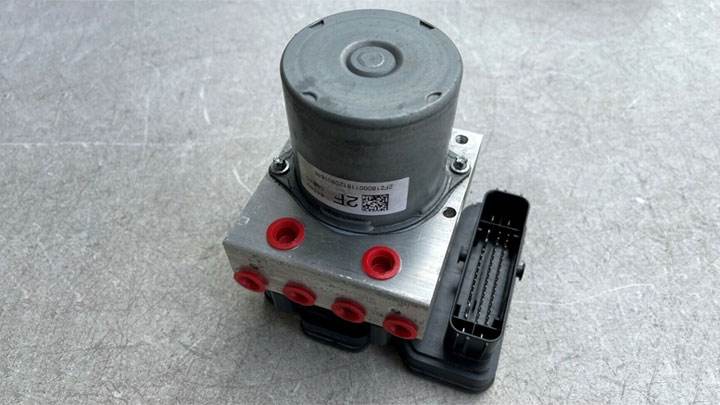
The cost of replacing a vehicle’s ABS control module can vary significantly from one make and model to another. However, it is safe to say that replacing such a key and complex component is not the cheapest of auto repairs, especially considering today’s inflated parts costs.
Generally speaking, one can expect to spend between $600 and $1,200 to have their vehicle’s ABS module replaced. The middle of this range tends to be fairly accurate for most domestic vehicles on the road today.
In almost all cases, the cost of parts significantly outweighs the cost of labor when performing such repairs.
Does the Module Have a Fuse?
The vast majority of vehicles on the road today are equipped with an in-line fuse on the electrical side of the ABS system. This fuse provides power to the ABS module itself and serves as a circuit protection device in the event of circuit overload or an unintended ground.
In most cases, a vehicle’s ABS fuse is located in the power distribution block, in the general vicinity of all other critical fuses and relays. The integrity of this fuse can be easily checked using a 12-volt test light or through a simple continuity test with an analog or digital multimeter.
Can I Replace the Module Myself?
In most cases, it is best to leave ABS module replacement to professionals, although those with a reasonable degree of mechanical aptitude might succeed in such endeavors. However, it is important to realize that some ABS modules can require considerable effort to remove and install, depending upon the specific manufacturer’s design.
In some cases, it might also be necessary to flash a new ABS module using a professional-grade scan tool. Alternatively, at least a few manufacturers require that an ABS bleeding procedure be performed after the ABS module itself is replaced. Again, this often requires the use of an expensive, professional-grade diagnostic scanner.
Can an ABS Module Be Repaired?
Depending on the failure in question, it might be possible to repair your vehicle’s faulty ABS module. However, this falls to those who are intimately familiar with the inner workings of such a module itself. Therefore, it is not advised for the average DIY mechanic to undertake such an endeavor.
There are a number of companies that will repair your vehicle’s ABS module for a fee. However, doing so requires the removal of the ABS module in question before sending it to a qualified repairer.
This could be a solution to consider if you can spare the vehicle needing repair for several weeks while its faulty ABS module is repaired and mailed back.