
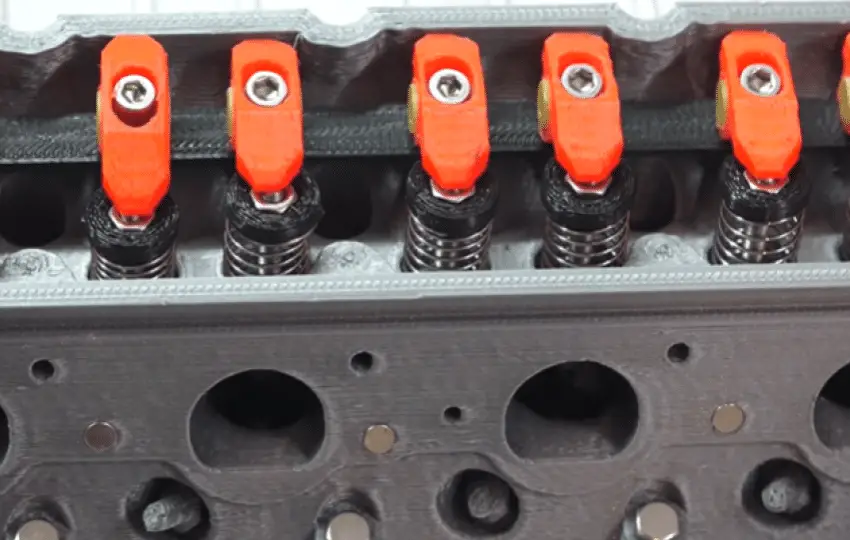
The symptoms of a bent pushrod are often a sign of a serious engine problem. Although a complete break is rare, a deformed rod significantly reduces the total lift provided to the valve. This malfunction can lead to a cascade of internal damage, including damaging the camshaft lobe if it encounters abnormal resistance. Additionally, the bent rod can rub against the lifter or rocker arm, worsening the problem. Therefore, it is crucial to know how to identify the warning signs to intervene quickly.
Main Causes of a Bent Pushrod
Several incidents can be the cause of this deformation. The most common cause is contact between a valve and the piston, often following a timing belt break or incorrect timing. A broken or weakened valve spring can also allow the valve to float and hit the piston. Finally, over-tightening the rocker arms or an excessively high engine RPM can cause enough stress to bend the rod.
How to Diagnose a Bent Pushrod?
Abnormal Noise and Loss of Power
The most immediate symptom is an abnormal metallic clattering sound coming from the engine, synchronized with its RPM. You will also notice a significant loss of power, misfires, and poor acceleration, as the engine is no longer breathing properly.
Visual Inspection
To confirm the diagnosis, a visual inspection is necessary. Remove the rocker arm cover and turn the engine over by hand. Observe the movement of each pushrod. A bent rod will have irregular movement or will not rotate on its own like the others.
Pushrod Replacement Procedure
Replacement requires disassembling the rocker arm cover and removing the defective rod. It is imperative to always replace the pushrods as a complete set and to take advantage of the operation to thoroughly inspect the related lifters, rocker arms, and valves. Do not forget to adjust the rocker arm clearance after replacement according to the manufacturer’s specifications.