
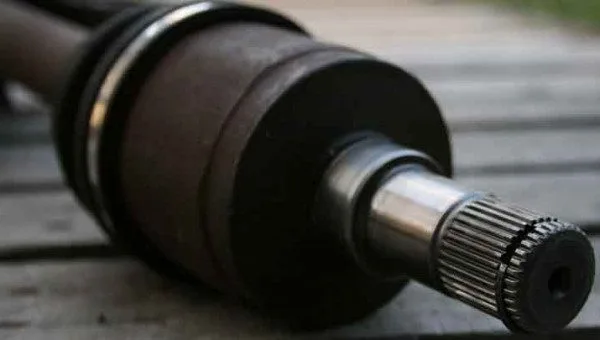
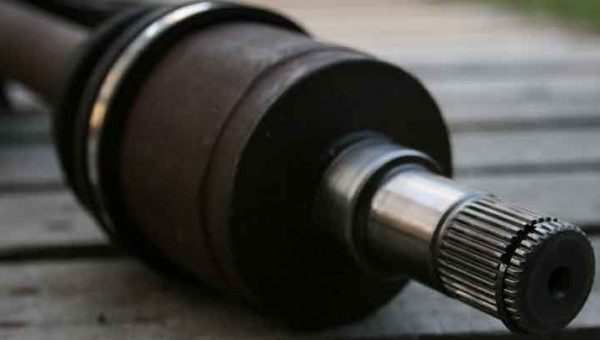
The power created by the engine is called torque. The drive shaft’s task is to transmit this torque power to the vehicle’s wheels.
Most economy cars are front-wheel drive, so the torque would be transmitted to the two front wheels with what is called a half-shaft.
But if you have a rear-wheel drive or a four-wheel drive vehicle, a long drive shaft (or propeller shaft) is needed to transfer the torque produced by the engine to the two rear wheels. In the case of a four-wheel drive vehicle, you may find that it actually has two separate drive shafts; one to transmit power to the front and another to transmit power to the rear.
Common Symptoms of Faulty Drive Shafts
Since drive shafts spin rapidly, they are capable of moving your vehicle’s rear wheels. The only way they can continue to spin rapidly is if they remain weighted and balanced exactly right.
When the drive shaft starts to have operational problems, your driving ability is impaired. Specifically, there are 5 common symptoms that you can recognize which will let you know there is a problem with the drive shaft or the slip yoke.
1) Vibrations
If you are driving the vehicle and feel a lot of violent vibrations coming from underneath, your drive shaft may be having problems. This is usually the first symptom people recognize when there is a drive shaft problem.
The vibrations are likely due to worn drive shaft bushings. These bushings are what normally prevent the drive shaft from vibrating in the first place.
If the problem is not fixed quickly, the vibrations will intensify. It will become so bad that your passengers will feel it too. Worst of all, other transmission components may also be affected and damaged.
2) Clunking Noise
When you accelerate your vehicle, do you hear a clunking noise? What about when you are driving the vehicle in reverse, or even while driving?
If you hear clunking noises in any of these cases, it may mean your drive shaft has a problem and needs to be inspected quickly. Often, this is a common symptom of a bad slip yoke.
3) Screeching Noise
If you are driving and hear a screeching noise coming regularly from under your vehicle, it means your drive shaft might be faulty. It could be unbalanced or another part might be worn out.
4) Universal Joint Movement
If the U-joint of your drive shaft is spinning too fast or not spinning at all, then that is a problem with your drive shaft. The bearing cap seals could be rusty. Either that, or the U-joint itself is not stable.
You will need to have your drive shaft replaced because you cannot drive your vehicle in its condition.
5) Turning Problems
If you try to make a turn with your vehicle and the wheels do not turn immediately or they hesitate, then you have a problem with your drive shaft. The tires will have significant resistance that you can feel when trying to turn.
Obviously, this is a serious problem that needs to be looked at immediately.