
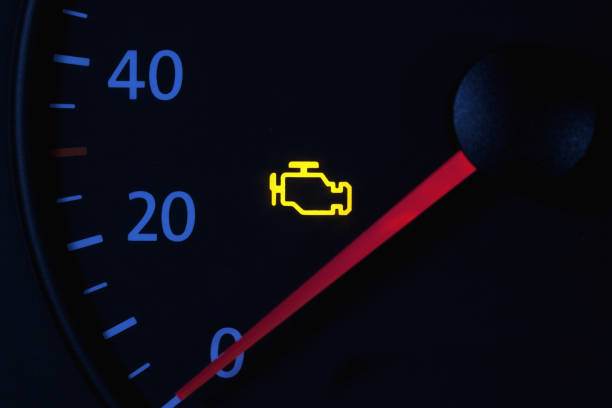
If you’re like most people, you probably know very little about your car’s air/fuel ratio sensor. But what if I told you that this small piece of equipment is responsible for ensuring your engine runs properly and efficiently?
Let’s look at what an air-fuel ratio sensor is, where it’s located, the common symptoms of failure, and how much it will cost to replace. It’s going to be fun!
What is an Air-Fuel Ratio Sensor?
An air-fuel ratio sensor (or air-fuel sensor) is a simple device found in your vehicle’s engine. It constantly measures the amount of oxygen in your exhaust gases and sends this information back to your ECU (your car’s central computer).
This allows your engine to know if it needs to run richer, leaner, optimize fuel economy, or if you like a certain SPEED – and your car has this feature – your ECU can even optimize performance.
Essentially, you’ll need a properly functioning air-fuel sensor to maintain a healthy engine. This is because the engineers who created the engine designed it to operate at optimal air/fuel levels.
If the ratio changes too much in one direction or the other, the sensor will instruct the ECU to turn on a check engine light on your dashboard. This will “weaken” your engine so you can drive it to your nearest auto mechanic to fix the problem. This might sound extreme, but this way, you’ll still have a car at the end of the day.
Where is it located?
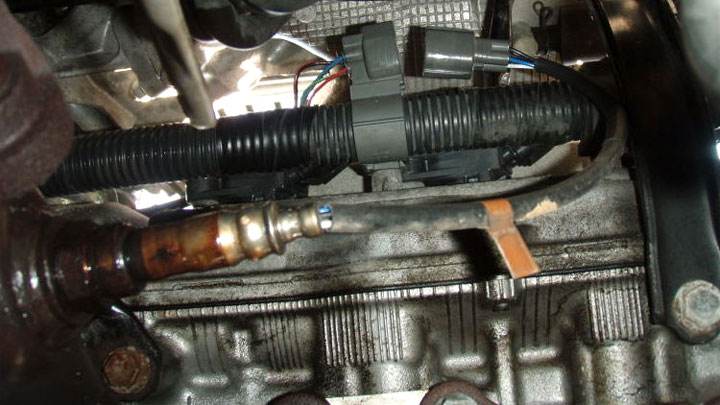
The air-fuel ratio sensor is located either in the exhaust manifold or in the front exhaust pipe. It measures the amount of air in your exhaust gases and uses this information to determine your current air-fuel ratio.
Symptoms of a Bad Air-Fuel Ratio Sensor
#1 – Rough Idle

If, for some reason, you notice your engine’s RPM increasing, then decreasing, then sputtering a bit, then returning to normal, you might be experiencing a rough idle. You might also feel it through the floor when you’re sitting in the car with the engine running and the vehicle in “Park.”
It might just feel like a “tapping” or intermittent rumbling for no apparent reason. This could be a potential symptom of a bad air/fuel sensor.
#2 – Engine Ping

If your car makes a metallic noise, almost a rattling sound, when you accelerate from a stop and it hasn’t always done this, the air-fuel sensor might be failing. Sometimes called “spark knock,” engine ping is the result of an improper combustion cycle.
If you don’t have enough air or too much air in your air-fuel mixture, you could end up with incomplete combustion. This will release harmful gases into the atmosphere that none of us want to breathe.
#3 – Poor Gas Mileage
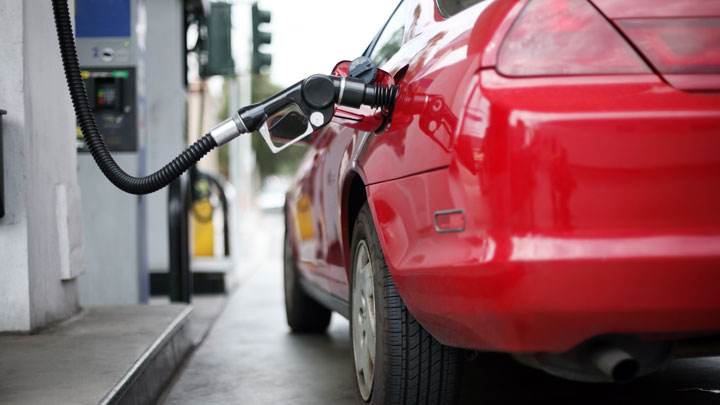
If you’re like me, you pay attention to how far a tank of gas can take you. The thirstier the car, the more I pay attention to how much money I’m spending.
For example, I know that my Toyota Sequoia, driven at 5,200 feet above sea level (as I drive), will average about 16 to 17 MPG. If I suddenly saw it drop to 12 MPG and my habits hadn’t changed much, I might check the air-fuel ratio sensor for an issue.
You can get a scanner that plugs into your OBD 1 or 2 port and it will tell you the kind of codes your engine is throwing, which could be much cheaper than taking the car to your mechanic. Or, you can go to the dealership and they will tell you exactly what’s wrong, then fix the problem while you wait.
#4 – Increased Exhaust Emissions
If you notice your car smoking a lot on startup, there’s a change in smell from your exhaust, or it seems like there’s a bit more smoke than usual coming out, take your car to the mechanic. They will be able to determine if your air-fuel sensor is faulty and if you’re getting incomplete combustion.
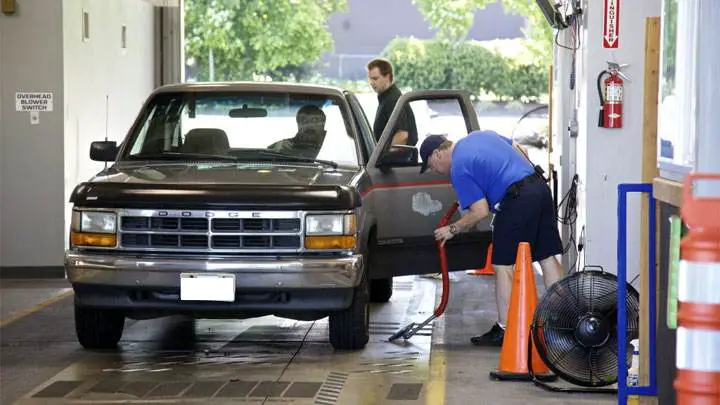
Alternatively, if you need to register your car or take a new emissions test, you’ll need to go to your state agency to have this measured. If you fail the test, but just passed it last year, you might have a faulty air-fuel sensor.
Related Fault Codes: P0131, P0132, P0133, P0134, P0135, P0170.
#5 – Decreased Engine Power

You’re driving and you’re going to pass a semi-truck, but suddenly you find it’s taking longer than usual. You check the back seat, and there’s no extra equipment inside, and you don’t have a pen of squealing pigs in the trunk – everything should be fine, right? Wrong.
You seem to have a sudden drop in engine power, which is a potential symptom of a bad air-fuel sensor. Take the car to your favorite repair shop to have it checked. It’s a fairly simple and inexpensive fix if you take care of it quickly. This way, you can avoid further problems later.
What Causes Sensor Failure?
As is the case with most other sensors in your vehicle, fuel, grime, dirt, debris, and physical damage can all negatively impact your air-fuel sensor’s ability to properly transmit information to your ECU.
Unfortunately, this isn’t something easy to avoid because the sensor lives in your exhaust system, so you’re not going to take it out and clean it all the time (I don’t know anyone who would). So, when it goes bad, replace it and move on. At least, that’s what I recommend.
Can You Drive with a Faulty Air-Fuel Sensor?
Yes, you can drive with a faulty air-fuel sensor, but we don’t recommend driving with a check engine light on for very long. It could just be your air-fuel sensor, but it could also be a catastrophic engine failure, and the average driver won’t know the difference.
So, if you see the check engine light on, take it to a mechanic. If they say it’s a faulty sensor, just ask them to replace it if you can afford it. Otherwise, try to limit your driving to only necessary trips.
Air-Fuel Sensor vs. Oxygen Sensor
Both have very similar purposes. The only difference is that a proper air-fuel ratio sensor reads a much wider range of inputs than the conventional O2 sensor. This is why it’s sometimes called a “wideband O2 sensor” instead of an air-fuel ratio sensor.
If you’re considering tuning your car, you might want to look into a wideband O2 sensor instead of the conventional method. This data can then be displayed via an aftermarket air/fuel ratio gauge mounted inside your car. More information means more power.
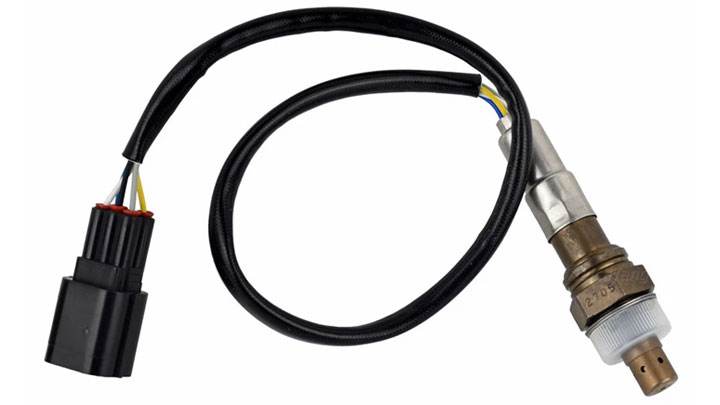
All of this depends on your mechanic’s rate and the type of car you own. Generally, a more expensive car = more expensive parts = a more expensive repair. Expect to pay between $50 and $200 for this repair.