
Your car contains hundreds of different components to make it run properly.
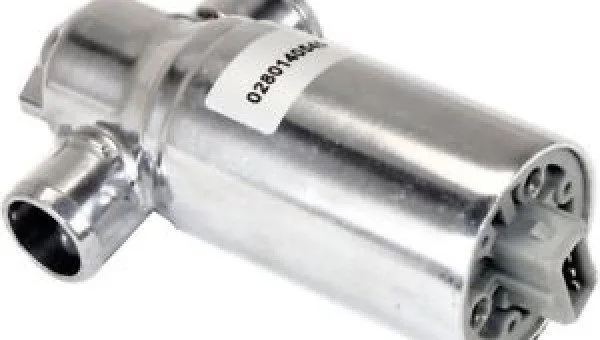
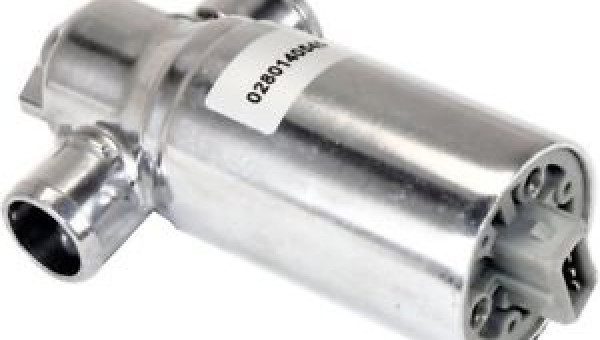
All engine components are interdependent and contribute to the proper functioning of the engine. Among the many engine parts and sensors, one component, called the idle air control valve, is essential to the engine. Its task is quite simple but crucial for the engine’s proper operation.
The idle air control valve is normally installed in fuel-injected engines. A similar device is found in carburetor vehicles and is called an idle control actuator.
The difference between the two is that the IAC is controlled by the car’s ECU, which is present in modern fuel-injected cars.
In this article, we will discuss how idle control works, the most common symptoms of a bad idle control valve, and replacement costs.
Signs of a Faulty Idle Control Valve
Like other sensors and components in a car, the idle air control valve also fails after years in a hot engine compartment. It can either become clogged or stop working completely. If this happens, you will immediately notice that your car no longer runs properly at idle and even sometimes stalls. Additionally, your car may stutter a bit when refueling. If the idle control valve is not working correctly, you may need to keep your foot on the accelerator to prevent the engine from stalling.
Here are some signs to look for to determine if your IAC valve is failing:
1. Irregular Idle
Since the idle control valve ensures that your engine idles smoothly, a faulty idle control valve will cause your idle to either rise or fall, either to high RPM or to get stuck at too high or too low RPM. You can also expect your idle speed to increase and decrease.
2. Check Engine Light
The engine control unit monitors all your engine’s sensors in real-time. If the engine control unit receives incorrect values from a sensor, it stores them as an error code. If the problem occurs more than once, the engine control unit turns on the Check Engine light on your dashboard. If you notice this, read the error codes with an OBD2 scanner.
3. Engine Stalling
If the idle control valve gets stuck in a closed position, problems can occur, such as your engine stalling at idle or needing to accelerate a bit to keep it running continuously. If this happens to you, remove the idle control valve and clean it.
4. Rough Acceleration
Idle control valves can also cause your throttle body to incorrectly calculate the air entering the engine. In some cases, you can expect problems with a bad idle control valve even at higher RPMs using these functions.
What is the Function of the Idle Control Valve (IAC)?
The IAC is a relatively small device, and it is a simple valve to control the airflow to the engine. The unit is installed between the air intake systems so that a small amount of air reaches the engine when the throttle is closed, or the throttle or throttle valve can resume airflow to the engine. The idle control valve has a servo that pushes and pulls a piston, with a cavity inside the housing that blocks or exposes when the servo pushes the piston.
The idle speed is controlled by signals from the vehicle’s computer system that tell the idle control valve how much it should move. The idle control valve is designed to allow a small amount of air to flow to the engine even when the throttle or throttle valve is completely closed.
Why is the Idle Control Valve So Crucial for the Engine?
To keep the engine running, the engine needs a constant supply of air that mixes with the fuel. An engine idles at about 500 to 700 RPM, which is essential because a little fuel is needed to keep the car running longer without overloading the engine, and consequently the engine produces less heat. To maintain the engine speed in the 500 to 700 RPM range, the throttle valve on manual injection vehicles, or the throttle body on injection vehicles, must be closed almost to the “full stop” position. The positioning must be as precise as possible so that the speed needles do not jump too much and remain largely constant.
The problem with the almost closed throttle, however, is that the engine speed is not constant and must be adjusted in real-time to keep the engine running. This is because atmospheric air pressure and temperature fluctuate, which can cause fluctuations for the engine. This can lead to frequent engine stalling.
This is where the idle air control valve comes into play. The throttle or butterfly valve closes and completely blocks the airflow to the engine, but the idle air control valve opens slightly to let a small amount of air into the engine to prevent stalling. Because the idle control valve is
controlled by electrical signals from the vehicle’s ECU, the ECU constantly sends signals to the idle control valve, which it must adjust based on the incoming air temperature and its pressure to maintain the engine at optimal idle. In this way, the ECU can control the engine speed via the idle control valve, regardless of the load on the engine.
The Idle Control Valve Compensates for the AC Compressor Load
For example, when you turn on your air conditioner, your AC compressor starts and puts a small load on the engine through the belt that drives the compressor pulley. This is not a problem if you are driving between 1,500 and 2,000 RPM, but if you are not driving and the car is idling without the idle air control valve, the engine would die or start shaking violently as soon as the air conditioning is activated. You would need to put your foot on the accelerator to prevent the car from stalling. The idle control valve quickly adjusts the piston position to let more air into the engine, bypassing the throttle or throttle valve and compensating for the power loss when the air conditioning is turned on. Just as turning the steering wheel of a power steering car puts extra pressure on the engine, this is compensated by letting more air in through the idle control valve.
Solutions
Similarly, if the extra load on the engine is removed, it would cause the engine speed to increase above 1000 RPM. The idle control valve then adjusts so that the air intake is closed to the point where extra air is no longer needed.