
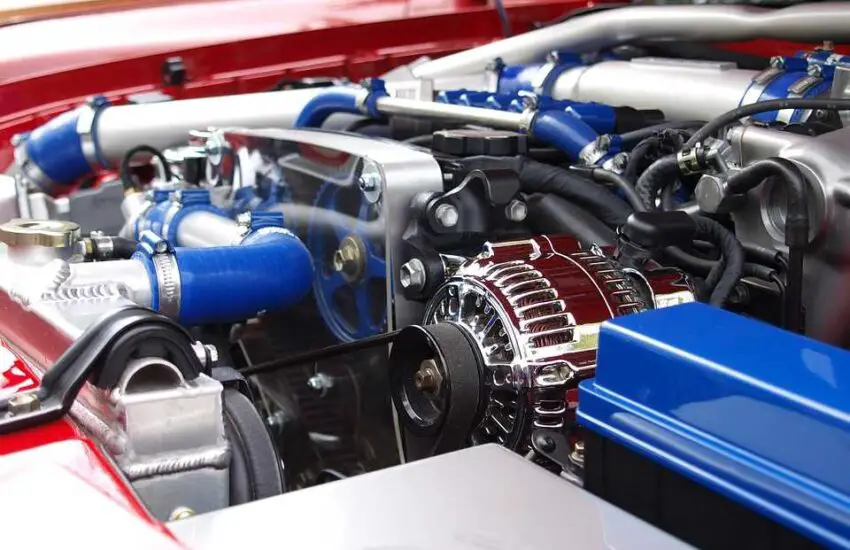
Detecting a boost leak in a car can be challenging. These leaks can damage the entire engine and turbocharger. It is crucial to detect and repair the leak as quickly as possible to prevent further damage. You may face higher repair costs if you don’t address the issue promptly. However, the symptoms of a boost leak can tell you a lot about this vehicle problem.
Your car’s engine may eventually perform poorly. The engine’s power drops to the lowest levels, and the vehicle might start making strange noises.
Before discussing some of the symptoms, drivers should understand what a boost leak is.
Definition of a Boost Leak
A car engine includes pipes, seals, hoses, clamps, and many other components. These loose or damaged components can lead to a boost leak. A boost leak also occurs when the supercharger cannot handle the air pressure, which typically comes from the intake path before the engine cylinders. Car engines equipped with turbochargers exert enough pressure on the components to produce optimal performance. But when a clamp cannot handle this pressure, air begins to escape, resulting in a boost leak.
In short, it is usually an air leak that affects engine performance.
This typically happens with engines equipped with turbo engines rather than non-turbo ones. More specifically, the hoses and pipes associated with the turbo are directly exposed to the heat of the engine compartment and the turbo’s pressure, leading to cracks and leaks. Another situation is due to a loose engine mount. In addition to the engine’s torque, the pressure can twist a pipe and create leaks. Boost leaks also occur in non-turbo engines, but the chances are low. The number of pipes, hoses, and clamps is lower in non-turbo engines.
The Ultimate Explanation of Boost Leak Symptoms
To understand how to check for boost leaks, we have prepared a list of symptoms and causes of turbo boost leaks:
Poor Acceleration
A car that accelerates poorly is one of the main symptoms of a boost leak. The vehicle ends up performing poorly when there is a leak issue inside the engine. Car owners may experience a loss of power during acceleration.
Faulty clamps and flexible pipes are the main causes of this problem. You may need to repair the boost leak to achieve faster acceleration.
Fuel Consumption
An engine with a boost leak problem will certainly consume more fuel. According to expert maintenance tips, checking the vehicle’s average fuel consumption would help identify the issue.
Turbochargers give the engine the power it needs to perform better. But faulty vacuum hoses lead to higher fuel consumption. Detecting and repairing couplers, clamps, and flexible hoses would help eliminate the problem.
Check Engine Light
To know how to find a boost leak, the engine light can be a clue. If drivers see a flashing check engine light on the dashboard, it is highly likely they have a boost leak. The only way to resolve this issue is to go to a garage and have mechanics read the error codes.
Smoke and Noise from the Engine
Other symptoms include smoke from the exhaust and the noise of a boost leak from the engine. The engine starts burning more fuel and produces black smoke. Faulty components inside the engine always lead to strange noises.
The main cause of this problem can be loose clamps or cracks. The boost leak generates excessive heat inside the engine, causing cracks in various components.
Repairing it as soon as possible is important to save money in the future. A full engine repair will certainly cost more than fixing a boost leak.
How to Fix a Boost Leak
After drivers have a thorough understanding of all boost leak symptoms, it is now time to determine the method for repairing a boost leak.
Buy a Boost Leak Tester
Have you ever wondered why car mechanics can detect a boost leak so quickly? The answer is to perform a boost leak test using a testing device. Instead of struggling to test whether your car is leaking or not, this device will test it for you. It is recommended to have one so that car owners don’t have to spend time and money at a mechanic’s garage.
The way to use this tester is very simple: remove the turbo intake and place the boost leak tester, then car owners will attach an air compressor to the system and wait for the pressure to rise. You can find the damaged spots by listening for air leaks.
However, if you don’t have a testing device and still want to look for the boost leak, we offer a second method:
Check the Couplers and Clamps
The clamp is one of the most common factors for boost leaks, so our recommendation is to check the clamps and couplers connected to the engine. What you’re looking for are loose clamps.
To find the errors, we need to look even deeper inside. After examining the compressor housing, car owners will look around the vacuum lines and the blow-off valve controller. Around these areas, it is suggested to inspect the clamps to see if they are properly tightened.
Repairing a Boost Leak
As we all know, loose couplers and clamps are the cause of leaks.
Drivers can start by tightening them and see what happens next. If the leaks don’t stop, it is recommended to call a mechanic.
Frequently Asked Question
How to Know If You Have a Boost Leak?
There are two most common solutions for checking boost leaks: the intake pressure test and the smoke test. Drivers can start by pressurizing the intake, then applying soapy water. If there are bubbles, there are boost leaks. The same technique applies to the smoke test, but instead of using soapy water, the smoke tester will provide a visual indication.
What Does a Leaking Turbo Mean?
Although many different factors can cause oil leaks, most of them come from compressor and turbine housing issues. While boost leaks can slowly affect the engine, oil leaks significantly damage bearing systems. For this reason, it is recommended to take your car to a mechanic’s workshop immediately.
What Can Cause Turbo Failure?
There are three main causes of turbo failure: oil contamination, lack of oil, and damage from foreign objects. More specifically, oil is the primary cause of turbo failure.
Final Words
That’s everything you need to know about the symptoms and causes of boost leaks. Neglecting a boost leak would not be good for the engine or the turbo’s lifespan. You risk damaging your engine’s turbo or the engine itself. By understanding these boost leak symptoms, drivers should keep these components in good condition, as it is necessary to add years to the engine’s life.