
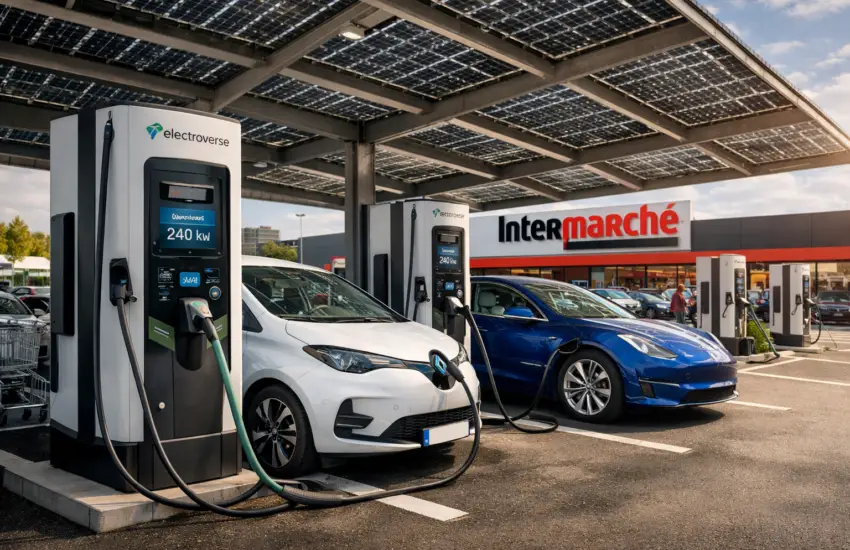
The New Era of Electric Refueling
Supermarket car parks are rapidly evolving from places to leave your car into essential energy hubs. A landmark strategic partnership between energy tech pioneer Octopus Energy and infrastructure specialist Eranovum is set to deploy 3,000 ultra-fast electric vehicle (EV) charging points across France. This ambitious initiative will primarily utilize the extensive network of Intermarché supermarket parking lots, fundamentally changing the EV charging landscape.
Strategic Partnership for Rapid Deployment
The collaboration leverages the unique strengths of both companies. Octopus Energy brings its expertise in renewable energy and smart charging technology, ensuring the infrastructure is efficient and grid-friendly. Eranovum contributes its proficiency in the deployment and operation of large-scale charging infrastructure. By targeting high-traffic retail locations like Intermarché, they guarantee maximum convenience for drivers, integrating charging into weekly routines.

Transforming Consumer Convenience
This move addresses two critical barriers to EV adoption: charging speed and accessibility. Ultra-fast chargers can add significant range in the time it takes to complete a grocery shop, making charging stops productive rather than a prolonged wait. Placing this infrastructure at supermarkets, which are naturally frequented destinations, removes the need for drivers to go out of their way to find a reliable high-power charger. It represents a significant step towards making EV ownership as convenient as refueling a traditional combustion engine vehicle.
A Blueprint for European Expansion
The installation of 3,000 ultra-fast chargers at Intermarché is more than a national project; it serves as a potential blueprint for other markets. The model of partnering with large retail chains to utilize their real estate for energy infrastructure is highly replicable. As the demand for electric mobility surges across Europe, similar partnerships are likely to emerge, turning retail parks into critical nodes in the continent’s future energy and transport network.