
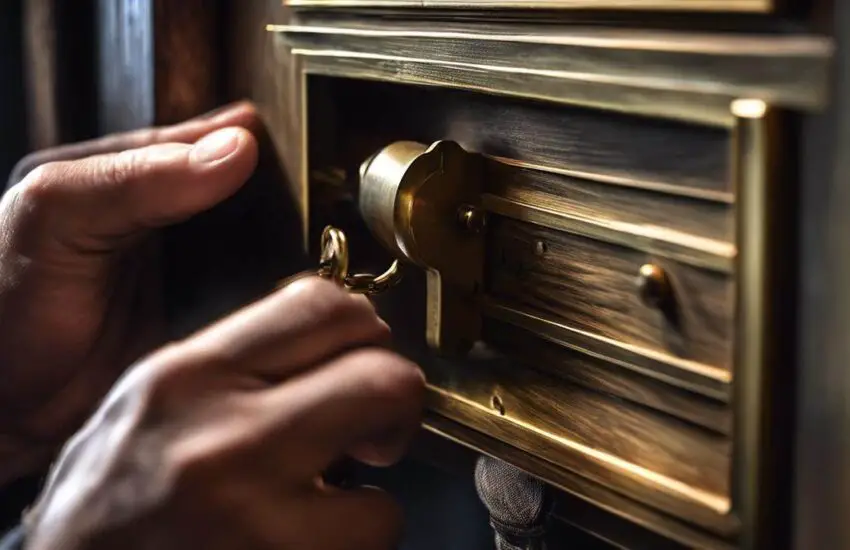
When faced with the mysteries of a stubborn door that refuses to open or close properly, it is essential to have the appropriate knowledge to diagnose and resolve locking issues. Entering the world of locks requires a fine understanding of the different mechanisms that compose them. In this context, diagnosing a locking problem becomes an art as well as a science: knowing how to examine a lock to determine if the malfunction lies in the cylinder, key, bolt, or other internal components is fundamental. Additionally, it is important to check the door’s alignment and the proper functioning of moving parts to ensure daily security and comfort.
Diagnosing Locking Problems
Deciphering Lock Problems: Untangle the Knot in a Blink of an Eye
In the arena of home troubleshooting, a stubborn door lock may seem like a minor adversary. However, equipped with the right analytical tools and a hint of technical insight, this mechanical mystery can be solved with near-surgical precision. Here is the procedure to diagnose a faulty lock, as rigorous as a testing protocol for the latest trendy gadget.
Step 1: Initial Check
Start by inspecting the key. A bent or damaged key is often the culprit. If your key is at fault, replace it. Otherwise, it’s time to dive into the heart of the matter.
Step 2: Cylinder Analysis
Insert the key into the cylinder and test the smoothness of the rotation. If it resists, a specific lock lubricant could be your quick solution. Spray lightly and test again.
Step 3: Lock Details
A lock may be jammed due to debris or corrosion inside. Carefully disassemble the cylinder and look inside. Cleaning may be necessary, or it might be time to replace the internal mechanism.
Step 4: Door Diagnosis
A misaligned door puts pressure on the lock. Check that the door is not sagging and that the hinges are tight. Adjust if necessary to ensure perfect alignment with the frame.
Step 5: Multipoint Locking
If the door is equipped with a multipoint locking system, each point must be checked individually. Arm yourself with the patience of a data scientist hunting bugs and proceed methodically.
Step 6: Bolt Test
A faulty bolt can make the task difficult. Check if it enters and exits the strike plate correctly. If the bolt is stuck, it can often be repaired; otherwise, it will need to be replaced.
Step 7: Electronic Finishes
In our digital era, smart locks add a layer of complexity. If your lock is electronic, consult the manual for error code diagnostics or use the dedicated application for maintenance.
Quick Conclusion
When faced with a faulty lock, a complete disassembly is not always necessary. An analytical mind coupled with a systemic approach can often solve the puzzle. With technology evolving at a frantic pace, maintaining a lock may seem outdated, but even tech enthusiasts know that mastering the basics remains essential. With an accurate diagnosis in hand, the problem turns into a solution—and often, it all comes down to the details.
Finally, don’t forget to regularly question your repair skills. As with any sophisticated gadget, staying up-to-date on modern troubleshooting methods and tools will strengthen your technological arsenal to combat everyday hassles.

Lock Repair or Replacement
When the question arises of repairing or replacing a lock, the approach must be systematic and informed. As an aficionado of technology and cutting-edge solutions, here is a practical guide to making a logical and optimal decision.
- Assess security performance: If the security mechanism no longer meets current standards or shows obvious weaknesses, replacement is necessary. Technological advancements allow for constant improvements in security. It’s better to opt for a recent lock with enhanced security features.
- Consider the lock’s age: A lock that has been in use for several years is often a candidate for replacement. Worn parts may no longer be produced or standard, making repairs complicated and uneconomical.
- Recurring failure rate: A lock that frequently malfunctions, despite repairs, is a warning sign of imminent failure. In this case, replacement is preferable to repair to avoid repeated costs and increase reliability.
- Obsolete technology: Advances in electronic and connected locks quickly render older versions outdated. If an update is impossible or not cost-effective, consider acquiring a recent model that integrates connectivity and smart functions.
- Cost-effectiveness ratio: Calculate the cost of repair versus replacement. If the repair approaches 50% or more of the replacement cost, it is often wiser to invest in new equipment.
- Consequences of failure: Assess the risks associated with a potential lock failure. If it secures high-value assets or critical access points, prioritize replacement for peace of mind.
- Compatibility with home automation systems: Technology enthusiasts appreciate synergies between equipment. If the current lock does not integrate into a home automation ecosystem, it’s time to switch to a more modern model capable of communicating with other devices.
- Insurance requirements: Some insurance contracts impose specific security standards. Ensure your lock is compliant; otherwise, proceed with a replacement to maintain the validity of your insurance.
In summary, the choice between repairing and replacing a lock is a balance between security, technology, and economy. An analytical look at these different elements will guide you toward the most rational decision, supported by a clear understanding of technical progress and access security expectations.

Preventive Lock Maintenance
Strategic Lubrication: Key Maintenance for Door Locks
Beyond understanding the mechanism and preliminary diagnosis, attention must turn to the dynamic and preventive maintenance of locks to ensure their optimal functioning. Lubrication remains an essential pillar in door lock maintenance. Use specific lubricants that do not attract dust or dirt, such as PTFE or silicone-based lubricants. Apply sparingly; an excess of product could lead to residue buildup harmful to the internal mechanics.
Regular Cleaning: Proactivity Above All
Lock cleaning should not be underestimated. Dust and moisture are the silent enemies of a high-performing lock. A damp cloth to wipe the exterior and a toothpick to dislodge fine particles inside the cylinder are often sufficient. Metal debris from the key or cylinder can also be carefully removed with an appropriate tool.
Update or Replacement: The Critical Decision
It is crucial to know when to intervene for an update or replacement. For traditional locks, if signs such as repeated difficulties in inserting or turning the key appear, consider replacing worn parts or the entire lock. Electronic locks require frequent checking of software updates to counter security vulnerabilities and maintain compatibility with the relentless progress of home technology.
Integration into the Home Security Ecosystem
Finally, analyzing the lock’s integration into the home security ecosystem is essential. Electronic locks must communicate effectively with other security devices. Establishing a reliable communication protocol between locks, surveillance cameras, alarms, and the home network strengthens the overall protection system and simplifies remote security management.
Expertise in lock maintenance is a major asset for perpetuating home security. In-depth product knowledge, combined with a proactive approach and methodical implementation, ensures that lock maintenance perfectly aligns with contemporary security and comfort requirements.

Through regular maintenance and informed care, our locks can serve us faithfully for many years. Learning preventive maintenance routines such as regular lubrication and cleaning of lock components is more than just a precautionary measure; it is an expression of domestic vigilance. After all, a well-maintained door is synonymous with peace of mind, and it is this tranquility that we seek to preserve at home. Keep these tips and practices in mind, and you will find that door locking problems will soon be a thing of the past.