
If you’re an enthusiast looking for your first rear-wheel-drive sports car, you’ve certainly come across the frightening term “snap oversteer.” Another, more accurate expression could replace it: “skill issue.”
The Dark Legend of Rear-Wheel-Drive Cars
Often associated with track models and older cars with responsive chassis, “snap oversteer” evokes unmanageable racing cars, designed at the limit of stability, that spin out as soon as a weekend driver approaches their limits. This reputation earned the early Porsche 911 the nickname “the doctor killer” and fueled theories about the Carrera GT.
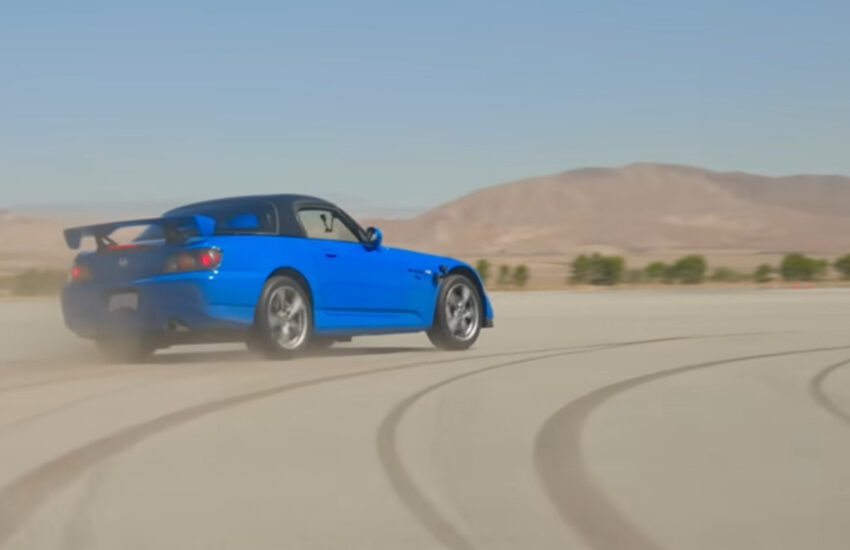
You don’t need to spend a fortune to encounter it. The Honda S2000 CR, for example, enjoys a similar reputation as a capricious car. Designed as a track model, its improvements were meant to make it faster and more responsive in the hands of a skilled driver. Some enthusiasts even consider it a “widow-maker.”
An Expert’s Verdict
But here’s the truth: “Snap Oversteer” is a myth. So, what is the common element that leads so many drivers to spin these cars? For Nik Romano, a driving instructor and race car driver, the answer boils down to two words: skill issue.
“Too often, people want to take a vehicle control course only after having a scary moment in an S2000,” explains Romano. “They are too quick to blame the Honda’s short wheelbase or front-mid engine.”
The Real Culprit: Lift-Off Oversteer
The real culprit isn’t the car, but a driver maneuver: lift-off oversteer. This phenomenon occurs when the driver lifts off the accelerator in the middle of a turn, causing a weight transfer to the front that destabilizes the rear of the vehicle.
“My inputs told the car to do that,” states Romano after spinning the Honda on a test track. He proves his point by reproducing the same maneuver with a smoother, more refined approach. The secret? Being progressive with the accelerator. With a bit of finesse, the CR’s rear stays perfectly in line.
Taming Oversteer
Even with the best intentions, oversteer can be inevitable. But it is neither violent nor unpredictable. It can be controlled and corrected by staying focused and making smooth movements. Romano demonstrates this by maintaining constant acceleration and using counter-steering to bring the car back in line when the rear starts to slide.
“Whether I subtly change the car’s balance with progressive acceleration or correct more aggressively with counter-steering, the result is the same,” he says. “I continue moving in the desired direction.”
What About Mid-Engine Cars?
What about cars with the engine placed behind the passenger compartment, like the Toyota MR2? Romano explains that a car with more weight at the rear will indeed have more inertia in a slide. This may require faster or more extensive corrections, but nothing in its fundamental design makes it unmanageable.
“The car will only ever do what you tell it to do,” concludes Romano. “And as long as you know what you’re asking of it, you can recover.”
If you’re coveting a sports car with a notorious reputation, remember this: “snap oversteer” is just oversteer you didn’t anticipate. Fix the weak link – the driver – and you’ll be ready to fully appreciate all the mechanics.