
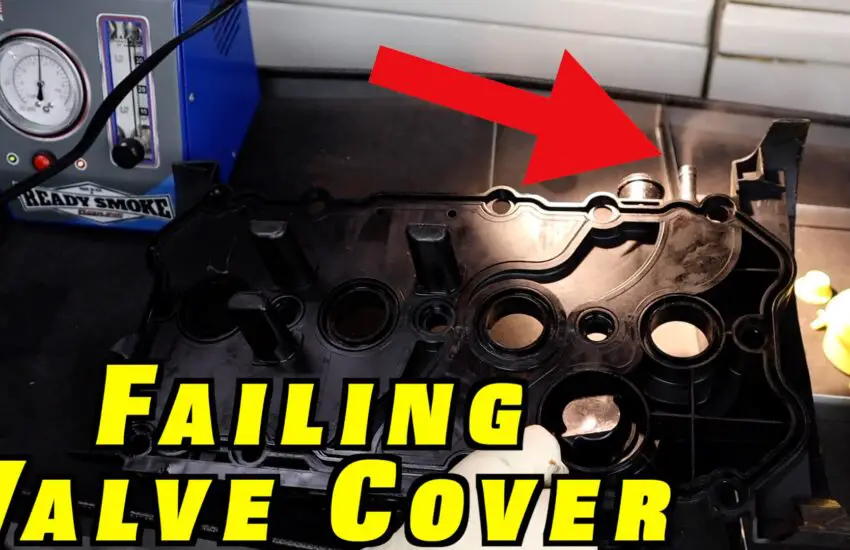
This plastic valve cover directly integrates part of the PCV valve. In this article, we will disassemble it to examine the gas flow passages and the oil separator. We will also perform a smoke test to diagnose a potential failure. A great opportunity to practice using a smoke machine!
Disassembly and Analysis of PCV Passages
The Positive Crankcase Ventilation (PCV) system is crucial for engine health. It allows for the evacuation of blow-by gases and maintains stable internal pressure. On this model, the circuit is partially integrated into the valve cover itself, a complex design that can be prone to defects. By disassembling it, we can clearly see the internal passages and the oil separator, whose role is to trap oil vapors before they enter the intake system.
Smoke Testing: An Essential Diagnostic Tool
To check the system’s sealing and identify potential leaks, we use a smoke machine. This non-invasive test involves injecting smoke under low pressure into the PCV circuit. Any leak becomes immediately visible, allowing for a quick and precise diagnosis. It is an extremely effective method for locating cracks in the plastic, a faulty gasket, or a failing PCV valve without having to completely disassemble the engine.
Conclusion on Leak Diagnosis
Smoke testing proves to be an essential technique for any mechanic or enthusiast. Testing the sealing of a plastic valve cover with an integrated PCV helps prevent issues like unstable idle, excessive oil consumption, or premature clogging of the passages. Early diagnosis using smoke can save you time and money by precisely targeting the necessary repair.