
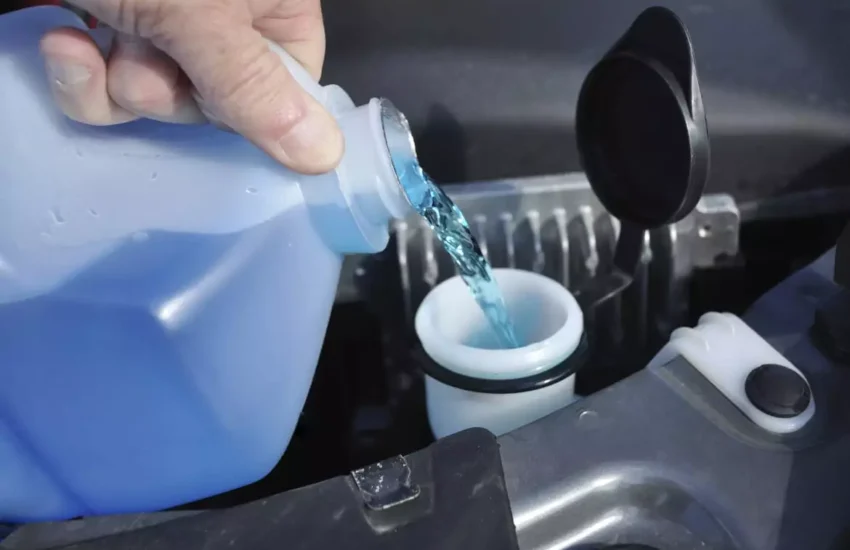
If you’ve ever run out of windshield washer fluid when you didn’t have any on hand, you might have wondered if you really need a special fluid or if you could simply use plain water instead. Water is readily available almost everywhere, and filling your reservoir with it would save you a trip to the store. Is plain water an acceptable substitute for windshield washer fluid?
Windshield Washer Fluid vs. Plain Water
If you live in a place where the temperature never drops to freezing, you might get by with clear water—but even then, water doesn’t have the cleaning power of a specialized cleaning fluid to remove bugs, bird droppings, road grime, and other dirt that accumulates on windshields. Windshield washer fluid contains ingredients designed to clean these stubborn messes. Most products are made of methanol and other alcohols like ethylene glycol. Many also contain small amounts of ethanol or alcohol-based antifreeze to prevent the product from freezing during the winter months. The ingredients in windshield washer fluid work together to give you a clean, streak-free windshield, no matter how cold it is outside.
The main advantages of water are that it’s cheaper than windshield washer fluid and more environmentally friendly. Its main drawbacks are its lack of cleaning solvents and detergents and the fact that it freezes at 32 degrees Fahrenheit, making your vehicle’s washer system useless in cold weather. So even if you live in a very warm climate, keep in mind those trips to Grandma’s in Minneapolis; you don’t want to get stuck in a snowstorm without being able to clean your windshield because you didn’t want to stop at the store to get windshield washer fluid.
Windshield Washer Fluid Works Better but Comes at a Cost
Fluids specifically formulated to clean windshields generally do a better cleaning job than plain water and typically don’t freeze until 20 degrees below zero or lower. The bad news about windshield washer fluid is that it’s usually made of ethanol or methanol, which are toxic to people and animals and can harm the environment. Windshield washer fluid also often includes a dose of ethylene glycol, a toxic alcohol used in automotive antifreeze. These substances can damage paint finishes as well as some plastic and rubber parts of vehicles.
For health and environmental reasons, some vehicle owners make their own windshield washer fluid from non-toxic substances. We have no experience with these homemade preparations and cannot guarantee their effectiveness. However, some people use ingredients like white vinegar and distilled water to clean windshields without using toxic fluids.
Despite the toxicity of over-the-counter windshield washer fluids, it can be downright dangerous to drive without them in many parts of the country, especially in winter. Snow, slush, ice, and road salt can quickly make a windshield unusable. Frequent washing with a high-strength windshield washer fluid designed for winter conditions is the only way to clear away the grime so you can see where you’re going.