
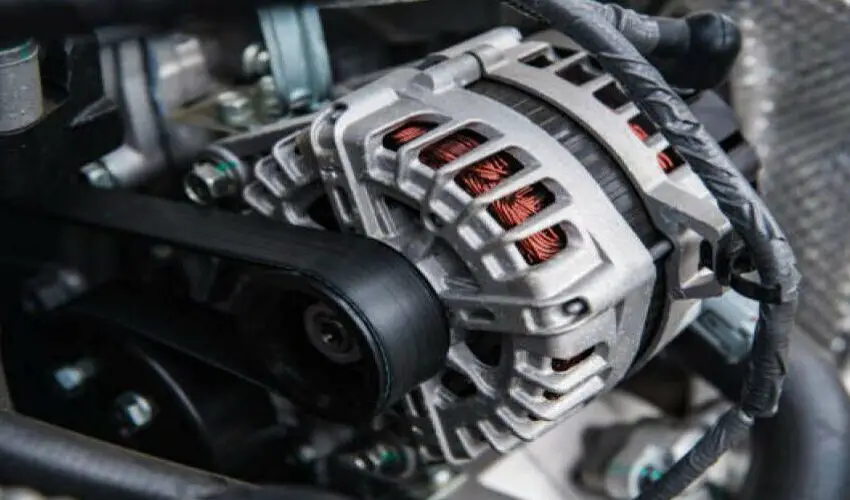
Risks of Driving with a Faulty Alternator: This situation is far more than just an inconvenience; it’s a genuine danger to your safety and your vehicle’s health. Often underestimated in favor of the battery, the alternator plays a crucial role. Without it, the battery, although “powerful,” cannot independently store or redistribute electrical energy. These two components must work in perfect symbiosis to power all of your car’s electronic systems.
Symptoms of a Failing Alternator
Recognizing the warning signs of a failure is crucial to act in time. Several clues are unmistakable and should alert you.
Warning Lights That Illuminate
The battery light on your dashboard is the most obvious alarm signal. If it lights up in the shape of a battery, it often means the alternator is no longer providing sufficient charge.
Dimming Headlights
Do you notice the intensity of your headlights varying? They become dimmer at idle and regain power when you accelerate? This is a classic symptom of a failing alternator.
Various Electrical Problems
Power windows that roll up abnormally slowly, a car radio that cuts out, or windshield wipers that operate slowly are all signs that your car’s electrical system is underpowered.
Abnormal Noises
A squealing or grinding noise coming from the engine can indicate a problem with the alternator’s bearings, often a precursor to its complete failure.
Immediate Dangers on the Road
Ignoring these symptoms and continuing to drive exposes you to serious and immediate risks.
A Sudden and Unexpected Breakdown
The most direct danger is a total breakdown. When the alternator no longer charges the battery at all, the battery discharges quickly. This results in a loss of engine power, followed by a complete stall, leaving you stranded, potentially in a dangerous location.
Loss of Driving Aids
In modern vehicles, electrical discharge leads to the gradual failure of essential assistance systems: power steering, ABS braking, ESP, and airbags. Your vehicle becomes much less safe and much more difficult to control.
Long-Term Consequences for Your Vehicle
Beyond the immediate danger, a faulty alternator causes costly collateral damage.
Battery Damage
An alternator that overcharges or undercharges the battery significantly reduces its lifespan. You will most likely end up having to replace both components.
Engine Control Unit Damage
Voltage fluctuations can damage your car’s engine control units and electronic modules, which are extremely expensive parts to repair or replace.
What to Do About a Failing Alternator?
At the first signs, it is imperative to act. Avoid long trips and non-essential travel. Go to a mechanic as soon as possible for a diagnosis. The repair, although sometimes costly, is always less expensive than the consequences of a total breakdown or the damage caused to other electrical components of your car. Do not take unnecessary risks: your safety is priceless.