
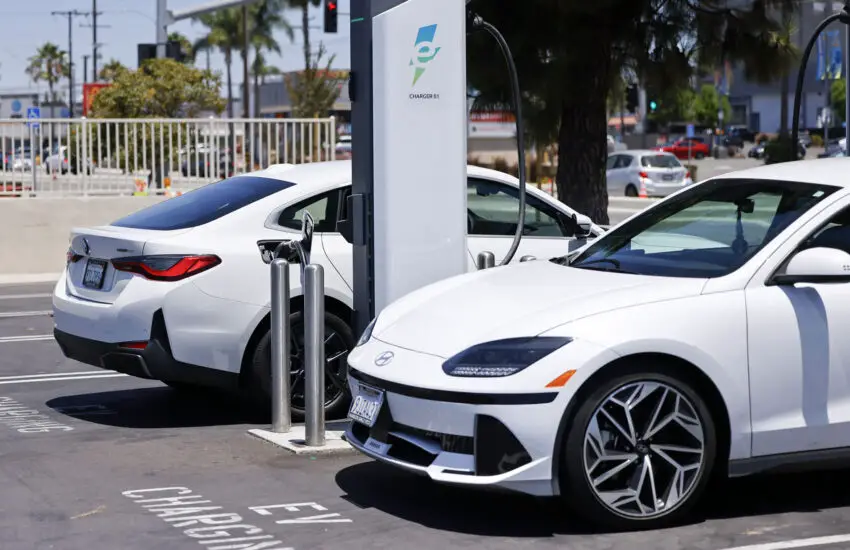
It is widely accepted that electric vehicles, or electric cars, are more environmentally friendly than their gasoline counterparts. This claim includes the total impact of battery manufacturing and the production of electricity needed for their charging. However, this generalization masks important specifics, such as the most virtuous models or the crucial influence of geographic location.
A Comprehensive Cradle-to-Grave Analysis
The University of Michigan provides a precise answer to these questions through an in-depth study, accompanied by an online calculator. This tool allows for the comparison of greenhouse gas emissions over the entire life cycle of vehicles – from production to disposal, including emissions related to driving and the production of fuel or electricity.
The Decisive Impact of Your Location
The results vary considerably depending on your place of residence. For example, in Bucks County, Pennsylvania, a compact gasoline sedan emits 309 grams of CO2 equivalent per mile. A compact hybrid emits 20% less, a plug-in hybrid 44% less, and an electric vehicle (EV) with a 200-mile range, 63% less. These gains would be even greater in Phoenix, with a 79% reduction for an EV.
Large EVs Outperform Small Combustion Vehicles
The most striking result concerns the comparison between large EVs and small combustion cars. The study shows that the heaviest and largest EV emits only 71% of the CO2 emitted by a compact gasoline car. Thus, over its entire life cycle, a 3.2-ton electric pickup truck (Rivian R1T) is less polluting than a standard Honda Civic.
The Case of Pickups and Freight Transport
Given the popularity of pickups in the United States, the study included the cost of cargo transport. Even with a 1,100 kg load, a 400-mile range electric pickup would produce about 35% of the emissions of an empty gasoline pickup. Note, however, that carrying a load impacts the range of an EV more than that of a combustion vehicle.
An Unequivocal Conclusion
The University of Michigan acknowledges that parameters, such as charging ranges, could refine the analysis. Nevertheless, the main message is clear: any vehicle with an internal combustion engine is more harmful to the environment than any EV. The key takeaway from the researchers is as follows: “Electrifying the powertrain offers greater potential for emission reduction than simply reducing the vehicle size.”