
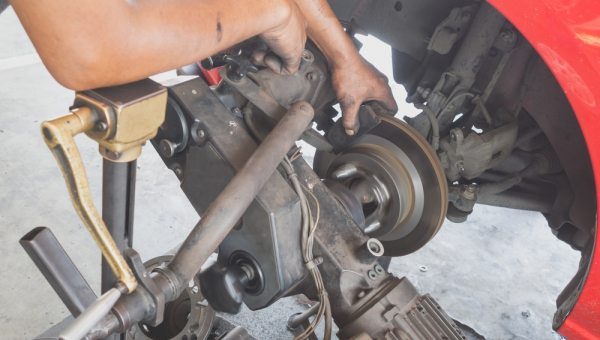

Nothing lasts forever, and brake rotors are no exception.
After all, brake rotors endure a lot of abuse every time you apply the brakes.
The time it takes for them to wear out depends on several factors: how easily the rotors cool down, how you apply the brakes, the quality of the brake pads, and their exposure to contaminants like dust.
Among the above factors, however, brake pads are the most important, as they come into direct contact with the rotors every time the brakes are applied. Therefore, you should avoid buying brake pads that contain a high proportion of metal.
It’s better to choose low-friction materials such as ceramic.
Resurfacing Brake Rotors
Brake rotors can be resurfaced if there are slight irregularities. In most cases, however, resurfacing is not recommended, as it can make your car’s brakes noisy. When you resurface a rotor, you essentially remove a layer of metal. This eventually makes the rotor so thin that it is no longer safe for driving. Therefore, rotors should not be resurfaced every time you change your brake pads.
You should also remember that not resurfacing brake rotors when necessary can lead to unnecessarily high wear on the brake pads. The uneven surface of the brake rotor can shorten the lifespan of the brake pads and increase your maintenance costs.
However, resurfacing brake pads is not very expensive. Many mechanics charge only $20 to $30 per rotor to resurface them. However, you can expect a higher price depending on the damage to your rotor.
Replacing Brake Rotors
The availability of original parts has made it easier for the average car owner to replace car parts without spending too much money. In some cases, it is less expensive to replace a brake rotor than to have it resurfaced, especially if you are a DIY mechanic. Resurfacing at home can cost you a lot of money, so it’s better to have a replacement than to resurface.
Fortunately for you, new rotors are very easy to install. There is no need to prepare them for installation, as they are already perfectly finished. All you have to do is remove your old rotor and install the new one, and you’re good to go.
You should keep in mind that the replacement cost varies depending on the make and model of your car. A genuine brake rotor for your average sedan may cost $140 or more. In contrast, a genuine rotor for a luxury car can cost over $300.
Essentially, it’s up to you to decide what you prefer. If replacing the pad is more cost-effective for you, go for it. Otherwise, always look for a replacement after resurfacing the brake rotors twice.
Points to consider before replacing or resurfacing rotors
Before moving on to the argument of whether to resurface or replace the rotors, we need to talk about the characteristics of a high-quality rotor.
1. Rotor Thickness
Brake Rotor
Manufacturers were very attentive to the quality of rotors and, as such, they issued rotors that could last at least two sets of brake pads. However, the modern race to reduce vehicle weight and costs has made brake rotors a victim. Manufacturers now produce thin rotors that wear out quickly. In some cases, brake rotors even wear out before the brake pads.
To counter this problem, a minimum thickness indication is provided on the rotors. This specification is necessary to ensure safe braking. If the rotor is so worn that it no longer meets the minimum thickness specifications, it must be replaced. Otherwise, the brake rotor can be resurfaced and reused.
2. Uneven Rotor Wear
Another major issue with brake rotors is uneven wear of the rotors. Uneven wear can result from aggressive driving behavior. One side of the rotor may wear out more than the other and cause problems during braking.
Generally, a rotor that has less than 0.002 inches of lateral runout is in good condition. This problem can be solved by resurfacing the brake rotors. If the problem persists, you may decide to replace them.
3. Corrosion
Corrosion is the sworn enemy of your car. It’s particularly bad for rotors, as they are an integral part of your car. Corrosion and rust can affect your car if you don’t drive it for a long time. Brake rotors are the most susceptible to this damage because they are exposed to moisture and dust.
You may feel the effects of rust when you drive your car after about a week or two without driving it. This is bad because it weakens the rotors over time, and you may hear squeaking when you drive your car for the first time in a while. The brake pads will eventually remove the rust from the rotors, but for a while, your braking power will be reduced.
4. Effects of Heat
Brakes heat up if you apply them frequently while driving. If applied continuously, they lose their ability to brake effectively. This heat is caused by friction, and friction is not your car’s best friend. The friction that occurs when the brake pad presses against the rotor must be effectively dissipated for the brakes to work.
This dissipation occurs through small slots at the back of the rotor, also called cooling fins.
However, these openings cannot dissipate too much heat. If they don’t dissipate enough, your rotors may warp and your brakes may fail completely. Overheating of the rotors is caused by aggressive driving, downhill driving, and towing heavy loads.
5. Rotor Inspection
You should properly inspect your brake rotors every time you change the brake pads. The rotors must be measured to determine if they meet the minimum thickness requirements and if they contain enough metal to ensure adequate braking.
If the rotor does not meet the thickness requirements, it must be replaced with a new rotor. Otherwise, if the rotors have cracks, uneven wear, or rust, you can always have them resurfaced at a reasonable cost and keep your brake rotors like new.