
With the emergence of electric vehicles (EVs), technologies associated with propulsion systems are evolving rapidly. Resolvers play a crucial role in the operation of electric motors in these vehicles, ensuring precise and reliable motor control. This article explores in detail resolvers, their operation, advantages, and application in electric vehicles.
What is a Resolver?
A resolver is an electromechanical sensor designed to measure the angular position, speed, and sometimes acceleration of a motor. Unlike digital sensors like encoders, resolvers operate on the principle of electromagnetic induction and generate analog signals.
How Resolvers Work
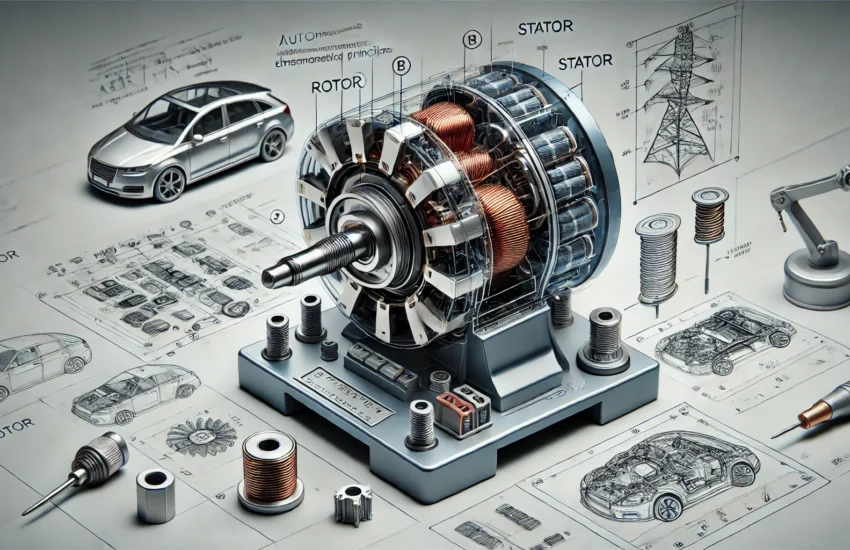
A resolver consists of three main components:
- The Rotor: A rotating part that generates a magnetic field.
- The Stator: Composed of electrical coils that detect variations in the magnetic field.
- Processing Electronics: Converts analog signals into usable information for the motor control system.
When an alternating current is applied to the stator’s primary coil, it induces a rotating magnetic field in the rotor. The stator’s secondary coils detect variations in this magnetic field, generating voltages proportional to the rotor’s angular position.
Advantages of Resolvers
- Reliability: Resolvers are robust and can operate in extreme environments, including high temperatures, intense vibrations, and dusty conditions.
- Accuracy: They provide precise measurement of position and speed.
- Lifespan: Unlike optical encoders, resolvers do not have components that wear out quickly.
- Noise Immunity: Their analog design makes them less susceptible to electromagnetic interference.
Applications in Electric Vehicles
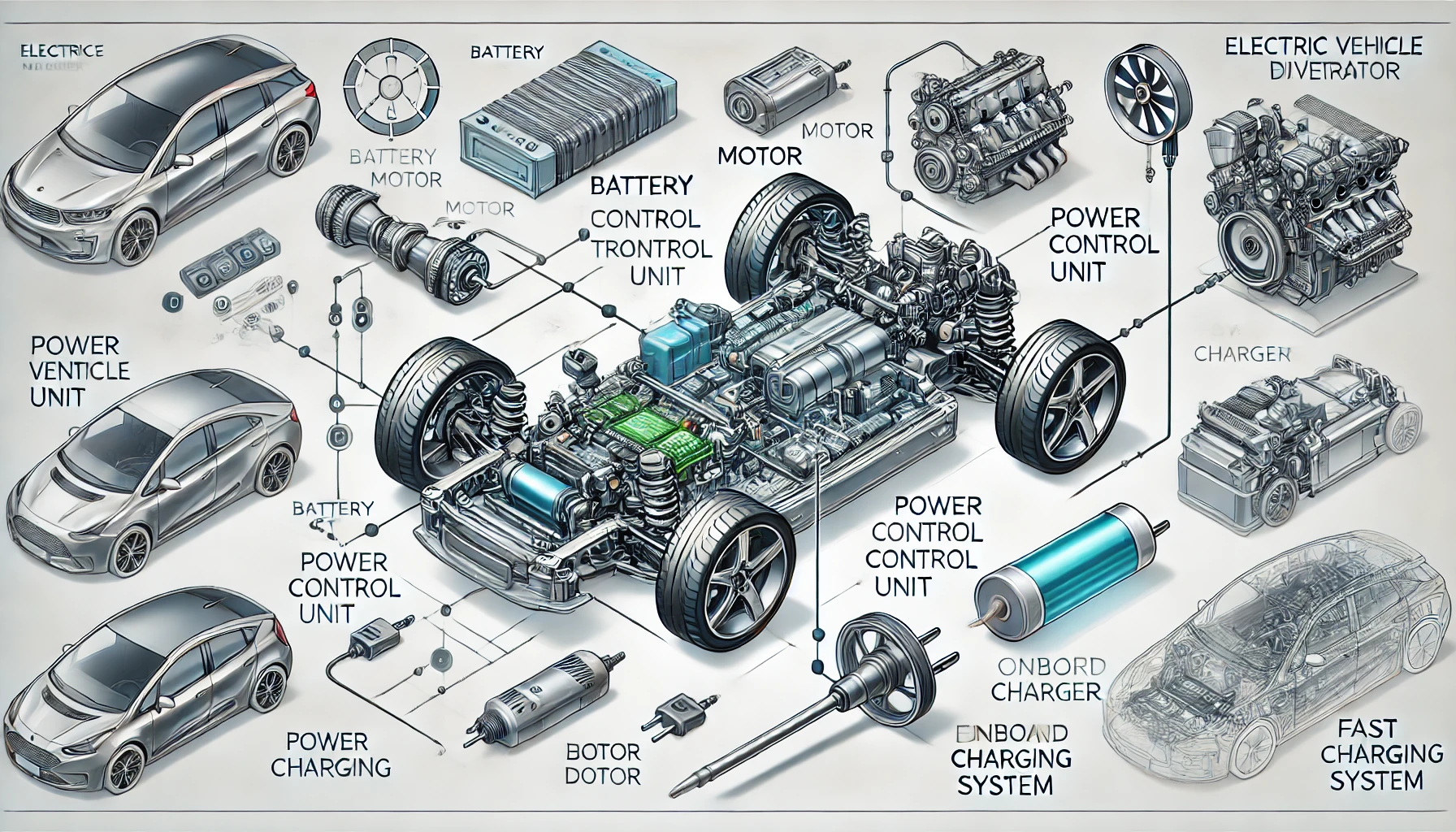
Resolvers are widely used in permanent magnet synchronous motors (PMSM), which are the preferred motors for electric vehicles due to their energy efficiency and power density. The main functions of resolvers in this context include:
- Vector Control: Providing accurate information on rotor position and speed for optimal motor torque control.
- Functional Safety: Ensuring continuous system monitoring to detect anomalies and prevent failures.
- Efficiency Optimization: Enabling energy-efficient operation through precise control.
Limitations of Resolvers
Despite their advantages, resolvers have some drawbacks:
- Cost: They are more expensive than encoders in some applications.
- Complexity: Their integration requires specialized electronics.
- Weight and Size: Resolvers are often bulkier than digital sensors.
Alternatives to Resolvers
Resolvers are not the only sensors used for electric vehicle motors. Optical encoders, magnetic encoders, and Hall effect sensors are alternatives, each with its own advantages and disadvantages depending on application requirements.
Conclusion
Resolvers play an indispensable role in the field of electric vehicles by ensuring precise and reliable motor control. Their robustness and ability to operate in extreme conditions make them a preferred choice for automotive applications. However, evolving technologies and increasing market demands may influence their adoption compared to other solutions in the future.