
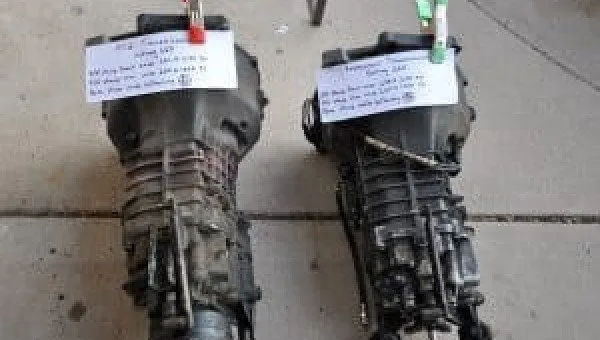

As soon as you notice problems with your car, the most frequently asked question is whether worn parts should be repaired or replaced.
Both options are often quite expensive. When rebuilding the transmission, you need to replace the clutch, gaskets, seals, sealing rings, and bands. All of this drives the price of an overhaul to over $1,000.
If you decide to replace it, it means you have a new or newer used transmission, which may perform better than the old one.
Factors to Consider Before Replacing or Repairing
There are a few factors to consider when deciding whether to replace or repair your transmission or perhaps even scrap or sell the car. Here are some things to consider.
Frequent Breakdowns
If you spend several hours in the garage replacing transmission parts, it’s time to replace them. Long-term repairs are costly, especially if the problem persists. Frequent breakdowns are not uncommon with transmissions that have traveled over 100,000 miles. If you find your car spending many hours in the garage rather than on the road, it’s time to replace it.
Most transmission problems can be solved. A repair will cost you several hundred dollars, but if the total repair cost exceeds the cost of a new transmission, it’s time to buy a new one.
Solving Transmission Problems
It can be a Herculean task for car owners to know what’s wrong with the car’s transmission, and you will need to ask your mechanic for help. Some transmission repairs are easy to fix, while others are so expensive that a new transmission is needed.
Before buying a new transmission, you must first diagnose that the transmission actually has problems.
Delayed Shifting Response
The transmission allows for changing the gear system. If you are driving your car and the gears are abruptly delayed, you have a problem with the transmission. If you drive a manual car, you will struggle to shift the car into the correct gear. With automatic cars, there is a delay in gear engagement when the car is parked in the parking lot.
You will notice that the car doesn’t move because the engine is roaring and there is some kind of delay. This is often a worn clutch that can be easily changed. You need to accelerate the car when shifting gears and watch out for a delayed shifting response.
Knocking or Humming
First, many engine components can produce this knocking noise. You need to rule them out before focusing on the transmission. It could be that your engine axle bearings or brake pads are worn. A well-functioning transmission is often quiet, but the knocking noise is more pronounced in manual transmission vehicles than in automatic ones.
As soon as you hear this humming, have the car checked by a mechanic. Further use of the car will cause more damage.
Transmission Fluid Leak
The fluid is essential for keeping all moving parts of the gears well lubricated. It also helps keep the parts clean and reduces heat emissions from friction. You can distinguish transmission fluid from other car fluids by its red color and sweet smell. If you notice it has a darker color with a burnt smell, you need to flush and replace it.
Unlike engine oil, which is consumed by the car, transmission fluid should never be too low. You can detect a leak when you observe the dipstick.
Car Shaking
If your vehicle’s components are working well, you should enjoy a quiet ride on paved roads without shaking. However, if you hear crunching noises on slippery roads while the car is shaking, there is a problem with your transmission. With manual vehicles, diagnosis is easier.
If the noise occurs when you engage and shift to another gear, the problem is with the clutch. Replacing the clutch is cost-effective, although it may take a day to replace. With automatic cars, you will notice a shaking of the car when it shifts to the next gear.
Refusal to Shift Gears
There are times when you engage the gear, but the car doesn’t engage even after the clutch is pressed. There are several possible reasons for this. The first is that the transmission fluid is leaking. If you bought and installed fluid with the wrong viscosity, you will have problems engaging the gears.
Secondly, the travel computer system may not be working or sending signals. You may have issues if the sensors are dirty or have problems with the wiring. If everything seems fine, try resetting it by removing the battery terminals and letting the computer reset. Finally, check that the gear lever cables are properly adjusted.
Check Engine Light
This is an important light on the dashboard that informs you when your car’s engine is not working as expected. It could mean that many things are not working, and the transmission is one of them. You need to rule out other possible causes.
The onboard computer detects problems using sensors connected to the transmission and other engine parts. If the transmission has a lot of shocks, the light will come on.
Conclusion
Most transmission problems can be solved if they are not too severe. A faulty clutch can be repaired to eliminate leaks. Bearings and gears wear out after heavy use; a mechanic can fix this and get your transmission back to work. Computer sensors become contaminated with dirt, causing them to trigger the check engine light.
Buying a new transmission costs between $1,300 and $3,400, depending on the vehicle model. You will then need to spend $500 to $800 in labor costs to install a new transmission. However, if you are replacing many transmission parts, repairs can be more expensive than buying a new transmission.
Your mechanic can put the cost into perspective, and then you can decide which option you prefer. Older cars often have this problem, and when the transmission starts to fail, other parts fail as well. In this case, you may need to buy a new car.