
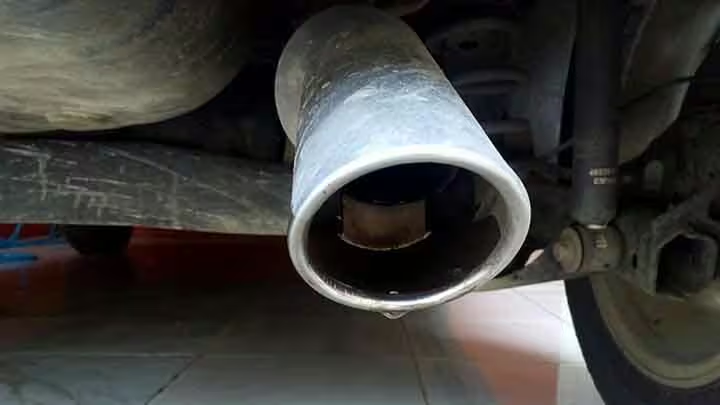
Seeing water dripping from the exhaust pipe can be alarming, but it’s not always serious. In some cases, condensation buildup is normal. In other cases, it signals major engine problems, such as a blown head gasket.
This article explores the possible reasons for water in your exhaust, from harmless to dangerous, so you can assess the severity and know if repairs are needed.
When Water from Your Exhaust Pipe is NORMAL
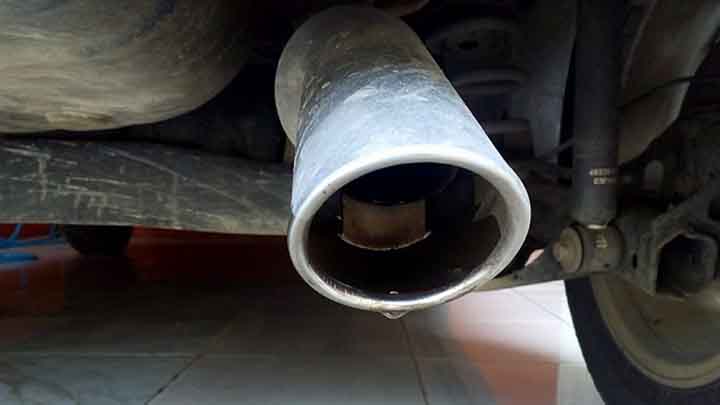
It is completely normal for water to drip from your exhaust pipe, as long as it is not excessive. This is the main takeaway from this article, at the very least.
#1 – Natural Water Condensation
The internal combustion process isn’t without issues, as pollutants sometimes form throughout the process. The three main ones are water vapor, nitrogen, and carbon dioxide.
When you start your car, water vapor and CO2 mix. Then, once you reach your destination and turn off your vehicle’s engine, you will start to see this water vapor gather and accumulate inside your exhaust tips.
You might notice a few drops here and there, but this is nothing to worry about and is simply part of a car’s normal operation. Condensation is the cause of 99% of water-related exhaust issues.
#2 – Catalytic Converter Producing Water Vapor
Oh my, catalytic converters, or “cats,” are just amazing, aren’t they?
So amazing that pranksters try to steal them right from underneath your car the moment you leave your vehicle unattended. A few minutes, a sawzall, and a very motivated gentleman will make your car sound like a race car, and for free.
Of course, you can drive without a catalytic converter, but you’ll likely be penalized by the annual emissions test or by the police. It’s better to have one.
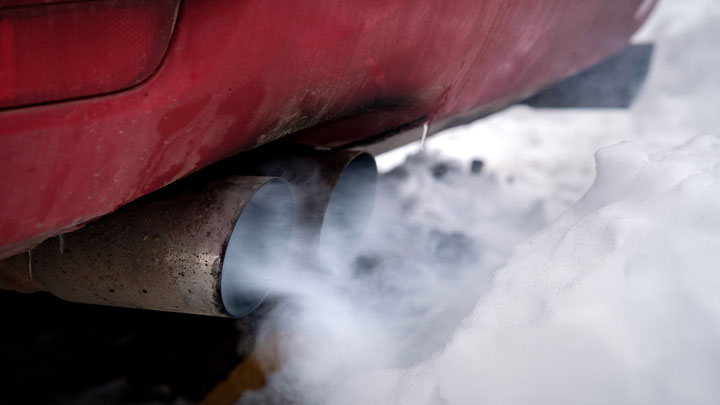
In any case, a catalytic converter removes toxins created during the internal combustion process and creates a bit of water vapor as a byproduct of the process. This water vapor can accumulate on your exhaust tips and drip here and there.
The key takeaway is that, as a general rule, there is no need to worry when you see water droplets dripping from your exhaust tips, provided they are very minimal.

Potential Problems That Can Cause Water in the Exhaust
#3 – Blown Head Gasket
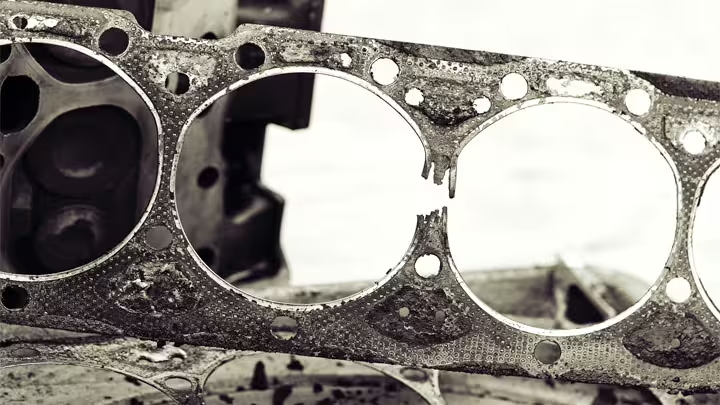
When your engine gets REALLY hot, components tend to warp. In many cases, this is due to a blown head gasket. Your head gasket is like the VIP bouncer of your engine, preventing fuel, oil, and coolant from mixing at the party. When this bouncer doesn’t do his job, you have a recipe for disaster.
If you notice more water (perhaps a cup per hour) coming out of your exhaust pipe, you might be in for a bad time. Inspect the fluid. Is it clear? Or is it a bit murky and opaque? If it looks a bit muddy, it’s probably coolant. If so, turn off your vehicle immediately and open the hood.
Remove the oil filter cap. Is the fluid milky? Green? If so, these are the telltale signs of a coolant and fuel mixture. You now have fuel that doesn’t burn as well, oil that doesn’t lubricate, and coolant that doesn’t cool! You’ll end up with a milky, foul-smelling fluid coming out of your exhaust pipe, and you should take your vehicle to a mechanic as soon as possible.
Engine replacements are very expensive, believe me, and it’s something you want to avoid at all costs. Please ignore the kid on the corner who says “Engine replacement isn’t a bad thing, buddy.” Note: You have probably ignored a few check engine lights, maintenance intervals, or other signs by the time fluid is coming out of your exhaust, so make sure to check if the fluid is about a cup per hour and smells bad. It’s probably just water condensation.
#4 – Cracked Engine Block or Cylinder Head
Let’s talk about the engine block and cylinder head. These are crucial parts of your engine, and when they crack, you have a serious problem on your hands. This usually happens because your engine overheated or something physically damaged the engine.
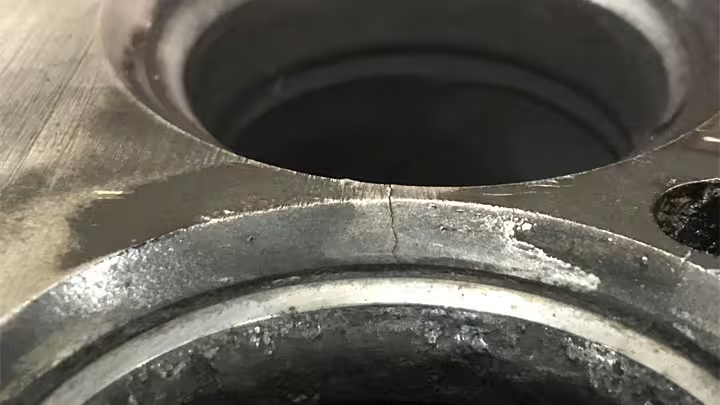
In rare cases, using water instead of proper coolant in extremely cold temperatures can cause freezing and expansion, which can lead to cracks. But with modern antifreeze, this is quite rare.
When coolant leaks into the combustion chamber or into the exhaust system due to these cracks, you will see water or steam coming out of the exhaust. You may also notice the coolant level dropping, your engine running hotter than usual, and your car’s performance dropping.
If you suspect this issue, prepare for a hefty repair bill. Repairing a cracked block or head is a major job, and it’s certainly not something you want to ignore. Believe me, your wallet will thank you for catching this early.
#5 – Faulty Pistons or Rings
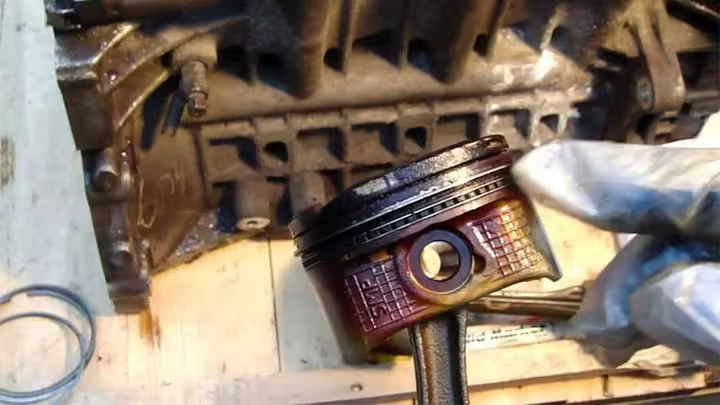
Typically, piston and piston ring failure does not cause water in your exhaust, unless the head gasket is also blown at the same time. One way to diagnose if your rings and pistons are blown is to look for black soot residue or an oily film at the ends of your exhaust.
You might also notice unusual engine noises, a sudden loss of power, increased oil consumption (please check your oil dipstick or level meter (WHY BMW?)), and overheating as indicated by your temperature gauge. While checking these issues, keep an eye on the type and amount of smoke coming from your exhaust when you start your car.
It’s less precise, but if you’re trying to specifically diagnose if your piston rings are faulty, watch for a dark blue/gray color from your exhaust when you rev your engine. This means your piston rings are faulty.
If you are replacing your head gasket due to water in your exhaust, it’s best to check these pistons and rings while you’re at it.
#6 – EGR Cooler Failure
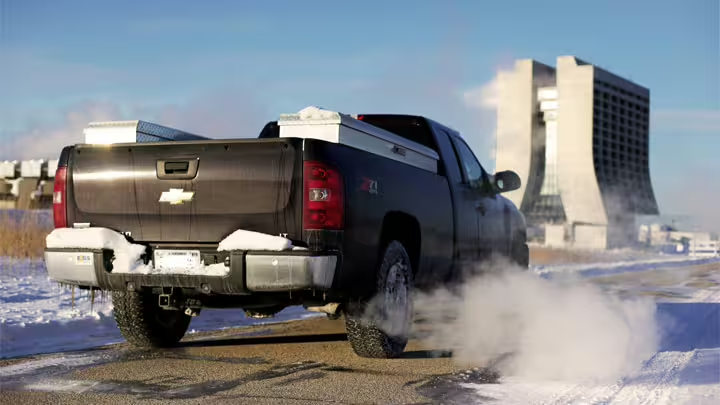
Now let’s talk about the EGR (Exhaust Gas Recirculation) cooler. This little gadget is designed to recycle and reduce emissions. It’s mainly found in diesel engines, cooling the exhaust gases and sending them back for another round in the engine.
But when this guy leaks, it’s like leaving the garden hose on in your engine. Coolant starts seeping into the exhaust system and suddenly, your car thinks it’s an 1800s steam engine.
You might notice white smoke coming from your exhaust pipe, your coolant mysteriously disappearing, and your engine running at a much higher temperature than normal. While not as catastrophic as a cracked block or a blown head gasket, it’s still a “take it to a mechanic” situation.
Ignore it and your wallet might start crying louder than a teenager who lost their phone.
Diagnosing the Problem
A large part of the diagnosis can be done using your two original tools: your hands and your eyes. (Let him cook!)
First, start your car cold and go out to observe the exhaust tips. Is there a constant stream of water coming out? If so, turn off the engine. Then, go back inside.
Are there only a few drops? It’s just water condensation and you can probably drive the car safely, provided there are no other unrelated exhaust issues you are ignoring.
The Short Answer
In 99% of cases, water dripping from your exhaust pipe is due to normal condensation and is not a problem. However, if it’s a significant amount of water, have your car checked by a professional.