

Diesel Engine Myths: “Diesel engines last so long.” This myth formed long ago, however, this question is constantly questioned and debated by many drivers. Why do diesel engines last longer than gasoline engines? Let’s break it down and compare diesel and gasoline engines. From there, we will answer the question and clarify it!
How does a diesel engine work?
For some car owners, diesel engines do not seem to be a smart choice. Noisy, smelly, and heavy are the characteristics that everyone seems to be able to highlight when mentioning diesel engines. However, it is undeniable that diesel engine cars are still highly valued, especially among experienced drivers. As part of this article, we will soon discover how diesel engines work to understand the idiosyncratic characteristics of this engine.
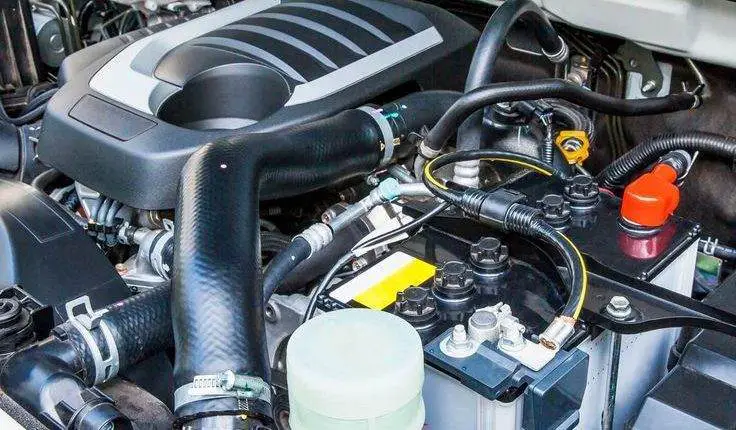
A diesel engine is a type of internal combustion engine, different from a gasoline engine. The combustion of fuel, i.e., diesel, occurs in the combustion chamber when the piston approaches top dead center during the compression stroke, which is a spontaneous combustion under the influence of high temperature and pressure of the compressed air.
In diesel engines, the operating cycle starts with pure air drawn into the cylinder, not an air-fuel mixture as in conventional gasoline engines. The piston’s movement compresses the air, heating it to a high temperature. When the piston gets closer to the top of the cylinder, fuel is injected under high pressure through the number of precisely machined holes in the tip of the fuel injectors. At this point, the fuel enters the engine in the form of a fine spray. Spontaneous ignition occurs without needing a spark and the rapid expansion of the combustion mixture increases the pressure in the cylinder, forcing the piston downward and powering your vehicle.
How long do diesel engines last?
If you want to buy a car with features such as reliability, robustness, and high lifespan, diesel engines might be a good choice for you. Why did we say that? Can you guess the average lifespan of a diesel engine? The truth has been revealed, vehicles equipped with gasoline engines can travel about 250,000 to 300,000 miles before needing a major overhaul or a brand new car. And you might be surprised to know that diesel engines can last up to a huge number: 1,500,000 miles before their performance decreases.
From this number, we can estimate that, if well maintained, diesel engines can run for about 30 years. Of course, the longevity of diesel engines will depend on many factors like any engine. How you maintain the engine, your driving styles, and other external factors… All these will determine the lifespan of diesel engines.
Why do diesel engines last longer than gasoline engines?
Based on the figures from the section above , how long does diesel last? You can see that diesel engines can last almost twice as long as gasoline engines if well maintained. As a result, diesel types are known for their longevity, with engines typically lasting longer than the rest of the vehicle. Why do diesel engines have such a big difference like that? Let’s find out:

Diesel fuel has very good lubrication
Diesel is a light oil and when burned and used as fuel by the vehicle. It lubricates the parts of your engine. Diesel is among the fuels that can only evaporate at high temperatures (ranging from 175 to 370 degrees Celsius), which helps limit engine wear during use. As we all know, gasoline is a solvent. Any gasoline that has not been burned tends to wash the oil off the cylinder walls, increasing wear. Diesel fuel is a light oil, it can reduce the viscosity of the lubricating oil, but not to the same extent as gasoline.
Because gasoline does not have the ability to lubricate very well (gasoline is considered an excellent cleaner), over time, it can increase the wear of your engine. Proven diesel fuel has better lubricating power above the piston rings in the combustion chamber. And the wear process in a cylinder occurs more slowly than in gasoline engines because diesel fuel is essentially a distilled fuel. Thanks to its exceptional lubricating properties, diesel engines have a better lifespan than gasoline engines.
Design of a diesel engine
This can mean there are many differences in the design of a diesel engine that will allow it to run longer than a gasoline engine. A diesel engine is a great example of engineering capability. The components of this engine are generally more durable than gasoline engine parts. The design of a diesel engine is gear-driven, so unlike other parts, the gear can be easily fixed and never lose its timing. In diesel cars, use gear-driven water and oil pumps to avoid the risk of major component failure. Whereas gasoline engines use timing belts, pumps, chains, and other components that can easily wear out and break frequently.
Furthermore, diesel engines have a fuel injector and also excellent self-cooling which will minimize the risks of overheating. Compared to gasoline engines, diesel engines are supposed to be 1.5 times more powerful. Because diesel engines often have a higher compression ratio, maintaining better operating efficiency over time. It is not uncommon for diesel vehicles to exceed the 1.2 million mile mark on the speedometer and still run smoothly.
Diesel engines operate at lower RPMs
If you own a car with a diesel engine, you will notice that the redline on the tachometer is much lower than the gasoline engine. The redline displayed on diesel engine gauges usually does not exceed 4500 RPM, this figure is only about half that of gasoline engines. Why does this happen? Diesel engines tend to have lower RPMs because they have a longer and heavier stroke. With larger strokes, they can produce a lot of torque. To clarify things, we will summarize 3 reasons why diesel engine RPMs are lower:
- Have a longer stroke length.
- Diesel engines are designed heavier.
- They are compression-ignited.
The higher the RPM, the more things break and wear out quickly. So we believe you had an explanation for why a low-revving engine typically lasts much longer than a high-redline engine, because the driver cannot rev the engine beyond 4500 RPM.
Unlike gasoline engines, diesel engines of the same displacement and same number of cylinders always dominate in torque, especially in the high-end. With a thicker inline-four-cylinder structure, the diesel engine easily achieves a torque of over 450 Nm from around 1,500 to 1,800 RPM. Meanwhile, to reach this level, the gasoline engine would have to switch to a 4.7-liter V8 (if it doesn’t use a turbocharger system), but also from 3,400 RPM or more, i.e., much later.
Is diesel better than gasoline?
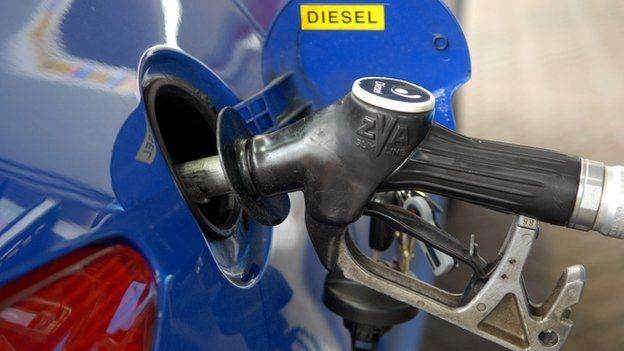
From the above analysis, we can see that the diesel engine has a longer lifespan than the gasoline engine. So does that mean the diesel engine will be better than the gasoline one? Although they are more fuel-efficient and durable, diesel engines are still not the first choice for drivers. Why? Let’s briefly list a few advantages and disadvantages of diesel engines compared to gasoline engines:
Advantages of diesel engines over gasoline engines
- Diesel engines are safer because diesel does not ignite at normal temperature, so there is less risk of fire than gasoline engines.
- Furthermore, diesel engines are less prone to breakdowns than gasoline engines due to the absence of carburetors and spark plugs.
- At the same time, diesel engines have better load capacity than gasoline engines.
About the disadvantage:
- Compared to gasoline engines, diesel engines have a heavier weight and higher manufacturing costs due to their higher compression ratio, which requires more engine parts.
- Repairing diesel engine parts requires specialized machinery, high-quality tools, and highly skilled technicians.
- Because they are heavier and have a higher compression ratio, diesel engines often have a lower redline than gasoline engines. The result is that diesel engines have high torque instead of high power, resulting in slower acceleration.
The above disadvantages are only historical, explaining why diesel engines were not chosen by the majority in the first place. Currently, as technology develops, companies are gradually eliminating or limiting the above disadvantages, making diesel engines more suitable.
Therefore, one cannot claim “Is the diesel engine better than the gasoline engine” or vice versa. Based on the difference in operating principles between the two types of gasoline and diesel engines. You can make the decision to choose the right car for you. Because each version has its own strengths or limitations.
Useful tips to extend the lifespan of diesel engines
Although diesel engines are considered more durable than gasoline engines. For diesel engines to operate at maximum efficiency, drivers must follow maintenance guidelines:
Use the right diesel for your vehicle
Maintaining diesel engines has a few small differences compared to gasoline engines when changing oil for diesel engines. Drivers must change the correct type of oil according to the vehicle’s specifications to limit unnecessary damage. To know the right lubricating oil for your car. You can refer to the user manual or you can contact reputable maintenance centers. Where technicians will advise you on the best oil for your vehicle.
Periodically change the oil filter
Over time, dirt will accumulate and clog the oil filter. The consequence is that dust will follow the oil to the engine parts, directly affecting the engine’s operation. Therefore, periodic inspection and replacement of the fuel filter are essential. According to the manufacturer’s recommendations. You should periodically check the oil filter after 1 to 2 months of use or after 5,000 to 7,000 km. Depending on the engine’s operating level.
Clean the injectors after some time
For diesel engines, the injectors and lubrication systems must be cleaned periodically. The inside of the combustion chamber of diesel engines does not use spark plugs to ignite the fuel like a gasoline engine. Therefore, the fuel injector must always ensure that the injection is smooth and unobstructed to increase the direct ignition and explosion capability. With diesel cars, care must be taken to clean the injectors periodically every 20,000 km.
In addition to the above tips, there will be a few notes for you when driving a diesel car in cold weather. Before starting the engine, it is necessary to turn on the electric lock at the preheating stage. At this point, the glow plug will heat the oil inside the combustion chamber to thin the oil and prevent it from freezing. When the preheating light on the dashboard goes out, start the engine.
Final thoughts: Why do diesel engines last longer?
Reading this far, we will probably see that it is no longer a mystery. When we know that diesel engines have a significantly longer lifespan than gasoline engines. However, you will be surprised to know if a well-maintained diesel engine can travel over a million kilometers or more. Hopefully, with the information from our article, you will have the necessary information about diesel engines.