
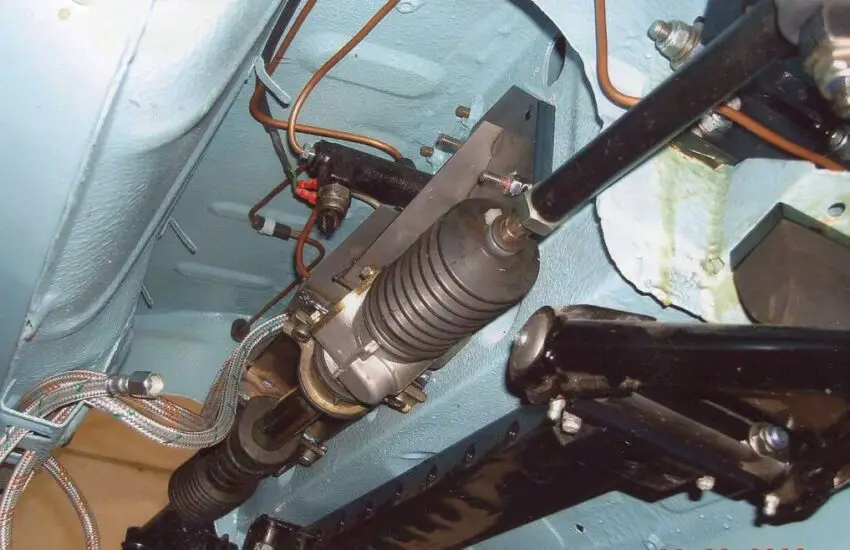
Are you curious about what happens when you turn your car’s steering wheel? Normally, there are many types of steering mechanisms, such as recirculating ball or electric power steering, for example. Rack and pinion is also a steering system you may have heard of. A rack and pinion steering system consists of a pinion (circular gear) and a rack (linear gear). The system converts rotational motion into linear motion. Most cars, small trucks, and SUVs have a rack and pinion steering system, as opposed to the recirculating ball steering found in large trucks, SUVs, and other heavy vehicles.
History of Rack and Pinion
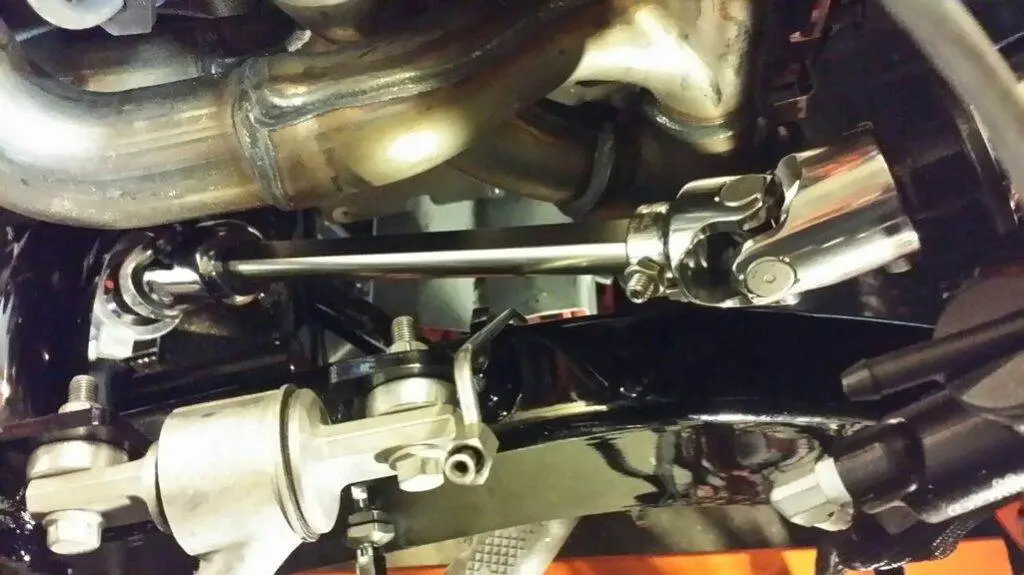
Although rack and pinion steering is relatively new in U.S. automotive history, it is not a new concept. The first rack and pinion steering gears were developed by BMW in the 1930s, but they were only sold in the United States with the 1951 MG, and they were not used in American model production until the 1974 Ford Mustang II and Pinto. AMC used rack and pinion in the Pacer starting in 1975, but GM and Chrysler did not use them until the early 1980s for the X-body and K-Cars.
Manufacturers in the United States saw rack and pinion as logical. It had been used for many years by European and Asian automakers, and its design was simpler than recirculating ball steering gears, making it less expensive to manufacture. Rack and pinion steering is also much lighter than a traditional steering gear, meaning better fuel consumption. Idler arms, center links, drag link sleeves, and pitman arms are not needed with the rack and pinion design. This, in addition to the weight loss benefits. Rack and pinion systems are much easier to integrate into a front-wheel-drive system because they can be mounted near the transverse transmission. Steering gear ratios could also be tailored to each wheelbase as well as handling and option packages. Rack and pinion gears also give the driver a firmer feel in the steering wheel.
Rack and pinion systems are used not only for steering cars and small trucks but also for various other purposes. Rack and pinion systems are not only used to help trains climb steep slopes, but they also provide better brake control, especially in snowy and icy conditions. They are standard features in the majority of stairlifts. The rack and pinion mechanism is frequently powered by hydraulic or electric power.
Arthur Ernest Bishop invented the variable ratio rack in the 1970s. His variable ratio rack was used to improve vehicle handling when combined with a standard pinion.
Rack and Pinion Ratios
To go from lock to lock, most cars require three to four full turns of the steering wheel (from full right to full left). The steering ratio indicates how far you need to turn the steering wheel for the wheels to turn a certain distance. A higher ratio means you need to turn the steering wheel more to turn the wheels a certain amount, while a lower ratio means the steering responds more quickly.
Variable ratio steering is used in some vehicles. The center of this rack and pinion steering system has a different number of teeth per cm (tooth pitch) than the ends. As a result, when the steering wheel is turned towards the lock, it is more responsive than when it is near its center position, making the car more maneuverable.
There are two main types of rack and pinion steering systems:
- End Take-off – The tie rods are attached to the end of the steering rack via the inner tie rods.
- Center Take-off – Bolts attach the tie rods to the center of the steering rack.
How This System Works
Rack and pinion steering works by converting the circular motion of the steering wheel into the linear motion needed to turn the wheels via a gear system. The gear set is housed in a metal tube. The tube has openings at both ends that allow the rack to be attached to a tie rod. The pinion is connected to the steering shaft so that when the steering wheel is turned, the gear turns and moves the rack. The tie rods are connected to a tie rod end, which is attached to the steering knuckle.
The rack and pinion gear set serves two purposes:
- Converting the rotational motion of the steering wheel into the linear motion needed for the vehicle’s wheels to turn
- Providing a gear reduction, making it easier to turn the wheels via the steering wheel
Signs of Problems
Since the rack and pinion are essentially gear mechanisms, they will wear out and fail over time, like almost every other component in your car. Here are the signs that Maintenance Tips think you should pay attention to:
Excessive Play or Loose Steering
Your steering wheel should feel “tight” when you operate it. That is, when you turn the steering wheel, you can feel the front wheels turning. If your rack and pinion are failing, you will notice the steering wheel starting to feel loose or that there is excessive play in the steering wheel. You will often feel that your car is slow to respond when you turn the steering wheel. The car will also feel more difficult to control and may wander at high speed.
At some point, you may also experience a dead spot. This is when you turn the steering wheel, but the front wheels do not turn until you turn it to a certain angle. This happens because the rack and pinion are not meshing tightly, meaning the rack does not actually move when you turn the wheel.
Noise When Turning
Your car may also make a clunking noise when you turn the steering wheel. A worn rack and pinion may not be sufficiently lubricated and can knock and rub against each other, creating noise.
Keep in mind that these noises can come from the tie rods or other suspension components. The difference is that if the noise is from a bad rack and pinion, you will hear the noise almost every time you turn the wheel. Meanwhile, clunking noises from the suspension assembly usually only occur when you go over bumps or make a tight turn.
Power Steering Fluid Leak
If you have hydraulic power steering in your car, you may start to see a power steering fluid leak when the rack and pinion are failing. If you see a puddle of red fluid under your car, it could be a power steering leak or a transmission fluid leak. Check where the leak is coming from to verify if it is power steering fluid or transmission fluid.
Keep in mind that a power steering leak can occur due to a bad power steering pump, a faulty reservoir, or leaking lines. Your rack and pinion might not be the cause in the first place. Furthermore, if your car has electric power steering, you will not see this issue. This is because electric power steering does not require any fluid to operate.
Replacement Costs

A rack and pinion replacement will cost between $1,000 and $1,900, including labor, depending on your vehicle’s make and model. The rack and pinion unit itself typically costs between $700 and $1,500, while labor costs can run up to $400. For example, the rack and pinion for a 2015 Toyota Corolla will cost you $717, add a labor cost of $400, and you get a repair bill of $1,117.
Of course, these are just rough estimates, and we are taking the upper end of the spectrum. Replacing the rack and pinion for your car may be cheaper than our estimate. Needless to say, luxury and high-performance cars are likely to cost more. The good news is that rack and pinion systems usually last quite a long time. They will typically last about 100,000 miles, and they can easily last longer than that. My Mitsubishi Pajero Sport, for example, has 120,000 miles on it and has no steering issues.
With such an expensive replacement job, you are probably wondering if it is really worth it? Before giving your mechanic the green light, it would be wise to check your car’s resale value on the used market. If your car’s value is still well above the repair cost, we would say the cost is worth it.
For example, if replacing the rack and pinion will cost you $1,200, but your car can still be sold for around $10,000, then the repair job is really worth it. However, if your car’s resale value is only about $3,000, it is not worth it. That is almost half the value of your car! In that case, you would probably be better off selling your car as-is.
Another option would be to scrap your car. You can either take it to a scrapyard or to a scrapping company that will pay the metal value of your car. Or you can also dismantle your car and sell individual parts and accessories. The latter option is time-consuming, but you will probably get more money out of your car. Ultimately, do not proceed with the repairs if your car’s market value is not significantly higher than the cost of the repair.
Conclusion
So, to summarize, the rack and pinion are at the heart of your car’s steering system. The rack is a linear gear that connects to the tie rods, which are ultimately connected to the front wheels. While the pinion is a round gear that sits on top of the rack and connects to the steering wheel via a steering column. The rack and pinion will last up to about 100,000 miles. But they can wear out, and when they start to fail, you will see noticeable symptoms. Some symptoms include clunking noises when you turn the steering wheel, power steering fluid leaks, and a loose steering wheel with a lot of play. This obviously makes steering and controlling the car more difficult. That is why you should not drive a car with a faulty rack and pinion, as it can lead to a major accident.