

We all have a friend who has experienced flat tires and a smoking car engine right under the sun, stuck in the middle of nowhere. On a sunny day, when you decide to take a long drive on the highway and suddenly the car breaks down in the middle of the road. We recommend browsing online to learn about the issue of starting a flooded engine.
Sooner or later, every driver has faced this problem when the car refused to start due to a flooded engine. It’s a wise decision to know the engine maintenance tips to avoid such a situation in the future.
In this article, we will share with you the perfect solution to fix a flooded engine and keep your car’s engine in perfect condition.
The Process for Starting a Flooded Engine
1. What is a Flooded Engine?
An engine is flooded when fuel exceeds the car’s engine. This happens due to a poor mixture of fuel and air, which occurs when the driver presses hard on the accelerator pedal. When the driver turns the ignition and the vehicle does not start; it’s a reliable indicator that the engine might be flooded.
A flooded engine occurs when:
- Due to the carburetor: The carburetor provides the engine with a richer explosive mixture in gasoline than prescribed, perhaps because the ink tank overflows with fuel, the main turbine has a larger number than the standard, or the air flap is stuck in the closed position as the carburetor has set the excess fuel.
- When the engine starts (pedal or starter) several times but does not ignite, gasoline accumulates in the combustion chamber, causing fuel suffocation. This can also be due to a weak spark that cannot burn the air mixture, or it may also be due to low compression (weak piston ring or leaking valve), wet spark plug (engine oil leak). In these cases, if the engine does not start, the more you try to pedal (or start the engine), the more fuel will leak and the engine will not start.
2. How to Identify a Flooded Engine?
If the driver does not hear the engine starting; it’s likely that the engine is already flooded. The second indicator is that there would be black smoke coming from the vehicle’s exhaust system. Professionals recommend not starting the car’s engine if any of the above events occur. It’s an essential point to understand how to start a flooded engine to avoid this problem.
3. How to Start a Flooded Engine?
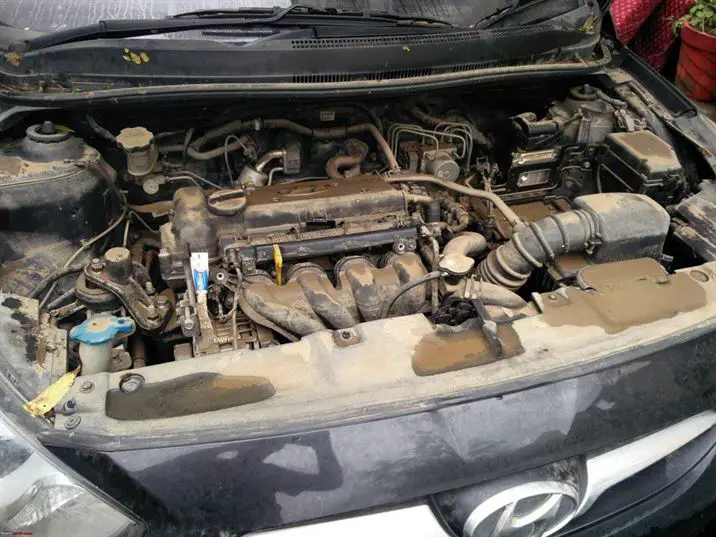
The best solution for a flooded car engine is time. You can open the car’s hood and let the excess fuel evaporate. After about 20 minutes, try restarting your car without pressing the accelerator pedal. If the vehicle does not start, you may need to check the spark plugs.
When excess fuel has flooded the engine, it can soak the spark plugs, making them unable to create enough spark to start the car’s engine. If the car’s engine floods from time to time, you will need to check the fuel injectors and use fuel injector cleaner.

Remember that the ultimate goal is to restore the fuel/air ratio in your vehicle. The other thing to remember is to keep the accelerator pedal to the floor and restart the engine. Do not pump the accelerator pedal, as this will only introduce more air into the engine to balance the excess fuel.
If you have performed these steps and your engine still does not start, you need to remove the spark plug and clean it with gasoline, or clean it by blowing to dry the gasoline. It’s better to replace it with another spark plug if available.
Turn off the switch, use a finger to lightly tap the spark plug hole at the top of the cylinder, and start or crank the engine continuously about 5 to 10 times to let the gasoline vapor in the combustion chamber escape. Insert the spark plug and start as usual.
Summary
Overall, in case your car’s engine does not start, the aforementioned solution would help you eliminate the engine from the unbalanced air/fuel ratio. It’s the best choice for issues such as starting a flooded engine in your vehicle.