
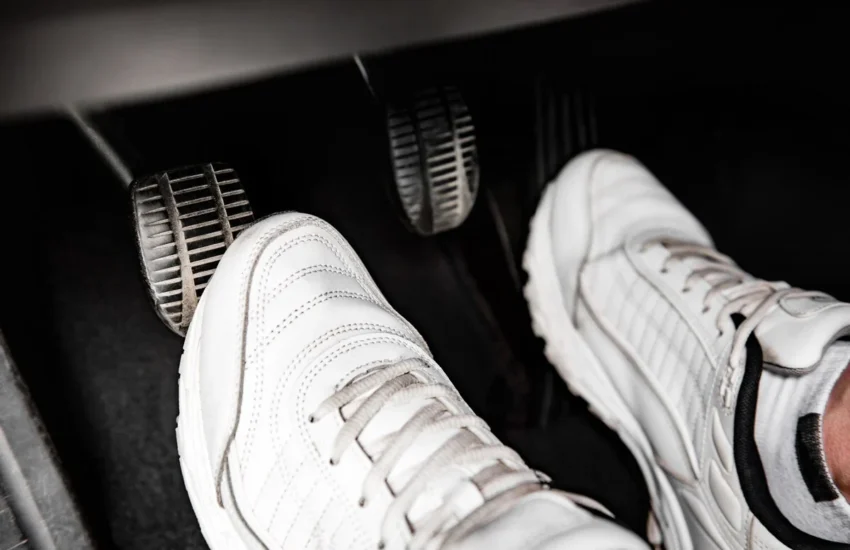
Clutch Pedal It often happens that you press the clutch and brake at the same time. Have you ever thought about what happens when you do that? Now is the time! You need to be aware of how your car reacts when you use the brake and clutch at the same time.
Come explore the consequences that arise from your actions.
The Results When You Use the Brake and Clutch at the Same Time
Time clearly shows that the brake and clutch have been used in synchronization. When you brake and downshift together in the right way, things could turn in your favor. On the other hand, if you do it wrong, things could get worse.
Read on to examine both sides of the coin in detail.
1. The Wrong Way
When you apply the brakes in sync with the clutch, it will cause your car to stop immediately. This would be necessary when it is required to stop the car instantly. For example, if a human or stray animal suddenly appears in front of you; you would need to stop the car immediately. You must use the brake and clutch at the same time in such situations.
One must use the brake and clutch at the same time
An important thing to keep in mind is that pressing the brake with the clutch is not at all suitable for your car. The combination of the clutch and brake can lead to excessive fuel consumption, stalling jerks, and wasted energy. Another drawback is the depreciation of brake quality. The brakes, in turn, would wear out easily, increasing risks to your safety while driving.
2. The Right Way
If you are a novice driver, you will need to press the brakes and clutch simultaneously when stopping. One must know that this is not an ideal thing to do. When you want to reduce your speed approaching an intersection or come to a complete stop, a definitive approach must be followed.
The correct step is to brake first, then press the clutch. For example, if you need to reduce your speed, gently press the brake to reach a lower speed. Then, you can press the clutch. This can help you make small stops at approaching signals. Alternatively, when you want to make a complete stop; follow the same procedure by pressing the brakes and then the clutch.
By doing this, you will increase the lifespan of the brakes and clutch while saving on fuel consumption. Refer to the maintenance tips to learn more about advice for increasing the lifespan of the clutch and brakes.
How to Correctly Use the Brake and Clutch at the Same Time?
Using the brake and clutch pedals simultaneously in a car is generally not necessary nor recommended during normal driving. However, there may be situations where you need to press both pedals at the same time, such as during an emergency stop or as part of specific driving techniques. Here is a general guide on how to correctly use the brake and clutch pedals together:
Understanding the Purpose of Each Pedal
- Brake Pedal: The brake pedal is used to slow down or stop the vehicle by applying the brakes.
- Clutch Pedal: The clutch pedal is used to engage or disengage the engine power from the wheels, allowing you to change gears.
Emergency Stops
In an emergency where you need to stop the car as quickly as possible, you may need to press the brake and clutch pedals simultaneously.
Press the clutch pedal all the way to the floor to disengage the engine power from the wheels, preventing the engine from stalling.
Apply firm and progressive pressure on the brake pedal to stop the car as quickly as possible.
Specific Driving Techniques
In some advanced driving techniques, such as heel-and-toe downshifting, you may need to use the brake and clutch pedals simultaneously.
Heel-and-toe downshifting is a technique used to shift to a lower gear while braking, typically in performance driving or spirited driving.
The technique involves using the right side of your foot to brake and the right side of your foot or the side of your other foot to press the accelerator while the clutch is depressed.
This technique requires practice and coordination and is generally used by experienced drivers.
Watch more:
1. Smooth Stop:
- For a smooth stop, it is advisable to press the brake first, then disengage the clutch progressively while you continue to brake.
- This allows the vehicle to slow down smoothly and maintain steering control.
2. Emergency Braking:
- In case of emergency braking, it is crucial to brake as hard as possible first.
- Then quickly press the clutch to prevent the engine from stalling.
- Not disengaging the clutch before braking in an emergency situation can lengthen the braking distance.
3. Downshifting:
- To downshift, it is necessary to disengage the clutch before releasing the accelerator.
- Then press the brake if necessary to slow the vehicle before shifting gears.
- Release the clutch progressively while you press the accelerator.
Important Points to Remember:
- Always apply gentle and progressive pressure on the clutch and brake pedals.
- Never hold the clutch depressed for a long period, as this can damage the clutch system.
- Coordinate your movements between the clutch, brake, and accelerator pedals for smooth and safe driving.
Conclusion
You would now know what happens when you use the brake and clutch at the same time. Always press the brake first, then the clutch to avoid potential wear. Better safe than sorry, and to ensure your safety; driving the car the right way is necessary.