
Exclusive Test of the Peugeot Polygon Concept
The automotive future is taking a sharp, angular turn. We recently experienced the Peugeot Polygon, a concept car whose radical design language could foreshadow the styling of future models like a next-generation 208. More than just a design study, the Polygon serves as a bold manifesto for the cockpit of tomorrow, built around one revolutionary interface: the Hypersquare steering control.
Beyond the Wheel: The Hypersquare Revolution
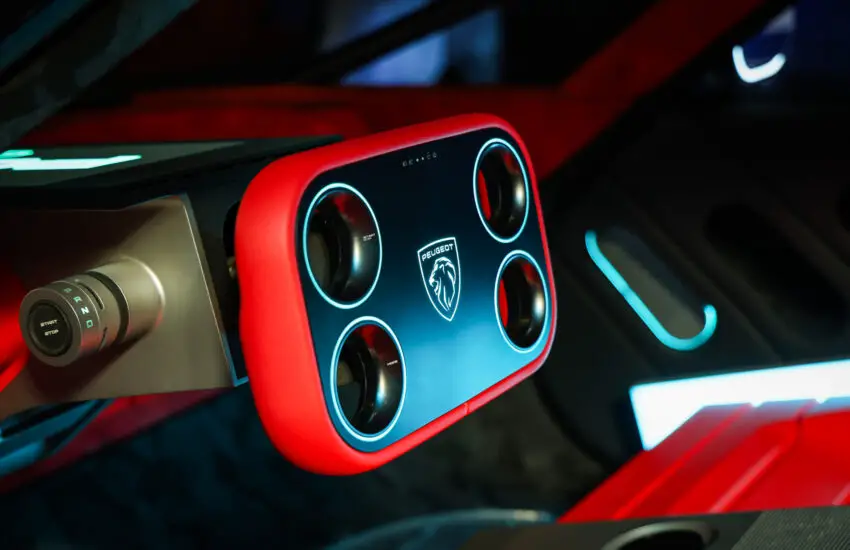
The Hypersquare is not a steering wheel in the traditional sense. This rectangular, screen-based control module replaces the classic round wheel and column stalks. It operates as a steer-by-wire system, where the physical connection between the controller and the wheels is electronic. This allows for unprecedented flexibility. In autonomous driving modes, the Hypersquare can retract, transforming into a large rectangular screen for media or productivity. When the driver takes control, it provides precise, responsive handling through its unique shape and haptic feedback.
Redefining the Driver’s Environment
The Polygon’s interior, dubbed the “Hypervisor,” is a minimalist sanctuary centered around this technology. The absence of a conventional dashboard and the Hypersquare’s compact form dramatically increase cabin space and forward visibility. All vehicle functions—from acceleration and braking to turn signals and infotainment—are managed via touch-sensitive controls and haptic sliders on the Hypersquare’s surfaces. This “e-control” system aims to make driving more intuitive, reducing physical clutter and focusing on digital interaction.
A Vision for Electric Mobility
This concept is a clear statement for Peugeot’s electric future. The Polygon’s architecture is designed for next-generation electric vehicle platforms, prioritizing interior space and user experience. The Hypersquare interface is presented as the ideal companion for electric mobility, offering a seamless blend of dynamic driving engagement and relaxed autonomous capability. While production-ready versions may evolve, the Polygon concept firmly establishes a new direction for how we will interact with the intelligent, electric vehicles of tomorrow.