
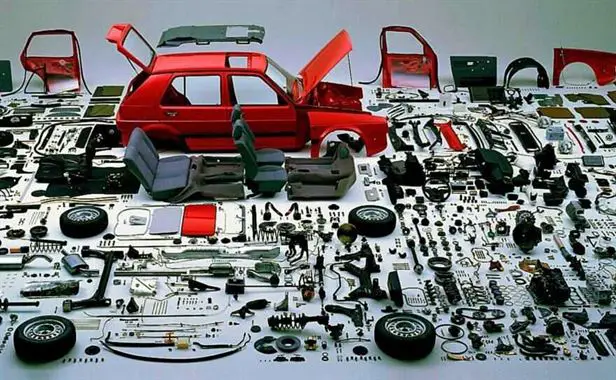
Although you don’t need to know the ins and outs of your car to provide it with adequate maintenance, every car owner should familiarize themselves with the most important parts of a car and their functions.
In this article, we will take an in-depth look at the most important automotive components and parts that every car owner should know, briefly explain how they work, and discuss their importance.
Even if you are not a true gearhead but just a regular car owner, you should know this selected list of the most important and basic car parts and their functions.
This guide and the many links to related full articles will help you take good care of your beloved vehicle in your garage.
Basic Car Parts: Most Important Components
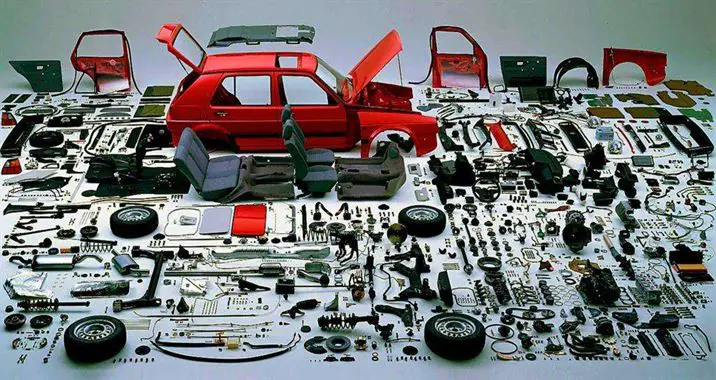
Every component of a vehicle is important, although some may be more important than others. Modern vehicles have become much more complex and feature many more parts than their predecessors.
While there are many complex parts, some are a mainstay—common and essential for every vehicle. Below are the most fundamental and at the same time most important parts of a car.
Understanding how they work and how to keep them in good condition will mean smoother and hassle-free travel for you as an owner.
Engine
We would start with the engine. The engine is the heart of the car. It is the most important element of an automobile by all accounts.
A vehicle’s performance depends heavily on its engine. Furthermore, the many engine components and the many other associated parts are very prone to wear, which is why the engine tops the list of car parts you should familiarize yourself with.
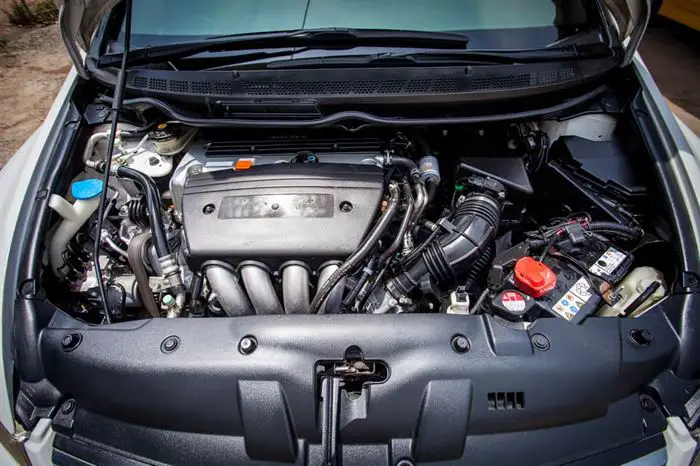
This complex and delicate powerhouse is made up of blocks, heads, pistons, and valves. Modern car engines are also called “internal combustion engines.”
This is because the engine generates energy for your car to run by creating combustion inside its chamber. The input for such combustion is a mixture of fuel and air in a precise ratio for optimal results.
Different types of fuels are used by engines, including:
- Diesel
- Ethanol
- Gasoline
- Electricity
How an Engine Works
The engine block houses the engine cylinders, inside which the pistons move up and down, creating energy. The more cylinders an engine has, the more powerful it is. Engines typically have four, six, or eight cylinders.
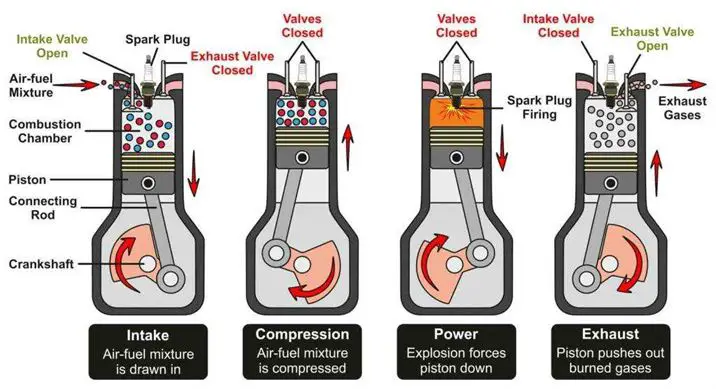
In a four-stroke engine, during the intake stroke, the intake valve opens. The piston moves downward and pulls the crankshaft with it, creating suction or a “vacuum” that draws in air and fuel, allowing them to enter the combustion chamber.
The valve then closes. The amount of this mixture allowed to enter is controlled by the throttle, a rotating plate, in the intake valve.
When the piston reaches the top of its compression stroke, the mixture is compressed, while the spark plug ignites the compressed mixture and creates combustion, sending the piston downward on its power stroke, which rotates the crankshaft.
Ultimately, this crankshaft combined with the transmission spins your wheels and sends you on your way to your destination.
When the piston reaches the bottom of its stroke, the exhaust valve opens, pushing the exhaust gases out of the cylinder.
Engines require regular oil changes to stay lubricated and prevent wear.
Gearbox (Transmission)
The gearbox, or transmission, also called a car’s powertrain, comes right after the engine. It is this part that usually requires special attention when vehicles break down. The gearbox, once restored, can breathe new life into vehicles, even the oldest ones.
The transmission is what contains the different gears that a car must shift into depending on speed. These gears transfer power from the engine to the vehicle’s wheels.
A transmission is available in two types: manual and automatic models.
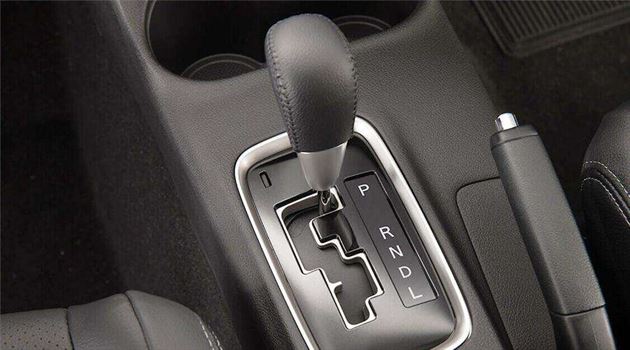
With manual transmissions, the driver selects the gears using a gear lever and a clutch pedal. Meanwhile, automatic transmissions can shift gears on their own, and the driver only has to choose between drive and reverse.
Obviously, an automatic transmission is more convenient and popular, but it doesn’t last as long. Furthermore, some performance enthusiasts claim that you lose control when opting for an automatic gearbox.
Interestingly, many seasoned drivers prefer the manual transmission because it’s more fun to drive.
To discover more helpful maintenance tips for your car’s transmission as well as common problems and how to fix them, check out the comprehensive guides below.
Brakes
If the parts of a car that make it move are vital, the components that make it stop are just as important. They must work side by side.
The next part on the list of important car parts and their functions is the braking system, whose failure can lead to serious, even fatal, accidents. Have you ever wondered how light pressure on the brake pedal can slow down or stop a gigantic moving machine?
When you press the brake pedal, hydraulic fluid is transmitted through steel pipes to the vehicle’s wheels. The brakes use the power of hydraulic fluid to transfer the force the driver applies to the brake pedal into a clamping force that slows the vehicle’s wheels.
A manual braking system requires driver intervention to stop. A later invention is the sensor braking system, which can detect the need to brake and act.
How the Braking System Works
A car’s braking system consists of brake discs, brake calipers, and brake pads. Brake discs are metal discs made of steel and iron. They connect to the axles, the component that rotates the wheels.
Brake calipers are clam-shaped parts that come into contact with both sides of the brake discs to create friction when you brake.
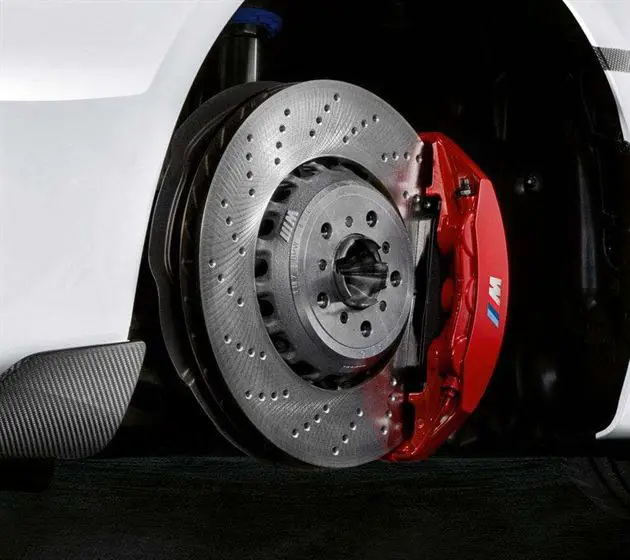
When you press the brake pedal, the brake calipers clamp onto both sides of the brake discs to slow the wheels to a stop.
To increase braking efficiency and minimize wear on the expensive braking system, the brake calipers are equipped with pads. These sacrificial pads press against both sides of each brake rotor to slow it down.
Whether you have a manual or sensor braking system, it is very important to regularly maintain and replace the brake parts, which can crack under the effect of many impacts.
Common problems with brakes can be due to rusty calipers that can seize, cracked pads, air in your brake lines, or water damage.
To learn more about the different types of brakes, as well as a handy maintenance guide for the many parts of the braking system, refer to the guides below.
Steering System
You surely know that when you turn your car’s steering wheel, the wheels turn. However, what happens when you turn your car is not as simple as one might think.
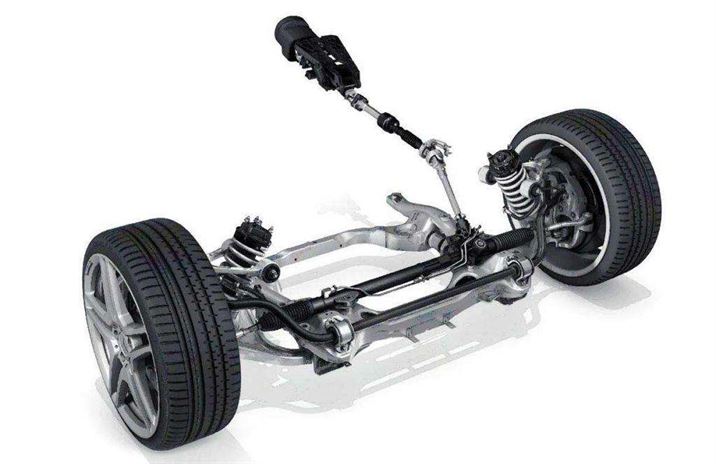
The two most common types of car steering systems are rack and pinion steering and recirculating ball steering.
While rack and pinion steering is more common on passenger cars, small trucks, and SUVs, recirculating ball steering is more commonly used on SUVs and large trucks.
How Steering Works
You might be surprised to learn that when you turn your car, your front wheels do not point in the same direction.
For a car to turn smoothly, each wheel must follow a different circle. The inner wheel must follow a circle with a smaller radius, or in other words, it makes a tighter turn than the outer wheel.
The steering system ensures that the inner wheel turns more than the outer wheel.
Steering Ratio
A measurement you should know is the steering ratio. The steering ratio is the ratio between how far you turn the steering wheel and how much the wheels turn.
For example, if one full turn (360 degrees) of the steering wheel turns the car’s wheels by 30 degrees, then the steering ratio is 360 divided by 30, or 12:1.
Generally, sports cars have lower steering ratios. The lower ratio gives the steering a quicker response, so you don’t need to turn the steering wheel as much to get the wheels to turn a given distance.
Furthermore, smaller cars are light enough that, even with a lower ratio, you don’t need to steer so hard to turn the car.
Suspension
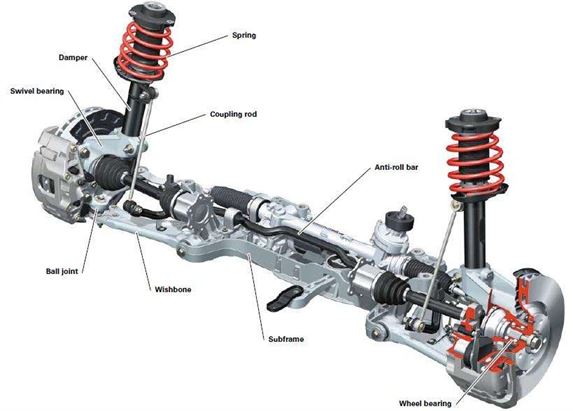
After talking about steering, we must follow with suspension in this list of basic car parts. The role of a car suspension is huge. It maximizes the friction between the tires and the road surface, thus providing steering stability and ensuring a smoother and more comfortable ride.
There aren’t many requirements for car suspensions on a flat surface. However, on a rough surface, you might not be able to drive or handle the vehicle correctly.
When the car’s wheel goes over a bump in the road, it moves up and down, causing the car to completely lose contact with the road surface. The suspension system deals with these shocks by absorbing the vertical force from the wheel.
With such vertical force minimized, the wheels continue to roll with horizontal force, allowing the car’s chassis and body to roll undisturbed while the wheels follow the bumps in the road.
Chassis
The chassis is the vehicle’s frame that houses and supports everything else in a car. If the engine is the heart of the vehicle, the chassis is its skeleton.
The chassis keeps the vehicle rigid and sturdy. It ensures low vibrations and noise throughout the vehicle.
Car chassis are usually made of lightweight steel or other robust materials like aluminum. Most vehicles on the roads today are equipped with a steel chassis, as it guarantees strength and durability.
Basic Car Parts: Cooling System
Although gasoline engines have improved a lot over time, they are still not very efficient at converting chemical energy into mechanical energy.
About 70% of the energy in gasoline is converted into heat, meaning the engine and other components under the hood are prone to overheating.
Without a cooling system, overheating will quickly lead to malfunction and complete breakdown.