
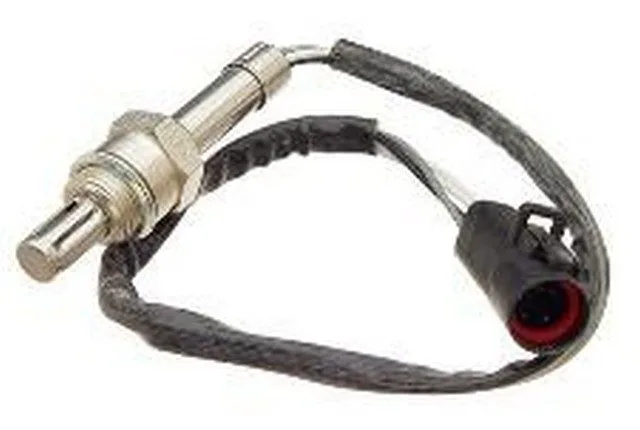
So you want to know a little more about how an oxygen sensor works? Well, as you may already know, many sensors are needed for a modern engine to run, but none are arguably as important as the oxygen sensors. These sensors read the amount of unburned oxygen in the exhaust gases. The computer then uses this reading to balance the fuel mixture. As the oxygen content in the exhaust increases (known as a lean condition), the sensor voltage reading decreases. This signals the computer to increase the amount of fuel delivered by the injectors. In turn, the oxygen content in the exhaust gases decreases (known as a rich condition).
The oxygen sensor voltage increases due to this enrichment, and the computer responds by reducing the fuel flow. As the amount of fuel decreases, we return to a lean mixture and the sensor voltage drops. This process repeats as long as the engine is running. This continuous feedback loop is the heart of the fuel control system. Typical lean voltage readings are between 0 and 0.3 volts, and rich readings range from 0.6 to 1 volt. An ideal fuel mixture (14.7:1) will produce a voltage of about 0.5 volts.
So why not just maintain a constantly measured amount of fuel that varies with throttle position? Well, many factors affect the amount of fuel required to maintain a 14.7:1 ratio. Some of these factors include fuel quality, atmospheric pressure, humidity, and more. Hence the need for O2 sensors! The switching rates of sensors vary, but most modern sensors average at least half a dozen switches per second. Older sensors switched as slowly as once per second, so you can imagine the improvement in emissions produced by the new style sensors!
oxygen sensor
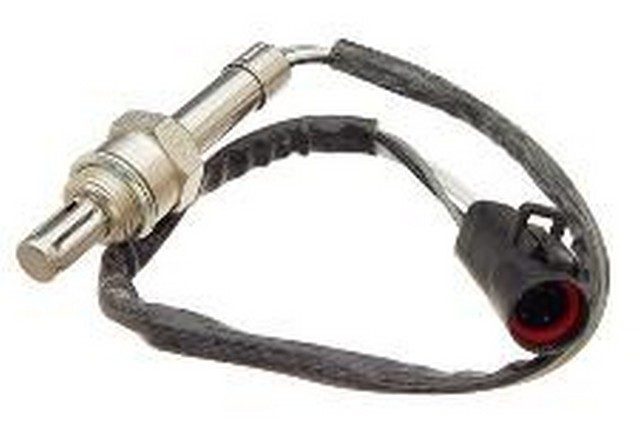
Old-style oxygen sensors used before 1982 were of the 1 or 2-wire unheated type. These sensors would not start recording a correct reading until the exhaust had heated the sensor to its operating range. This resulted in the computer operating in “open loop” (using predefined fuel values that actually make the engine run rich) for longer periods. All newer style sensors are “Heated Oxygen Sensors” (HO2S) that incorporate a heating element used to bring the sensor to operating temperature sooner, typically in less than a minute but as quickly as 10 seconds is possible! The heating elements also prevent the sensors from cooling when the engine is idling. These heated sensors are normally of 3 and 4-wire design.
There are a few different style sensors, which vary in chemical composition and design, but their purpose and function remain the same. The engineering behind these is beyond the scope of this page, but there are a few points to consider. Oxygen sensors compare the oxygen content of the outside air to the oxygen content of the exhaust gases. The outside air is brought into the sensor either through a vent in the sensor housing or through the wiring connector itself. Some types of sensors generate a voltage when the oxygen content of the exhaust changes and some have variable resistance. The newest style, heated wideband O2 sensors, have a voltage range between 2 and 5 volts. Despite all these differences and the actual readings produced by the sensors, the computer processes the information so that we have the expected readings of 0 to 1 volt. There are, of course, a few exceptions. Some heated Titania type O2 sensors can produce a voltage up to 5 volts. This reading is not altered by the computer. Another design of the same style sensor is configured to read values opposite to what you expect. High voltages indicate a lean mixture and low voltages a rich mixture. These 2 types of oxygen sensors are not common and have been used mainly on a few Nissan, Jeep, and Eagle applications. There always has to be an exception! Engineers, yeah I know!
You will also notice that on most post-1996 applications, there is a second set of oxygen sensors beyond the catalytic converters. These operate in the same way as the front O2 sensors, but their readings are used differently, and their purpose is to measure the efficiency of the converters, not to monitor the engine’s fuel ratios. Please refer to our article on oxygen sensor codes for diagnostic help and a more detailed description of O2 monitors. This article provides diagnostic assistance and valuable testing procedures as well as the likely causes of rich or lean oxygen sensor codes. I hope you found this information helpful!