
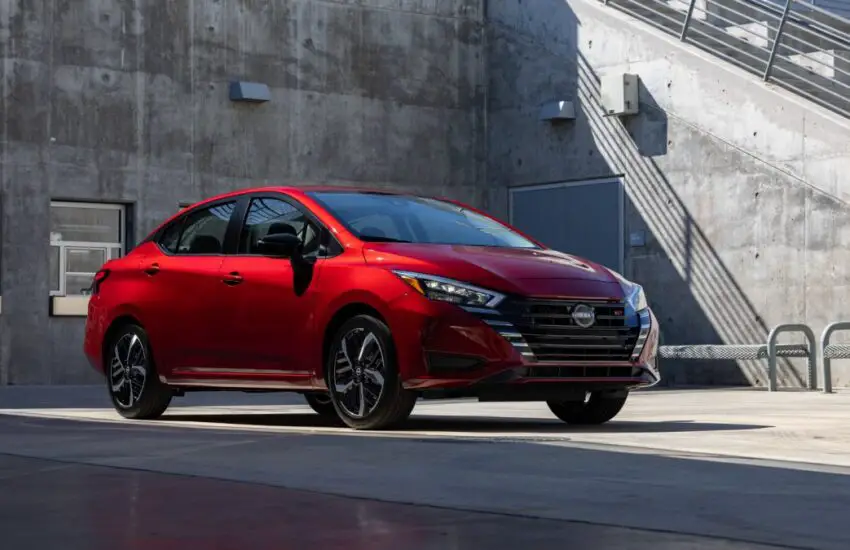
The Final Curtain for America’s Affordable Staple
The Nissan Versa, a longtime champion of affordability in the American new car market, has officially reached the end of the road. This discontinuation signals a significant shift in the automotive landscape, removing one of the last bastions of ultra-low starting prices from showrooms. For years, the Versa served as a critical entry point for first-time buyers and a staple of rental fleets, defining budget-conscious mobility for a generation.
Why the Versa is Disappearing
The decision to halt Versa production stems from a confluence of market forces. Consumer preferences have decisively shifted towards SUVs and crossovers, leaving traditional sedans and subcompacts with a shrinking share of the market. Furthermore, achieving stringent modern safety and emissions standards adds cost, making it increasingly difficult for automakers to profitably produce and sell vehicles at the Versa’s famous price point. Nissan’s strategic focus is now aligned with this new reality, prioritizing higher-margin vehicles and electric vehicle development.
The Changing Face of Entry-Level Driving
The Versa’s exit raises the question of what replaces the most affordable new car. The answer points to a transformed market. New car buyers seeking the lowest possible price will find far fewer options, likely pushing some towards the robust used car market. For others, slightly larger compact sedans or the smallest available crossovers will become the new entry point, albeit at a higher cost of entry. This transition fundamentally alters the pathway to new car ownership.
A Legacy of Accessibility
Despite its simple nature, the Nissan Versa leaves behind a substantial legacy. It provided reliable, fuel-efficient transportation to millions of drivers who prioritized function over flair. Its presence consistently reminded the industry that a market for basic, affordable new cars existed. As the final Versas are sold, it closes a chapter defined by accessible pricing, cementing its role as a defining model of its economic era.