
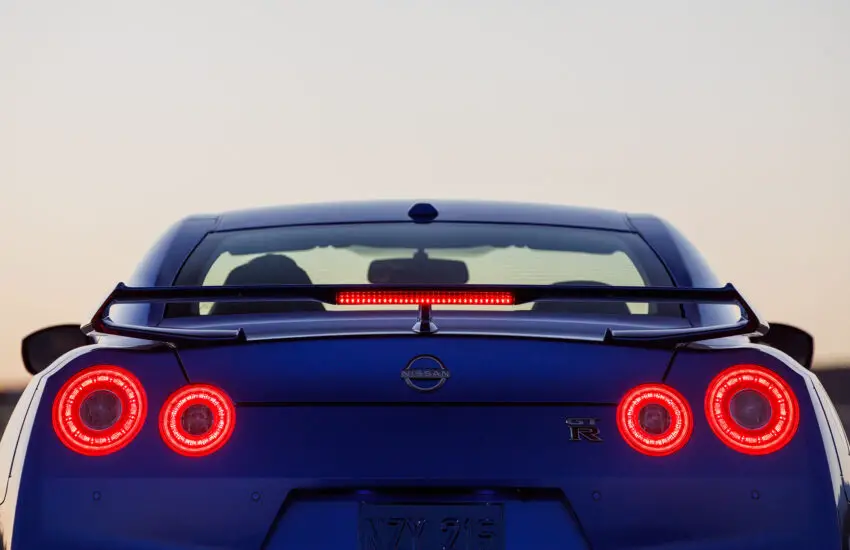
The “Godfather of the GT-R,” Hiroshi Tamura, expresses his personal wish that future legendary Nissan models retain a combustion engine. As production of the R35 has just ended after an 18-year career, with no immediate successor, the Japanese brand’s sports car ambassador shares his vision for the future of the icon.
The End of an Era for the Nissan GT-R R35
Production of the Nissan GT-R R35 officially ended this week, closing 18 years of reign without a direct successor ready to take over. Nissan’s Chief Planning Officer for North America had mentioned a provisional R36, potentially turbocharged and electrified, developing over 600 horsepower, with a launch planned between 2028 and 2031. A horizon still far off.
The Personal Preference of the “Godfather”
Hiroshi Tamura, the former Chief Product Specialist of the R35 nicknamed the “Godfather of the GT-R,” offered his personal opinion on what he would like to see for the next generation. Spoiler: he wants it to keep its internal combustion engine.
“For any future generation of the GT-R, this is just a personal preference, but I would still like it to retain the sound of a combustion chamber,” Tamura said in a recent interview. However, he is keen to clarify: “This is not a hidden hint of the company’s intention, or a clue about a potential direction Nissan might take, but just my personal preference.”
A Passionate Ambassador
It is important to note that Tamura has since retired from his position in GT-R planning to take on the role of Nissan sports car ambassador. A role that suits him perfectly, as he witnessed the Hakosuka Skylines roaring on the Fuji circuit and drove a 240ZG daily in the 70s.
Customer Smile as a Philosophy
Beyond the powertrain, Tamura shares a crucial point regarding the future of the GT-R, which should reassure the most impatient fans.
“The starting point and the goal must always be to bring a smile to the customer’s face, to deliver genuine driving pleasure,” he states. “I tell people to be patient. We had a seventeen-year gap between the second generation and the R32, but Nissan never abandoned the GT-R.”
An Enduring Legacy
The GT-R emblem was indeed dormant before the arrival of the R32 in 1989, a decade that marked the beginning of its golden age. Despite its recent difficulties and corporate upheavals, Nissan still seems to regard the GT-R as its guiding star. The brand has not lost sight of its importance and clearly wants to perpetuate this legacy. While awaiting the next chapter, Tamura’s words leave us nostalgic, but confident in the future of the legend.