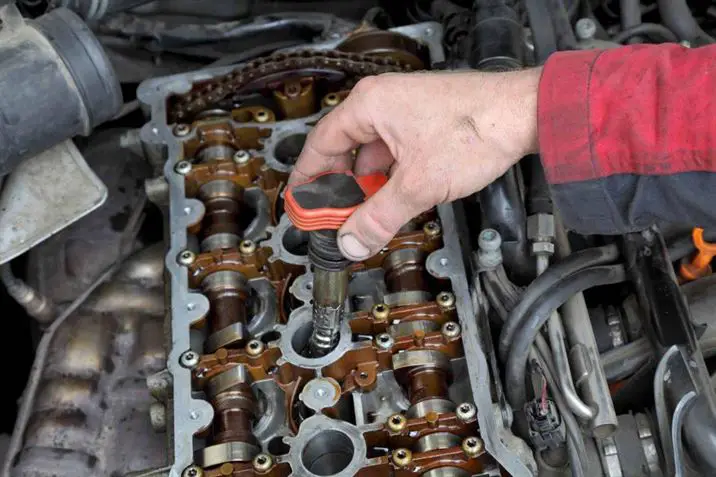
Engine Surging: How to Troubleshoot and Repair, Every dedicated car owner, even if not a true enthusiast, must understand and pay attention at all times to the well-being of their engine, as many problems can affect this delicate and complicated component.
A common malfunction you will likely encounter is engine surging, and knowing how to resolve this issue in under 45 minutes is a maintenance tip you must master early on.
The internal combustion engine relies on the precise cyclic operations of numerous parts, including the precise air/fuel mixture, spark timing, and exhaust gas management.
The slightest malfunction in a part will cause the engine cycles to deviate from what is optimal, which will hinder engine performance.
This issue is often referred to as engine soaring or rapid acceleration or deceleration cycles. You might encounter either engine surging at idle or car surging while driving.
The good news is that in many cases, engine surges can be repaired inexpensively. Discover the causes and how to troubleshoot and resolve this common engine problem in just under 45 minutes for smooth driving.
Engine Surging: Symptoms
Surging or Misfiring
Engine surging is different from hard starting or a no-start problem. “Surging” does not refer to an engine that knocks, idles roughly, or stalls. It is when an engine starts easily and accelerates smoothly, but after a few minutes at constant speed, it either accelerates or misfires.
Misfiring occurs when one of the cylinders in an engine’s combustion cycle fails. Since an engine has four cylinders, the car would still run if one cylinder failed.
However, power surges in speed and misfiring usually cause rough operation, jerking, or engine strain. If you experience either, the first thing to do is perform an inspection before going to a mechanic.
In some cases, you can resolve the root of the problem in your garage with the available tools. Meanwhile, if the cause requires complicated repairs, it is best to leave this task to a professional.
Check Engine Light On
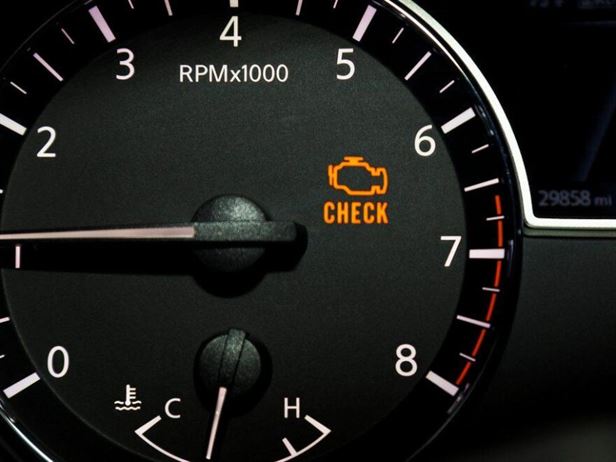
Whatever the cause, if your car’s engine is misfiring or surging, your OBD-II diagnostic system will display error codes and the Check Engine light will illuminate on your dashboard.
Engine Surging: Causes and Troubleshooting
Below are the most common causes of engine surging. While some are relatively simple and inexpensive to maintain, others require professional inspection and repair.
Electronic Control Module Adjustment
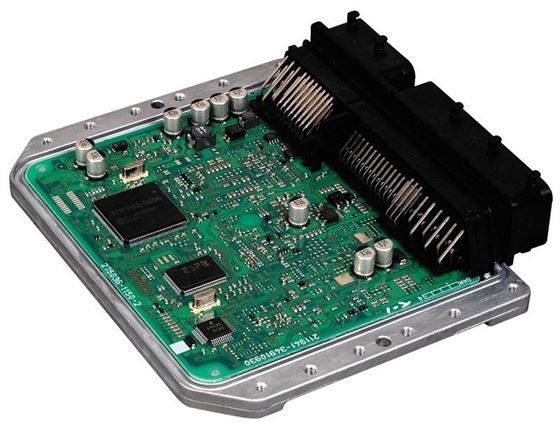
When one of an engine’s carefully controlled parameters deviates from what the electronic control module expects, it automatically adjusts the air intake, fuel injection, and spark plug timing to bring everything back to its normal state.
Each time, this electronic control module will almost invariably overcompensate, causing engine surging issues.
Vacuum Leaks
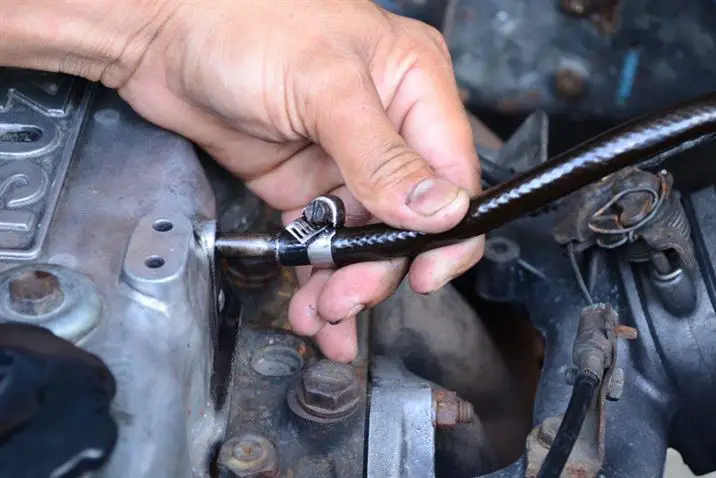
Vacuum leaks most often occur in hoses, which are the most prone to wear due to engine heat under the hood.
Vacuum leaks can cause car surging during acceleration on engines equipped with a Mass Air Flow (MAF) system or a Manifold Air Pressure (MAP) system. Regarding engine surging while cruising, it depends on the type of fuel injection system.
An internal combustion engine needs a mixture of air and fuel to create combustion. MAF systems measure the amount of air flowing through the engine’s throttle body and use this information to determine how much fuel to inject.
Vacuum leaks in a MAF system usually cause rough idling but often do not result in engine surging while cruising.
Meanwhile, a MAP system extrapolates airflow from the intake manifold’s internal air pressure. A vacuum leak in a MAP system can cause engine surging while cruising.
The Solution: check and replace vacuum lines if necessary by following this definitive guide on “What is and How to Find a Vacuum Leak”
Bad Gasoline
The oxidation of gasoline after a certain storage time is a natural process. Gasoline will react with oxygen to produce carbon dioxide, water, and contaminants like nitric oxide and free carbon molecules, thus losing its potency.
In other words, oxidized gasoline also contains air or is contaminated by air. Once the engine is injected with this bad gasoline, its electronic control module will read this as a “lean burn” or excess air conditioning.
A lean burn is not optimal for the engine, as a combustion engine strictly requires a fixed ratio of fuel and air to operate.
In attempting to adjust, the electronic control module injects even more bad gasoline to rebalance the air-fuel ratio. This essentially causes a lack of flame in the engine’s combustion chambers.
Once a lack of flame is detected, it slows down during fuel injection, runs lean again, then overcompensates and must repeat this cycle over and over to keep running. This repeated lean combustion and overcompensation will cause engine surging and stalling.
The Solution: remove the tank and siphon the bad gas using a garden hose. Then fill the tank with dry cleaning fluid.
EGR Valve Stuck Open
The Exhaust Gas Recirculation (EGR) valve is an important part of your car’s emission system. It recirculates exhaust gases from the engine’s combustion chamber to burn them again instead of sending them to the emission system, thus reducing emissions.
The EGR valve opens and closes during engine cycles. If the EGR valve remains open, exhaust gases return to the chamber when they are not supposed to.
The engine cannot burn too much carbon dioxide present in the exhaust gases, meaning there is not enough oxygen for combustion to take place.

The electronic control module will overcompensate by allowing more air to enter through the intake manifold, which will result in the engine running lean. As explained above, lean combustion will cause engine surging cycles.
The Solution: replace the EGR valve.
Faulty Electronic Control Module
As explained above, the electronic control module regulates the operation of many components to ensure the engine gets what is optimal to run efficiently and compensates when there is a deviation.
When the electronic control module malfunctions for any reason, it will not do its job correctly. For example, it may suddenly inject more fuel into the combustion engine, resulting in engine surging.
The Solution: this is usually not a DIY job. Have a mechanic test the electronic control module and repair or replace components if necessary.
Clogged Fuel Filter
An engine’s fuel injectors contain very fine mesh filters, which can just as easily become clogged. A clogged fuel filter will reduce fuel pressure, prompting the electronic control module to open the fuel injectors wider to maintain the same flow.
Once the fuel filters are forced open this way, the fuel pressure increases rapidly, which injects more fuel into the engine than it needs, causing what you would feel as engine surging.

The electronic control module then compensates by closing the injectors, which causes the fuel pressure to drop again. The above cycle would therefore repeat, causing repeated engine surges.
Engine Running Too Hot
An engine can overheat, often due to low coolant levels or air bubbles in the cooling system.
When an engine overheats, the cylinder head gaskets can typically blow, which can cause coolant leakage and air intake.
Similar to what happens when you use poor quality gasoline, as explained above, a greater amount of air entering the engine will cause an engine surging cycle.

The Solution: check and fill the coolant or remove air from the cooling system by referring to How to Flush a Car’s Cooling System.
Fuel Pressure Regulators Operating at Low Pressure
If a fuel pump fails or the fuel pressure regulator operates at low pressure, it can result in incorrect fuel volume or fuel pressure in the fuel system.
As explained above in previous sections, if the fuel pressure is reduced or when the engine runs with a lean mixture, these deviations will lead to engine surging cycles.
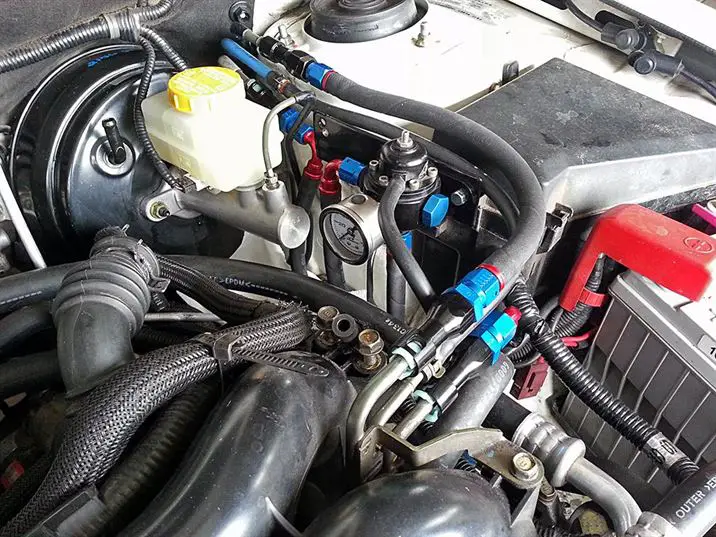
The Solution: these are usually not easy DIY jobs. Check the fuel pressure with a fuel pressure gauge. If it is low, take it to a mechanic to repair or replace a fuel pressure regulator.
To learn more about how to check and replace faulty fuel pumps, refer to the guides below.
Bad Ignition Timing
Without a spark, the air-fuel mixture could not ignite in the engine chamber, thus causing combustion. Spark plugs will transmit an electrical signal from the ignition coil at a predetermined time to create a spark that will ignite the air-fuel mixture.
The timing of this ignition must be precise. If the ignition timing is incorrect, the air/fuel ratio will not burn efficiently, the combustion process will not be optimal, and engine performance will surely be affected.
For example, if the timing is too advanced, or much earlier than it should be, the air-fuel mixture will ignite too early in the combustion cycle.
This can lead to engine overheating. As explained above, an overheating engine can cause engine surging.
The Solution: have a professional adjust the ignition timing.
Ignition System Causing Weak Spark
A weak ignition spark can be caused by many possible problems in the ignition system, including faulty distributor caps, rotors, wires, spark plugs, and coils.