
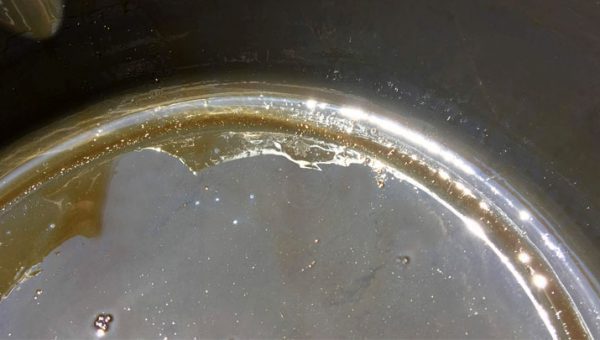
On certain occasions, a particular view will catch the attention of an attentive vehicle owner. Those who are meticulous in maintaining their vehicle seem to know when something is wrong and deserves further examination. Although what is observed often turns out to be of little concern, there are times when a person’s findings prove to be a sign of a larger problem.
Few circumstances illustrate this point as vividly as the discovery of shiny metal particles in a vehicle’s oil. Although many drivers do not understand the exact cause of this anomaly, most realize that it warrants further investigation.
Read on to learn more about the root causes of the sudden appearance of fine metal chips and metal flakes in a vehicle’s oil, as well as how to handle such a situation should it occur in the future.
Is It Normal to Have Metal Shavings in Oil?
Although the engine oil of almost every vehicle contains microscopic metal particles, these particles should never be visible to the naked eye. The only exception to this rule is when these particles cling to a magnetic drain plug or other polarized objects. However, even then, these particles should be rare in nature.
The sudden accumulation of metal particles in a motor’s lubricating oil should never be considered “normal.” On the contrary, this anomaly often indicates that something is wrong with the internal components or the rotating assembly of an engine.
What Does Having Metal Shavings in Oil Indicate?
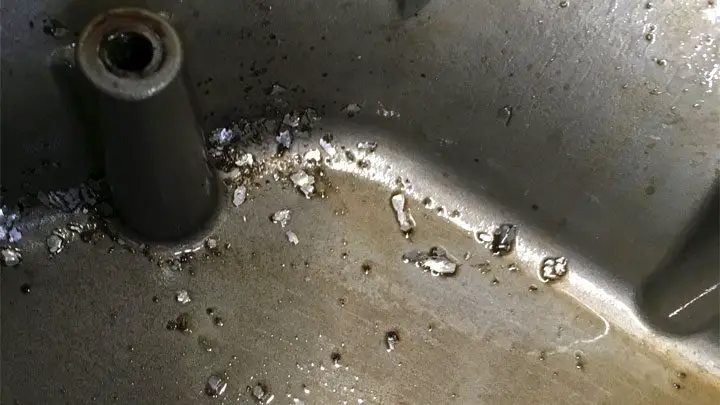
The sudden accumulation of metal shavings in an engine usually indicates accelerated wear of bearings or other reciprocating surfaces. As metal erodes away from these components, it deposits into a motor’s oil, where it accumulates before being discarded during routine maintenance.
Unfortunately, once one or more bearings in an engine have begun to wear at an accelerated rate, irreversible damage has already been caused. This wear pattern usually continues and progresses over time. In most cases, metal shavings will be present at every subsequent oil change.
How Serious is This Problem?
The problem with accelerated bearing wear is that it is an endless cycle. Due to the wear of an engine’s main, connecting rod, and camshaft bearings, their clearances increase beyond those specified by the manufacturer. These clearances are vital for engine operation, as they are directly related to an engine’s ability to maintain proper oil pressure.
Over time, worn bearings no longer maintain pressure in the same way they did when new, thus allowing oil to pass through without resistance. This often leads to a noticeable drop in oil pressure.
Due to this reduction in oil pressure, an engine’s bearings are then deprived of vital lubrication. This complicates matters exponentially and can lead to multiple bearing failures in a short amount of time.
In severe cases, a knocking or ticking noise may be heard during engine operation, which largely indicates bearing failure at a later stage, as well as a lack of oil at the upper end of the engine.
Will an Oil Filter Catch Metal Shavings?
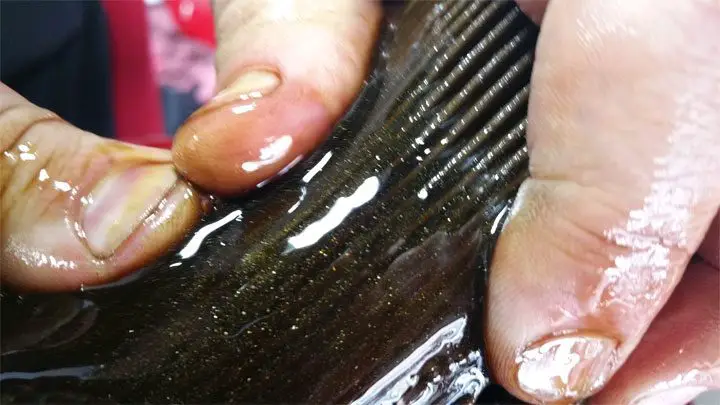
Although an oil filter is excellent at capturing a large percentage of metallic contaminants in an engine’s oil, it is far from infallible. Generally, an oil filter will capture the vast majority of large metal shavings circulating in an engine. However, many metal particles are too small for an oil filter to capture.
As a result, these microscopic particles continue to pass through an engine’s bearings, somewhat acting as an abrasive along the way. Over time, this can further accelerate bearing wear, especially if an engine’s oil is not changed at the factory-recommended service interval.
When an engine’s health is in question, a further examination of a used oil filter can also prove useful. In these situations, many mechanics will carefully cut open the cartridge portion of an oil filter to reveal its internal paper element.
This element can then be inspected for metal fragments and shavings, thereby providing clues about the overall health of an engine’s bearings and wear surfaces.
What To Do If You Find Metal Shavings in Your Engine Oil
Discovering metal shavings in your engine oil is certainly concerning and should not be taken lightly. In all cases, further diagnostics will be necessary.
In most cases, this will involve removing the engine’s oil pan and bearing caps to carefully inspect the bearing surfaces for wear. If surface scarring or accelerated wear of any kind becomes apparent, a much larger issue is at hand.
Unfortunately, an individual’s options are limited when faced with rapidly deteriorating bearings in an engine’s rotating assembly. In most cases, engine removal and overhaul will be necessary. This can become a rather expensive undertaking, to say the least, with these repairs often exceeding the total value of many older, high-mileage vehicles.
Alternatively, some might find it cheaper to locate a replacement engine from a junkyard, as the cost associated with this operation is often less than overhauling a vehicle’s current engine. This can be particularly advantageous if you are up to the task of replacing the vehicle’s engine yourself, thereby eliminating labor costs.
What About Metal Flakes in Your Transmission Fluid?
Unlike a vehicle’s engine oil, one can expect to observe some degree of metal shavings in their transmission fluid. This tends to be especially true if a vehicle has gone a long period of time without having its transmission oil changed.
These observable metal shavings are usually the product of normal internal gearing and are unlikely to indicate anything outside of normal wear. In fact, most transmission pans contain magnets to catch this debris.
However, one should keep an eye out for large metal flakes that are large enough to be pinched between your fingers or are sharp on their edges. Metal flakes of this type often indicate impending problems due to abnormal wear. This is an issue that should be diagnosed in more detail by a transmission specialist.