

McDonald’s, Lidl: The Future of Charging in Small Provincial Towns
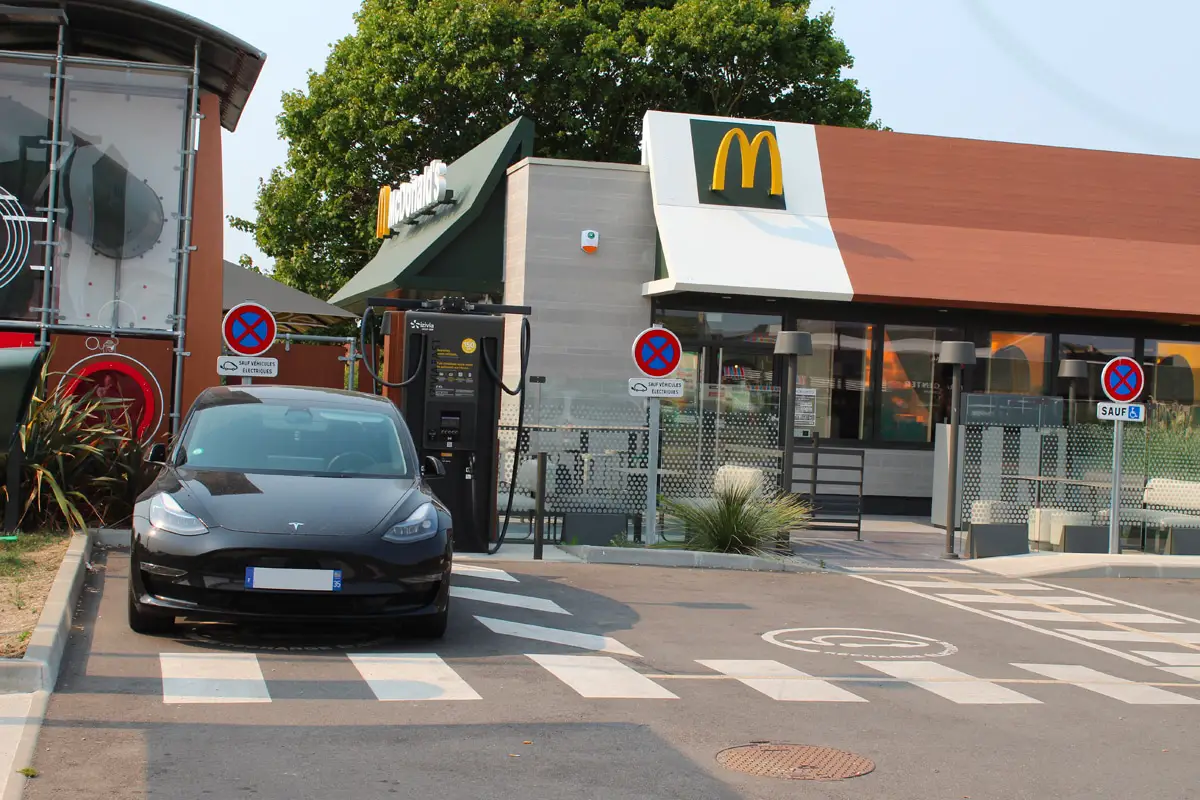
In the French landscape of electric mobility, a silent revolution is underway. Major retail and fast-food chains are gradually becoming the pillars of charging infrastructure in rural areas and small towns.
The Transformation of Commercial Parking Lots
The parking lots of McDonald’s, Lidl, and other major chains are transforming into true 21st-century service stations. These spaces, once simply dedicated to parking, are becoming strategic points for electric vehicle charging. This evolution addresses a growing need in less densely populated areas.
The presence of charging stations in these commercial establishments completely transforms the experience for electric car users. Instead of wasting time during charging, drivers can now run errands or have a meal while their vehicle charges.
Rapid and Effective Development
In just a few years, the electric vehicle charging offering has seen remarkable expansion in many small French towns. Agglomerations of 4,500 inhabitants, like La Guerche-de-Bretagne, now see their urban landscape enriched with new charging infrastructure accessible to the general public.
This rapid deployment is explained by several factors. The chains already have the necessary spaces, suitable electrical supply, and regular traffic. Installing charging points therefore represents a relatively controlled investment for these economic players.
Benefits for Municipalities and Residents
For small provincial towns, this new approach offers multiple benefits. It allows for the development of charging infrastructure without significant public investment. Municipalities thus benefit from an essential service for their residents without having to bear the installation and maintenance costs.
Residents of rural and suburban areas see their electric vehicle autonomy significantly improved. The ability to charge during daily activities like shopping or lunch breaks removes a major barrier to electric vehicle adoption.
Complementarity with Existing Networks
These charging points in commercial settings complement the infrastructure already present on highways and in large urban areas. They form an essential territorial network to ensure coverage of less dense areas.
The location of these charging stations in places of daily life and consumption perfectly matches driver habits. The charging time, which can vary from 20 to 45 minutes depending on available power, ideally corresponds to the duration of a meal break or quick shopping trip.
Evolution Prospects
The model of charging integrated into commercial chains seems to promise a bright future. More and more players recognize the strategic interest of offering this service to their customers. This represents not only a competitive advantage but also an additional revenue stream.
In the medium term, we can anticipate standardization of equipment and an increase in available charging power. The next generations of charging stations will enable even faster charging, making the experience even more convenient for users.
This evolution towards diffuse charging integrated into the local commercial fabric could well represent the most sustainable solution for electrifying the French vehicle fleet, particularly in areas where population density does not justify the installation of dedicated charging stations.