
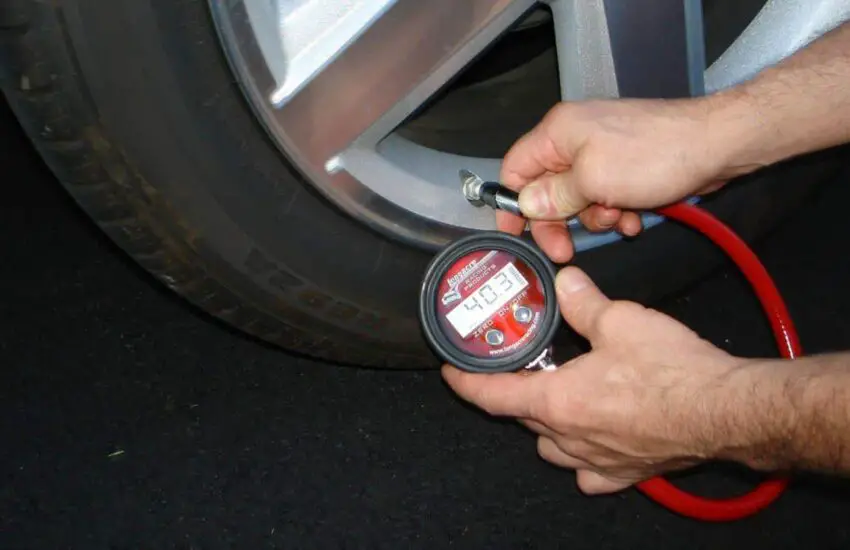
According to the National Highway Transportation Safety Administration, approximately 11,000 accidents and 200 deaths can be attributed each year to tire failures, with the majority of cases caused by underinflated tires. To ensure optimal stability, control, handling, and braking performance, your tires must be consistently inflated to the optimal air pressure specified by your vehicle manufacturer.
To ensure this, most newer vehicles today are equipped with a tire pressure monitoring system that displays a warning light on your dashboard when a tire is significantly low on air. However, there is a common issue of seeing a low tire pressure light when the tires are fine.
So, what is the reason for this problem and how can it be fixed? Continue reading to find out. However, before addressing the reasons for the continuous illumination of the tire pressure light and its solutions, you must first understand the basics of the technology measuring tire pressure inside the car.
Tire Pressure Monitoring System: What is it for?
Car tires must be properly inflated to the optimal air pressure specified by your vehicle manufacturer. Underinflated and overinflated tires can impair handling and braking, lead to faster and uneven wear of your tires, and thus compromise your safety on the roads.
Underinflated tires are more problematic and represent the majority of tire-related accidents. Underinflation means more contact with the road surface, leading to rapid heat buildup, which, in the worst case, can completely separate the tread from the wheel and make the vehicle uncontrollable.
Most new vehicles are equipped with a TPMS, which stands for Tire Pressure Monitoring System. A TPMS is an electronic unit installed on the tire rim that generates tire pressure information for the car’s computer system.
When the pressure in a tire is significantly lower than the recommended pressure, the TPMS illuminates a light on the dashboard. However, this does not allow you to check the exact pressure. So, just because the light is not on doesn’t mean your tire pressure is correct. Furthermore, older vehicles may not have a TPMS installed.
There are two types of TPMS with their own advantages and disadvantages: direct and indirect. Direct TPMS systems use sensors inside each tire to directly measure pressure. Indirect TPMS systems use wheel speed sensors to indirectly calculate pressure.
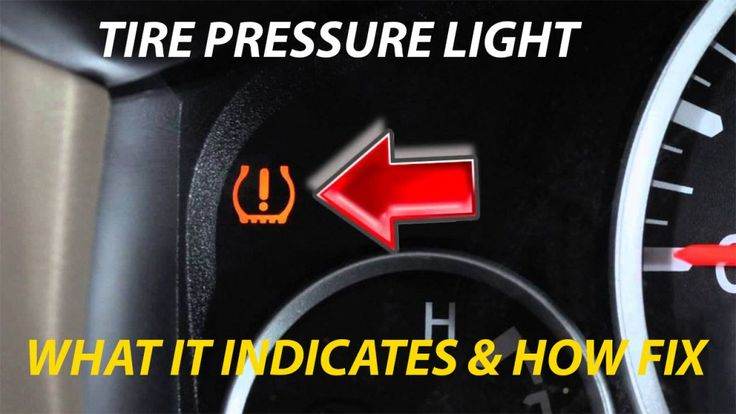
When the car starts, the TPMS light normally illuminates for a second or two to indicate that the system is working. The light may look like a tire with an exclamation point inside, or it may simply say “TPMS”.
If a tire has low pressure, the TPMS light on the dashboard will illuminate. It may flash or stay on. So, what causes the TPMS to illuminate when the tires are fine?
Reasons Behind the Low Tire Pressure Light But Tires Are Fine
Often, when the tires are not flat or underinflated, the low-pressure light on the dashboard illuminates. There are many perfect reasons why this can happen:
Extremely Cold Weather
It is quite common for the low tire pressure light to come on, but the tires are fine, a problem that occurs on very cold winter mornings. Warm air expands, takes up more space, and is less dense, but inside the confined space of a tire, this expansion leads to an increase in air pressure. In contrast, cold air becomes dense and takes up less space, so inside a tire, this condensation leads to a decrease in air pressure.
A car tire might measure 30 PSI at 80-degree temperatures during the day, but early the next morning when the temperature drops to 30 degrees, as it is often coldest overnight, it might return a reading of only 25 PSI.
On days when the temperature varies considerably, say between 40 and 50 degrees F between day and night, your tire pressure can vary by about 3 PSI to 5 PSI. That’s why it’s quite normal on a cold winter morning to find your dashboard’s low-pressure light on, but once you start driving, the tires warm up. The air inside the tire will expand, thus increasing the air pressure and the light will go out. So you see the low tire pressure light but the tires are fine.
However, if the light does not go out once the tires are warmed up, you need to grab your pressure gauge to measure the exact pressure of your tires and inflate them to the correct optimal pressure level.
Recent Tire Rotation or Replacement
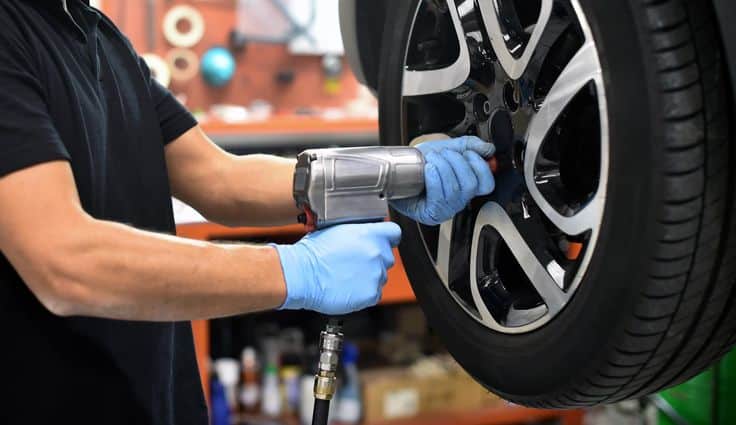
As mentioned earlier, the TPMS is located on the tire rim. So, there is a chance that this electronic unit could be damaged during the tire rotation or replacement process. Therefore, whenever you consider changing a car’s tires, check from time to time for the problem of the low tire pressure light but tires are fine to avoid having to return to the auto shop later.
Furthermore, you might replace old tires with a different tire that doesn’t have a TPMS like the others or doesn’t have the correct TPMS specified by your car manufacturer. When this happens, it’s as if your vehicle has to go through a relearning process, which can trigger the TPMS light but the tire pressure is good.
In this case, to turn off the light, simply drive your vehicle casually at a constant speed for about 10 minutes. If this doesn’t solve the problem, you will probably need to take your car to a mechanic for external recalibration.
Faulty TPMS Sensor
If you have used a pressure gauge and confirmed that all four tires are properly inflated to the optimal level specified by your car manufacturer, but every time you start the car, the pressure light comes on and stays on, it means the TPMS is not working properly. In this case, it is best to consult a mechanic to inspect and possibly replace the TPMS.
Physical sensors are subject to wear and tear over time, particularly at the seals, valve caps, or sensor core. These sensors also operate with onboard batteries, whose lifespan is limited to about 5 to 7 years (up to 10 years in the best case). A weak battery and age-related wear can cause the TPMS sensor to malfunction and trigger a low tire pressure light but tires are fine problem.
Another reason for TPMS sensor malfunction is the presence of a substance other than air or nitrogen in the tire, such as puncture repair sealants used when fixing a flat tire.
Forgotten Spare Tire
It might be that you just replaced your spare tire, which has been sitting there for some time without attention or care. Not all spare tires are equipped with TPMS, but if it is and the tire pressure in the spare tire is too low, it could trigger the warning light.
Almost all tires gradually lose pressure over time through the inflation valve, even with a spare tire or if the vehicle is stored and rarely driven. There is a cap, but the role of the valve stem dust cap is to prevent dirt from entering rather than better retaining air. So, even though it is recommended to check your tire pressure at least once a month, it’s still a good idea to check your spare tire as well and inflate it to the optimal pressure so that you always have a properly inflated spare tire to swap at any time.
Air Loss Due to Physical Impacts
A sudden loss of air pressure in tires is quite common and can cause the TPMS light to illuminate even though you properly inflated your tires just a few days ago. The pressure loss is likely caused by driving on very rough terrain or hitting a curb, which can cause a momentary separation of the seal between the tire and the rim, thus letting a small amount of air pass.
Other common reasons for air leaks that can cause the low tire pressure light but tires are fine problem include damage to the rim due to physical impacts on the road like flying pebbles or debris, or a faulty tire valve that gradually purges air.
Watch more:
Low Tire Pressure Light But Tires Are Fine: How to Fix
Now that we are well informed about the causes of the low tire pressure light but tires are fine problem, let’s address this issue.
You have the choice to reset the TPMS yourself or seek professional help. But be aware that, by law, any auto shop must resolve the issue before letting you leave. So, in rare cases where troubleshooting and repair take longer than expected, your car will be held hostage until the problem is fixed.
Locate the Reset Button
Positioned inside the glove box (a compartment inside the dashboard), you will find it easily in front of the passenger seat. If you cannot locate it, look for a button marked “SET”, or consult the car manual.
Note: The position of this button may vary depending on the car’s make and model.
Press the Reset Button
The next step in the process is to press the located button for three seconds. Once the light flashes three times on the dashboard, it means the TPMS is reset. After that, turn off the engine and restart it after five seconds (from the moment the light flashes).
This would solve the problem. But it is important to note here that the TPMS reset process can vary depending on the car model. Therefore, consult the vehicle manual before proceeding.
However, if the above solution does not work for you, take your car to the nearest mechanic for a thorough inspection.
Sometimes, you can’t do it yourself…
Some vehicles like Subarus will not allow you to reset your TPMS sensors yourself. You will need a special tool, available only at auto repair shops, auto parts stores, and tire dealers.
In this case, the TPMS sensor receives a unique identifier that must be registered with the ECU, along with pressure information as well as the position and temperature of the tires at that time. Once you rotate or replace your tire, to fill your tire, one or more of this information will change, requiring the sensor to be recalibrated with the special tool above.