
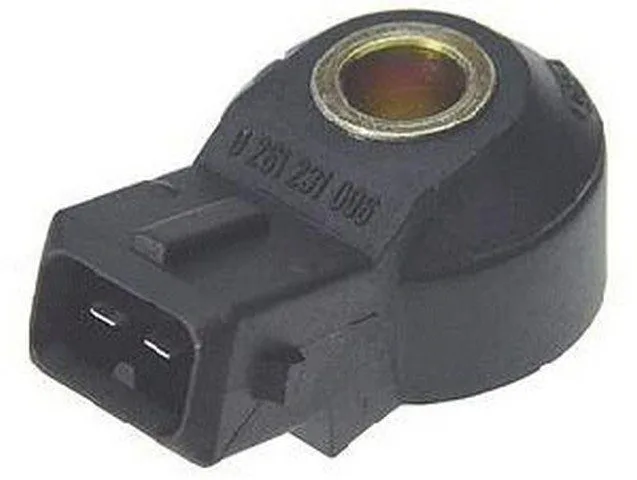
A vehicle knock sensor is a sensor screwed into the engine block or cylinder head. It is used to detect engine knocking or detonation (there is a piezoelectric element inside the sensor). The knock sensor signal is sent to the PCM/ECM and is used to control engine timing. Typically, you will have one knock sensor per engine row (one on inline 4/5/6 cylinder engines, two on V6, V8, V10 engines).
Here is a photo of a knock sensor:
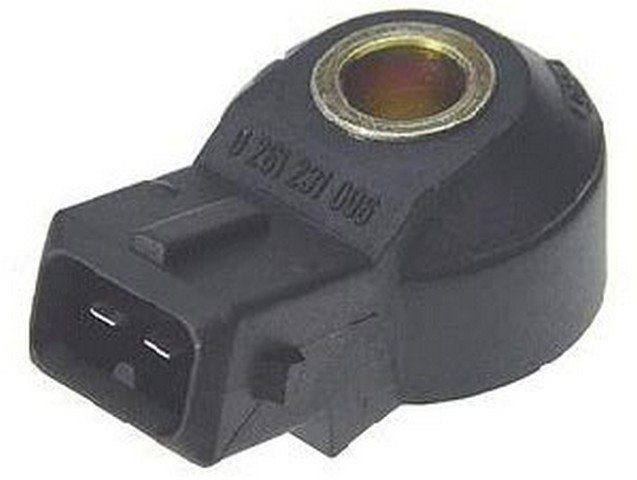
With the advent of computerized vehicles, they have many input sensors that send signals to the computer so it can control engine operation. One of the sensors they have recently added is knock sensors. And I am holding a typical knock sensor right here, and what it does is it actually detects knocks or pings that occur quite often with higher operating temperatures and lower quality fuels used in vehicles today. Jim Bates is with us to tell us a bit more about it and show us a quick and easy test to tell us if it’s good or bad. Jim, first of all, where do they usually place knock sensors in vehicles?
Well, basically, you would find these things in the cylinder head near the back of the engine or sometimes in the intake manifold where a Y would be. In these locations, it can pick up the vibrations produced by knocks. And so when the engine starts to knock or ping, these vibrations will cause the device inside this sensor to produce a small millivoltage, which the computer will pick up and it knows it’s time to retard the timing.
So, to test something like this, all we have to do is measure or record that millivoltage. Testing can be done on or off the vehicle. We are doing it off the vehicle, of course, so we will hold it in our hands and connect this device that I brought with me. This is a device made by the Kastar company (sp?) that can test knock sensors and other millivolt-producing devices. It has two wires that you simply connect to the sensor. I will connect one here and the other at the bottom. And the small LED here should flash every time knocks hit the sensor. And we will replace the knocking engine with a metal object, I will just use this side knife here, and every time I hit it, the light should flash. So we see that this sensor is working fine.
This is a transcript of the first two minutes of the five-minute knock sensor video. Video by Auto-Repair-Help.com.