
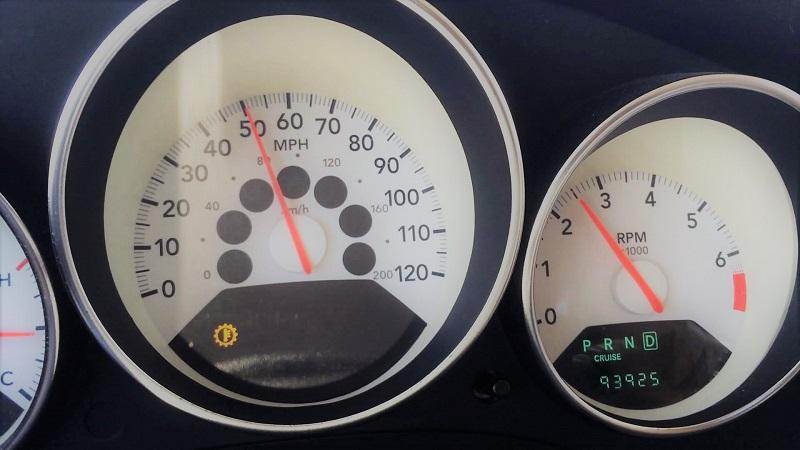
Do you know your car’s mechanism well? Not much, right? Well, don’t feel embarrassed, because most people are like you! Now, you need to understand a few basic functions to drive safely. And the transmission temperature light is one of them!
So, what does the transmission temperature light mean? It means your transmission is overheating. Is it dangerous? Yes. Heat, more than anything else, is the cause of transmission failure.
Is it safe to drive when the transmission temperature light is on?
No! Why? Let’s find out:
The normal transmission temperature is between 175 and 225 degrees Celsius. It is in very good health when operating at a temperature equal to or below 175°C.
Remember that for every 20-degree increase beyond 225 degrees, you will halve the normal lifespan of your transmission. Similarly, every 20-degree drop in temperature is likely to double its lifespan.
When the light is on, it indicates that the fluid temperature has reached at least 250 degrees. At this point, the fluid begins to break down, thus reducing the transmission’s lifespan.
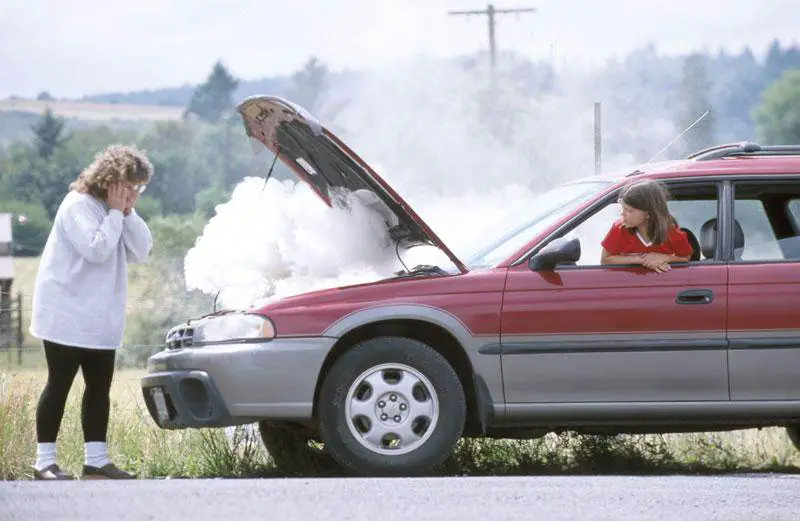
If you continue driving, the temperature will keep rising. It would be a disastrous situation if the temperature exceeded 270 degrees. The fluid will completely break down at this point, and the transmission will stop working.
Thus, continuing to drive with the transmission temperature light on can lead to an accident due to car breakdown and expensive repair work.
Why is the transmission temperature light on?
Transmission fluid shortage
Lack of transmission fluid is one of the reasons your transmission temperature light comes on. To fix this issue, you can add the appropriate fluid and determine where the leaks are.
High transmission temperatures
If the transmission overheats, most cars will also instantly display a transmission warning light.
In this case, it is essential to check the overall quantity and quality of your vehicle’s transmission fluid and replace it according to the manufacturer’s maintenance schedule.
Recorded diagnostic codes
In many circumstances, if a transmission-specific failure code is recorded, the vehicle’s transmission light will come on. Internal transmission failures or basic electrical issues in the valve body can all cause such codes.
Your car needs maintenance
Under certain conditions, a transmission light coming on in a car may not be symptomatic of a problem at all. Instead, some cars use a similar light to warn that routine transmission-specific maintenance is needed.
What to do when the transmission temperature warning light is on?
You should stop driving. Immediately. Continuing to drive under these conditions is extremely dangerous. You need to park somewhere and wait a while for the transmission to cool down.
Then start again but with caution. If the light comes on again, stop the car, let the transmission fluid warm up, and then take the car to a repair shop. If driving seems dangerous, call a towing company to take the vehicle to the mechanic.
How to know if the transmission is overheating?
Watch for the transmission temperature light to come on! But there are several other ways to tell. A hot transmission gives off a kind of sweet smell. Sometimes the light may not come on, but if you smell something out of the ordinary, stop the car.
Start the journey again after some time when you think the fluid temperature has returned to normal.

Another way to discover the problem is to check the transmission fluid. Unlike engine oil, it does not burn while driving the car.
So, a low fluid level is a sign of some issues. If you find it black or darker than the normal color, it’s a surefire way to know that the transmission is overheating.
FAQ on the transmission temperature light being on
- Is it possible to drive with a heated transmission?
Transmission overheating is a big problem. If it happens, you need to have your transmission system checked as soon as possible. Driving with an overheated transmission can be quite dangerous, and it might even prevent you from driving.
- How can I reduce my transmission temperature?
From time to time, shift to neutral.
Allowing your car to idle in neutral in heavy traffic, on railway tracks, or stopped at a red light reduces the pressure on the transmission. This is your chance to reduce the intensity of your transmission by cooling it down.
- What is an acceptable transmission temperature?
Temperatures ranging from 160 to 220 degrees.
Keep your transmission temperature between 160 and 220 degrees to ensure its safety. Some transmissions can maintain a normal and safe transmission temperature at slightly higher temperatures than this range.
- Is coolant used to keep the transmission cool?
During typical driving, the transmission, just like the engine, heats up. The fluid is sent through a cooler located in the radiator to cool the transmission.
When the engine cooling system is working properly, the engine coolant flows through the radiator and over the transmission cooler.
- How long can I drive with the temperature gauge light on?
Generally, this light tells you at least a hint of a major problem. Keep an eye on the light for about a kilometer, and if it doesn’t go off by then, stop and turn off the engine.
Final words
It is essential to detect transmission problems early to avoid larger malfunctions and expensive repair work later. So you must pay attention to the transmission temperature light and other symptoms to keep your car operational.