
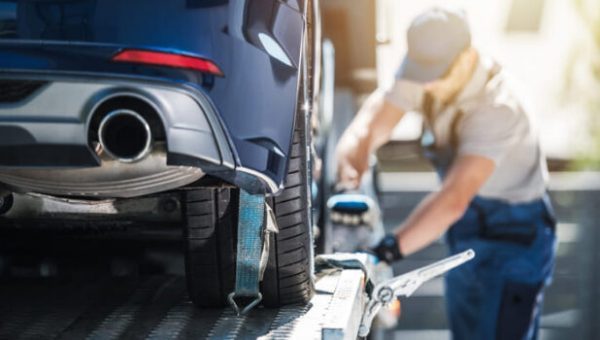

KNOWING HOW TO TOW A CAR CAN HELP YOU OUT OF SOME TOUGH SITUATIONS, BUT IT ISN’T AS SIMPLE AS YOU MIGHT THINK
It’s a situation we never want to find ourselves in: you’re stuck on the side of the road with a car that won’t start and you don’t know how to get the engine running again. Whether it’s because you forgot to fill up the tank or you ignored the annoying check engine light, you’re stranded in the middle of nowhere and, to make matters worse, you haven’t renewed your breakdown cover. When a friend or family member offers to tow you home, you’ll feel like they’re your guardian angel. But without knowing exactly how to tow your car legally and safely, you shouldn’t jump for joy just yet. This is our guide on how to tow a vehicle and the regulations you need to be aware of when towing.
HOW TO TOW A CAR
It’s not only in the disastrous circumstances mentioned above that you might want to tow a car. It could be taking a vehicle on vacation, helping during a move, or taking a car that won’t start from your home to a garage. The most important thing is to prepare for it with the right equipment and know exactly how to tow a vehicle.
USING A TOW ROPE OR STRAPS
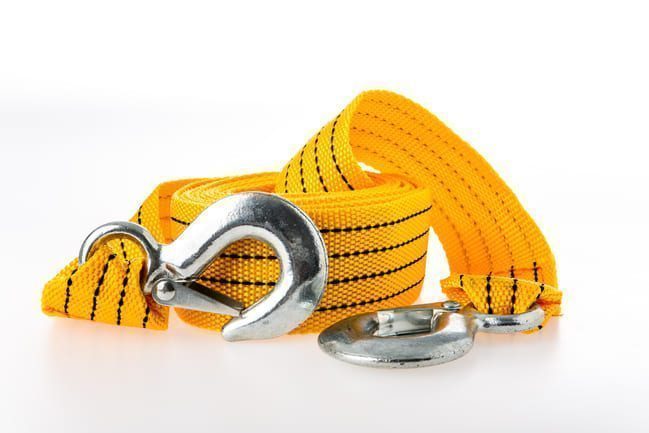
A tow strap is one of the most basic, cheapest, and easiest ways to tow a car. The tow rope should be strong and in good condition and must be attached to the front of the car that needs to be towed. The other end should, of course, be attached to the car doing the towing. Ensuring the rope is attached roughly in the center and in line on both vehicles will make it easier to control the direction of the towed vehicle. There are many strengths, sizes, and qualities of tow ropes for different vehicles available on the market, so be sure to consider what you might need when purchasing a tow rope.
USING A TOW DOLLY
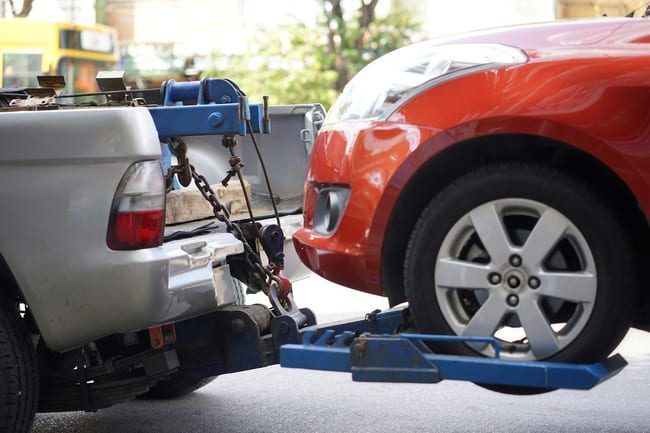
A tow dolly makes towing vehicles easier because some of the load is taken off the vehicle doing the towing, as only the rear wheels of the towed vehicle rest on the ground. The front set of wheels is lifted onto the dolly itself, which can be coupled with the tow ball at the back of the vehicle doing the towing, just like a trailer. This usually works best when the towing vehicle is front-wheel drive. This is because a rear-wheel drive or four-wheel drive vehicle means you need to disconnect the drive shaft for longer distances.
When the dolly is secured, you can load the towed vehicle. If possible, drive the car onto the dolly facing forward. Make sure the vehicle is properly positioned on the dolly.
The front wheels should then be secured using tire straps and all you have to do is disconnect the drive shaft and you’re ready to tow the car.
USING A TRAILER
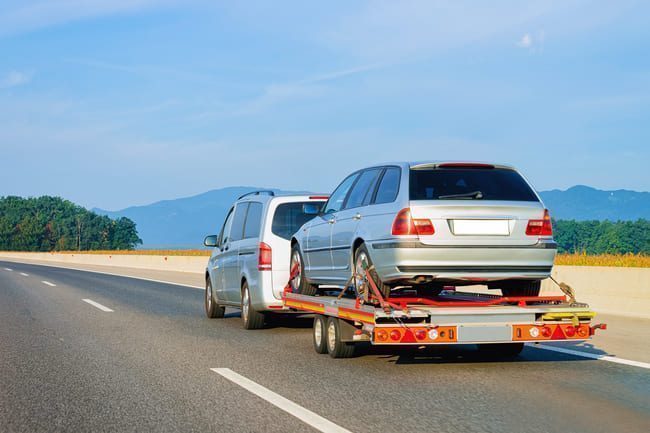
Whereas with a tow dolly, only one end of the vehicle will be raised, using a trailer means the vehicle is completely off the ground. This is by far the easiest way to tow a vehicle, but of course, you won’t carry a trailer with you everywhere you go.
This is also safer than other methods, but it has its drawbacks, one of which is that the towing vehicle and trailer together may be too heavy for the towing vehicle to handle. So your vehicle’s towing rating is something it’s essential you know (for any type of towing actually!). This towing rating or Maximum Authorized Mass (MAM) will be given in KG. For example, a vehicle with a towing rating of 800 kg MAM will be able to tow a vehicle provided the weight of the towed vehicle and the trailer does not exceed 800 kg.
The trailer is attached to the tow ball of the vehicle that will perform the towing. You must ensure that the trailer hitch is securely fastened and that it is attached to the hitch by gently pushing the towing vehicle forward. When you have done this, attach the safety chains that connect the trailer to the towing vehicle itself. Then connect the trailer’s wiring harness to the towing vehicle’s sockets. If the trailer comes with a brake battery, you should check its charge before starting your journey.
After setting up and attaching the trailer, you will then need to load the vehicle itself. After extending the trailer’s ramps, you will drive the towing vehicle up the ramp and onto the trailer itself. Make sure the towing vehicle is centered by driving the vehicle slowly up the ramps.
Continue climbing until the front tires rest against the tire stops located at the front of the trailer itself. Then place the vehicle in park and make sure you have engaged the parking brake.
You can then attach wheel nets or nylon straps to the towed vehicle to ensure maximum safety.
USING A TOW BAR
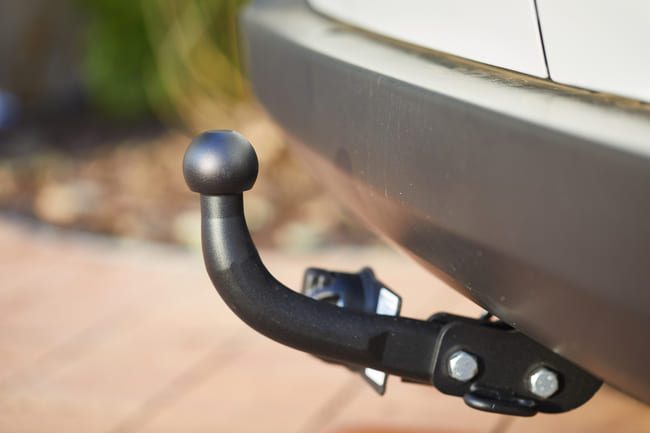
Finally, you can also tow cars using a tow bar. All four wheels of the towed vehicle will be on the ground during this process and you must ensure to disconnect the drive shaft to make sure the transmission is not damaged when the car is towed.
Tow bars are typically used with caravans or when towing vehicles over long distances or across the country. It is important to note that a tow bar means you attach brackets to the front chassis of the vehicle doing the towing. If you cannot do this yourself, a technician or expert can help you.
You must first secure the brackets. Find the strongest part of the vehicle’s chassis to attach the bracket, one on each side of the front. Then check the brake lights and turn signals to ensure they work together simultaneously. You can purchase a wiring system that will connect and coordinate with the lights and turn signals so they work together.
Finally, attach the tow bar. After attaching the tow bar brackets to the towed vehicle itself, you ensure the bolts are secured using a socket wrench. After securing the tow bar, make sure to fasten it by attaching the towing vehicle’s safety chains to the pivot bracket itself.
Towing Rules
Towing a car with another car is perfectly legal, provided certain guidelines are followed, which must be adhered to at all times, especially if the vehicle is being towed in an emergency situation and it may not be immediately clear that a vehicle is being towed.
Note: these rules are based on UK legislation – when towing in other European countries, local laws must be consulted.
- A “On Tow” sign must be visible at the rear of the towed vehicle.
- When vehicles are connected only by a rope or chain, the maximum allowed distance between vehicles is 4.5 meters.
- If the distance between the two vehicles exceeds 1.5 meters, the rope or chain must be clearly visible at a reasonable distance from both sides to other road users, for example by attaching a colored floating cloth in the middle.
- A qualified driver must be in the towed vehicle, even if it is not functioning properly.
- If it is dark, the towed vehicle must have its lights on as it would under normal circumstances, even if it is broken down.
- If the car’s wheels are in contact with the road, it must be insured, so a towed car must still be insured even if it is broken down. In addition to insurance, the car must be taxed and have a valid MOT, if applicable.
- For drivers who passed their driving test after January 1, 1997 and have not taken a test to drive with a trailer, restrictions apply. Check the GOV.UK website for more information.
- It is illegal to tow a car on the motorway if it did not break down on the motorway.
- You cannot tow a car without the driver’s or owner’s consent. If you find a car blocking your driveway, for example, you are not allowed to tow the car. You must contact the appropriate authorities.
TOP TOWING TIPS
- Make sure you have a vehicle suitable for towing – it makes sense to see if your towing vehicle is suitable for the situation. Trying to tow a Land Rover with a Fiat Punto will only end badly. The weight – and the safe towing limit – will be defined in each car’s manual.
- Only cars with manual transmissions can be towed – do not attempt to tow an automatic car; seek professional assistance.
- Regularly check the quality and strength of the tow rope or chain you are using and before using it.
- If you are towing someone, agree on a route to take with the person being towed, preferably avoiding heavily built-up areas.
- Do not connect steel hooks to bumpers, as they will likely be torn off.

- Use the clutch to pull away slowly and avoid jerky movements that could damage the rope. Similarly, avoid sudden braking.
- Take your time – never exceed 15 mph.
- Signal with enough time for the towed driver to prepare.
- Try to keep the strap, rope, or chain taut at all times to avoid jerking – this can be controlled by gently applying the brake.