
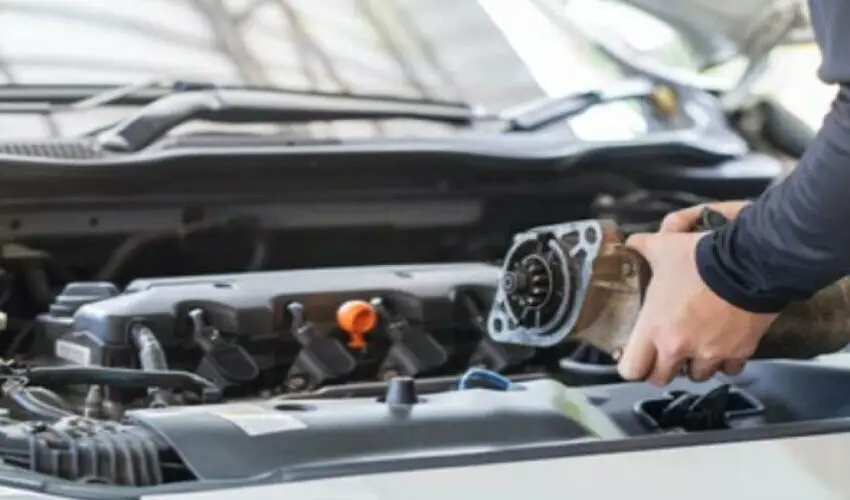
How to start a car with a faulty starter? This is the urgent question you ask yourself when, upon turning the key, you only hear a simple metallic click instead of the engine’s roar. This noise is often a sign of a worn-out solenoid or starter relay. Before resorting to replacing the starter, here are four solutions to get you out of trouble.
1. Tap (gently) on the starter
This is a classic troubleshooting method. Using a tool like a jack handle or a small hammer, give a few sharp but moderate taps on the starter body. This vibration can sometimes tighten loose internal connections or free stuck brushes, allowing sufficient electrical contact for one last start. Be careful not to hit too hard to avoid damaging other components.
2. Check the battery connections
A starting problem is often mistaken for a battery failure. First and foremost, ensure that the battery terminals are clean, tight, and free of corrosion (a white or greenish substance). Faulty connections prevent current from reaching the starter, causing the same symptoms. Clean the terminals if necessary and tighten them.
How to check the battery voltage?
Use a multimeter set to DC Volts. A voltage below 12.4 V indicates a weak battery that could be the cause of the problem. In this case, use jumper cables to recharge it via another battery.
3. Short-circuit the starter solenoid
This more technical procedure must be performed with extreme caution. It involves short-circuiting the two large terminals of the starter solenoid (usually using a sturdy insulated screwdriver) to send current directly to it. Ensure the car is in neutral and the handbrake is engaged. This method forces the starter to activate and may work if only the control circuit is faulty.
4. Push-start the car (for manual transmissions)
If your vehicle is equipped with a manual transmission, the “push-start” or roll-start method is an excellent solution. Turn on the ignition, shift into second gear, depress the clutch, and have a few people push the car to give it momentum. Then release the clutch abruptly. The force transmitted to the pistons may be enough to trigger combustion and start the engine.
Conclusion: a temporary solution before replacement
These tips are stopgap solutions for emergency situations. A starter showing signs of weakness is a worn component. These methods may allow you to restart once or twice, but the definitive and safest solution remains replacing the starter by a professional to avoid a permanent breakdown.